
Freeze-Thaw Weathering
Learn about freeze-thaw weathering and erosion through a simple, fun experiment that mimics the conditions of icy mountains and what causes them to weather!
Adult supervision for setup

You will need
- Cheap pavement chalk
- Coldwater in a bowl
- Hot water in a bowl and tongs
- Freezer and a plastic bag
- Patience!
Method
-
Snap a chalk piece in half.
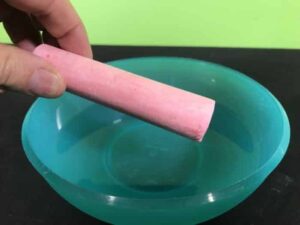
-
Soak the chalk piece in water until no more air bubbles rise from the chalk – as a precaution, move the chalk around to shake loose any surface air bubbles clinging to the side of the chalk.
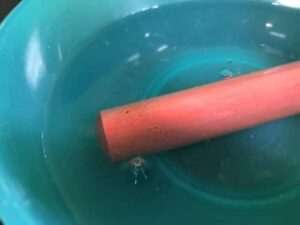
-
Remove the chalk from the water and place the chalk into the plastic bag.
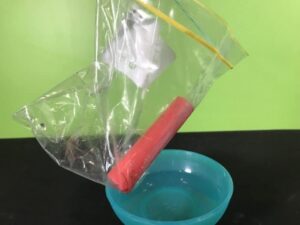
-
Place the plastic bag in the freezer and wait 6 hours.
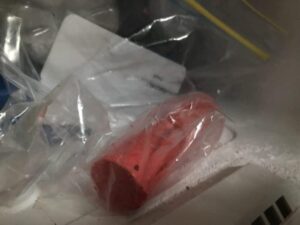
-
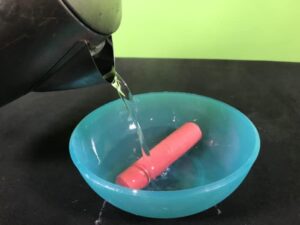
Pour hot water into a bowl and place the now frozen chalk into it. Place the chalk into a hot oven, dry would be better as the thermal change would be greater. If you do use an oven, you will need to re-soak the chalk again.
-
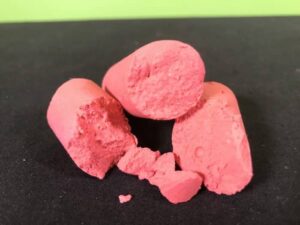
Repeat steps 2 to 4 until the chalk breaks.
-
Get the Unit of Work on Geology here!
- The Earth’s layers, the rock cycle, volcanoes, earthquakes & more!
From soil science to mineral testing, these hands-on experiments your students will discover the importance of natural resources and the role of plate tectonics in shaping our world.
Includes cross-curricular teaching ideas, student quizzes, a sample marking rubric, scope & sequences & more

-
School science visits since 2004!
– Curriculum-linked & award-winning incursions.
– Over 40 primary & high school programs to choose from.
– Designed by experienced educators.
– Over 2 million students reached.
– Face to face incursions & online programs available.
– Early learning centre visits too!
-

The science behind it
Why Does This Happen?
Freeze-thaw weathering is common in mountainous areas where the temperature is around freezing point. This type of weathering is caused by the expansion and contraction of water within porous rocks. As ice crystals form, they grow larger, attracting liquid water from the surrounding pores. The ice crystal growth weakens the rocks which can then crack, exfoliate or shatter with the stresses imposed.
Chalk is a quite porous material, containing numerous air pockets. Soaking the chalk replaced the air with water, setting up a situation where the chalk could be broken by rapidly changing the temperature of the materials.
Variables to test
- Try chalk blocks vs smaller chalk. Does this make a difference?
- What happens if you repeatedly cool the chalk with dry ice and then reheat with boiling water?

Teacher's note
Curriculums change, and so does the way you implement them in your classroom. Please use your own experience and knowledge of your students to use these resources to best effect for student learning.
Still want the curriculum links?
Here are the suggested links:
Australian Curriculum (ACARA) Science:
NSW Science syllabuses:
Victorian Curriculum Science:
Want this experiment — and many more — running in your classroom?
Have us visit your school — every student gets three hands-on experiments in 60–90 minutes with a qualified presenter.








