
Make Your Own Electromagnet
Learn about magnetic fields and and how magnetic fields are created, all while using batteries, through this easy, fun and safe experiment.
Adult supervision for setup
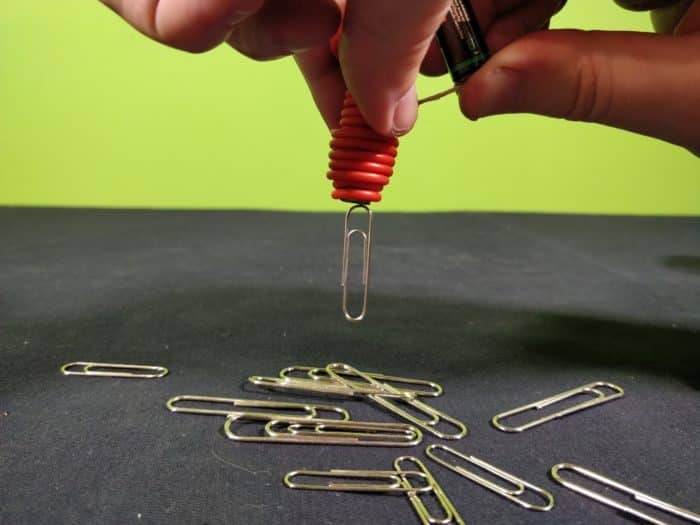
You will need
- Batteries: one 9V, one 6V, and one 1.5V
- Battery terminals
- One 60cm length of insulated wire
- One 20cm long steel rod
- Paperclips or measured iron weights
Method
-
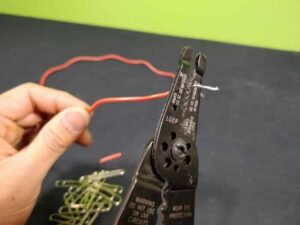
Strip 2cm off both ends of the insulated wire
-
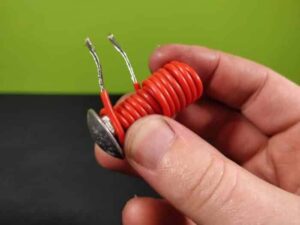
Wrap the wire tightly around the iron bar, keeping the wire loops next to each other. Do this at least 40 times!
-
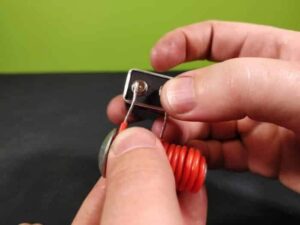
Connect the ends of the wire to the battery terminal and connect the battery.
-
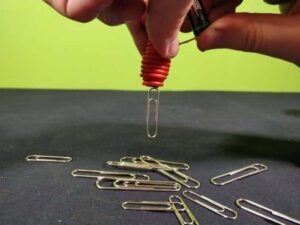
Try to pick up paperclips using the iron bar. How many can you pick up?
-
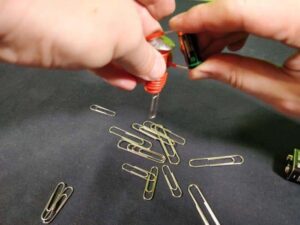
Does the size of the battery make a difference on the amount of weight you can pick up?
-
Get the Electricity & Magnetism Unit of Work here!
- How does electricity actually flow?
- What makes magnets become magnetic?
- Why is there electromagnetism and what does this tell us about electricity & magnetism?
- From series & parallel circuits to conductors & insulators, there’s a lot to explore & learn!
Includes cross-curricular teaching ideas, student quizzes, a sample marking rubric, scope & sequences & more.
-
School science visits since 2004!
– Curriculum-linked & award-winning incursions.
– Over 40 primary & high school programs to choose from.
– Designed by experienced educators.
– Over 2 million students reached.
– Face to face incursions & online programs available.
– Early learning centre visits too!
-

The science behind it
Why Does This Happen?
The Science of Electromagnets
An electromagnet is a type of magnet in which the magnetic field is produced by an electric current. Unlike a permanent magnet, the magnetic strength of an electromagnet can be easily changed by varying the amount of electric current flowing through it, and it can be turned on or off instantly.
How It Works: Electromagnetism
In 1820, Hans Christian Ørsted discovered that a magnetic field occurs whenever electricity passes through a wire. This field circularizes the wire. When you wrap the wire into a tight coil (called a solenoid), these individual magnetic fields stack up and concentrate in the center of the coil.
- The Core: By placing an iron bar (like a nail) inside the coil, the magnetic field of the wire temporarily aligns the “magnetic domains” within the iron. This makes the iron itself magnetic, vastly increasing the overall strength.
- Polarity: The direction of the magnetic field depends on the direction of the current. If you flip the battery, the North and South poles of your electromagnet will swap places!
Variables to test
Find out more on variables here.
- Winding Direction: What happens if you wind the coil of wire the opposite way? Does it change which end of the nail is North or South?
- Voltage and Current: What happens when you change the battery voltage? (Note: Do not exceed 9V to avoid overheating). More voltage generally pushes more current through the wire—does this make the magnet stronger?
- Wire Gauge: Does the thickness of the wire make a difference? Thicker wire has less electrical resistance, which can allow more current to flow.
- Insulation: What happens if you use uninsulated wire instead? (Hint: Electricity always takes the path of least resistance!) If the wires touch without insulation, the electricity will “short circuit” across the loops rather than flowing around the coil.
- Number of Turns: Try doubling the number of wraps around the nail. How does the density of the coil affect how many paperclips you can pick up?
Safety Note: Electromagnets can get hot quickly because the wire is essentially a “short circuit” for the battery. Always disconnect the battery when you aren’t actively testing your magnet.

Teacher's note
Curriculums change, and so does the way you implement them in your classroom. Please use your own experience and knowledge of your students to use these resources to best effect for student learning.
Still want the curriculum links?
Here are the suggested links:
Australian Curriculum (ACARA) Science:
NSW Science syllabuses:
Victorian Curriculum Science:
Want this experiment — and many more — running in your classroom?
Have us visit your school — every student gets three hands-on experiments in 60–90 minutes with a qualified presenter.








