
“Rubber” Chicken Bones
Bend chicken bones and tie them into knots. This experiment turns firm and sturdy regular chicken bones into flexible 'rubber'-like bones.
Adult supervision for setup
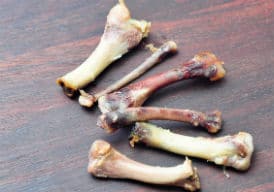
You will need
- Vinegar
- Clean Chicken Bones
Method
-
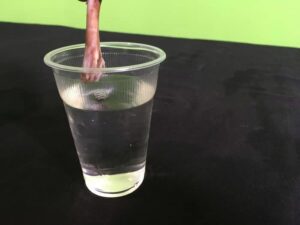
Soak the bones in vinegar for at least a day. The longer the better for this experiment.
-
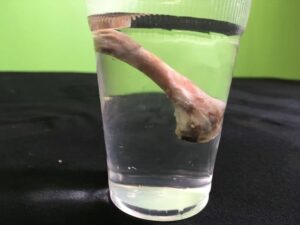
Leave the bones in the vinegar until it is soft and bendable. If you leave it for long enough you can even tie it into knots.
If you take the bones out of the vinegar and leave them overnight they will harden in the position that you have left them in. This happens as it reabsorbs the carbon from the carbon dioxide in the air.
-
School science visits since 2004!
– Curriculum-linked & award-winning incursions.
– Over 40 primary & high school programs to choose from.
– Designed by experienced educators.
– Over 2 million students reached.
– Face to face incursions & online programs available.
– Early learning centre visits too!

-

The science behind it
Why Does This Happen?
Vinegar is acidic and bones are made of roughly 10 percent calcium carbonate. Calcium carbonate forms a framework on which bone growth takes place. As the bones soaks, the calcium carbonate reacts with the acidic vinegar producing carbon dioxide gas. This gas is the bubbles coming off the bone.
Teacher's note
Curriculums change, and so does the way you implement them in your classroom. Please use your own experience and knowledge of your students to use these resources to best effect for student learning.
Still want the curriculum links?
Here are the suggested links:
Australian Curriculum (ACARA) Science:
NSW Science syllabuses:
Victorian Curriculum Science:
Want this experiment — and many more — running in your classroom?
Have us visit your school — every student gets three hands-on experiments in 60–90 minutes with a qualified presenter.








