
Science and cooking via Baked Alaska
Learn about heat transfer and the power is insulation through this fun and delicious home made experiment! Part of Fizzics Education >150 free experiments.
Adult supervision for setup
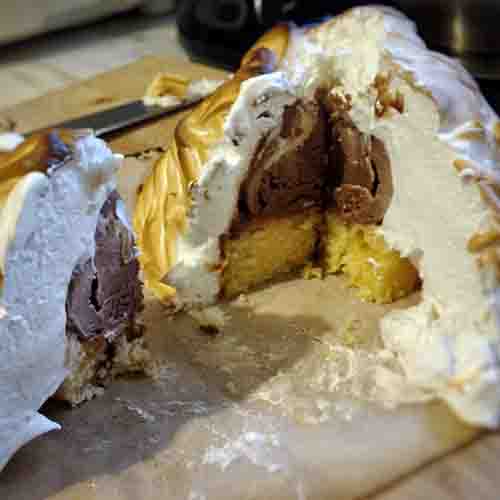
You will need
- Ice-cream
- 3 egg whites*
- 150g Caster sugar
- Base (sponge cake or a brownie)
- Bowl
- An electric whisk or beater
- *Note: Be aware that the final product contains raw egg.
Method
-
Separate egg whites from the yolk and pour the egg whites into a clean metal bowl.
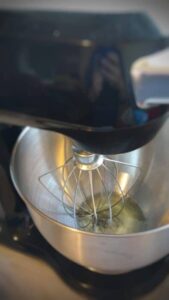
Beat on low-medium with an electric mixer or whisk until firm peaks form. This usually takes about 5 minutes.
-
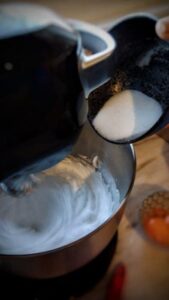
Turn beater up to medium-high while gradually adding the caster sugar for 5-7 minutes.
-
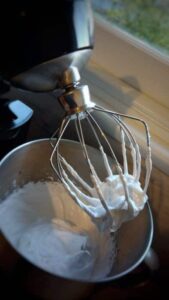
Beat for a further 2 minutes, until the meringue looks glossy.
-
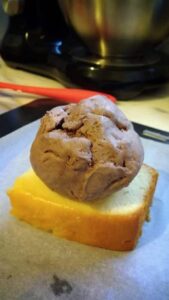
Line a tray with baking paper and place on it a nice thick slice of cake. Scoop some ice -cream on to your cake.
-
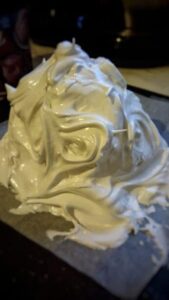
Use a spoon to dollop the meringue all over your cake and ice-cream. Make sure it’s completely covered!
-
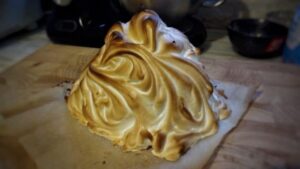
Bake at 230-250°C for 2-3 minutes.
-
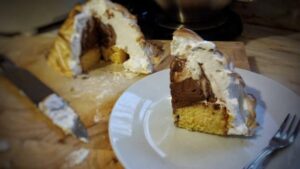
Remove from the oven, slice and serve!
-
Get the Unit of Work on Heat Energy here!
- What actually is heat?
- How does heat move through different materials?
- How does heat change the properties of materials and more!
Includes cross-curricular teaching ideas, student quizzes, a sample marking rubric, scope & sequences & more

-
School science visits since 2004!
– Curriculum-linked & award-winning incursions.
– Over 40 primary & high school programs to choose from.
– Designed by experienced educators.
– Over 2 million students reached.
– Face to face incursions & online programs available.
– Early learning centre visits too!
-

The science behind it
Why Does This Happen?
The Science of Baked Alaska
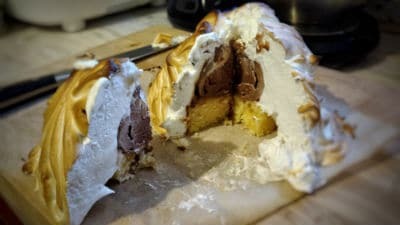
How can you put ice cream in a hot oven without it melting into a sugary puddle? The Baked Alaska is a delicious demonstration of thermodynamics and thermal insulation. It proves that heat doesn’t always move through materials at the same rate.
Heat Transfer and Insulators
Heat naturally moves from hotter objects to cooler ones through conduction. However, some materials are much better at blocking this movement than others.
- Trapped Air: Air is a poor conductor of heat, making it an excellent thermal insulator. When you whip egg whites to make meringue, you are creating a stable foam filled with millions of tiny air bubbles.
- Blocking the Oven: These air pockets act as a shield. Even though the oven is hot, the heat has to fight its way through all those layers of air to reach the centre. If the meringue is thick enough and the cooking time is short, the ice cream stays frozen.
- Real-World Application: We use this same principle to insulate our homes. Materials like fibreglass batts or polystyrene foam work because they trap “still air,” preventing heat from escaping your house in winter or entering in summer.
Variables to test
Find out more on variable testing here.
-
Insulation Necessity
Does it really need the meringue? Try putting a scoop of ice cream in an oven-proof dish next to the Baked Alaska. How does the melting rate compare when the ice cream is exposed directly to the heat? -
Aeration (Whipping Time)
Does the amount of air matter? Compare a meringue whipped to “soft peaks” versus “stiff peaks.” Does a denser foam insulate as well as a light, airy one? -
Structural Integrity (Sugar Content)
Sugar helps stabilise the egg white proteins. Try making one with very little sugar—does the foam structure collapse in the heat, allowing the ice cream to melt faster? -
Method of Heat Transfer
Compare an oven, a grill, and a blowtorch (adults only for this!). Which method browns the meringue (the Maillard reaction) fast enough to keep the ice cream cold?

Teacher's note
Curriculums change, and so does the way you implement them in your classroom. Please use your own experience and knowledge of your students to use these resources to best effect for student learning.
Still want the curriculum links?
Here are the suggested links:
Australian Curriculum (ACARA) Science:
NSW Science syllabuses:
Victorian Curriculum Science:
Want this experiment — and many more — running in your classroom?
Have us visit your school — every student gets three hands-on experiments in 60–90 minutes with a qualified presenter.








