
Why does ice float?
Find out why ice floats with this simple science experiment using common materials. A great activity for the kids to try out!
Adult supervision for setup
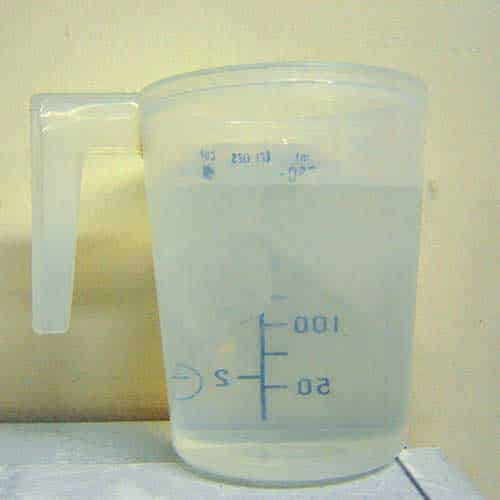
You will need
- Ice cubes
- 100mL Methylated spirits (Warning: Flammable)
- 100mL Water
- Two measuring jugs with gradations
- Measuring scales (preferably sensitive)
- Adult Supervision
Method
-
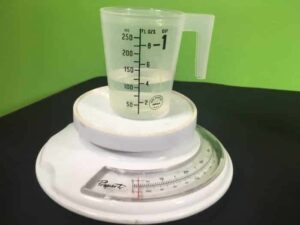
Measure the weight of each liquid. Which one is lighter?
-
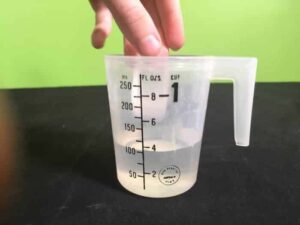
Place an ice cube in the water. Using the gradations on the side of the jug, try to estimate how much of the ice cube is above water compared to below the water.
-
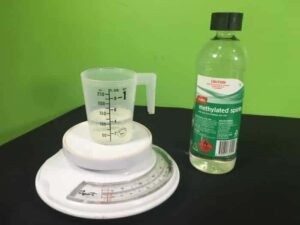
Place an ice cube in the Methylated spirits. Describe what happened.
Try different liquids to see their effect on the ice.
-
Get the Unit of Work on Water Science here!
- Explore the water cycle
- Learn about cohesion, adhesion & capillary action
- From water currents to floatation, join us to explore water science!
Includes cross-curricular teaching ideas, student quizzes, a sample marking rubric, scope & sequences & more
-
School science visits since 2004!
– Curriculum-linked & award-winning incursions.
– Over 40 primary & high school programs to choose from.
– Designed by experienced educators.
– Over 2 million students reached.
– Face to face incursions & online programs available.
– Early learning centre visits too!
-

The science behind it
Why Does This Happen?
The Science of Why Ice Floats
Everything around us is made of matter, but how tightly that matter is packed together is known as density. We calculate this using the formula:
Density = Mass ÷ Volume
Most substances get denser as they freeze because their molecules slow down and pack closer together. Water is a rare and amazing exception! Because of hydrogen bonding, water molecules form a rigid, hexagonal lattice structure as they freeze. This crystal lattice actually pushes the molecules further apart than they were in liquid form, increasing the volume and making ice less dense than the liquid water it sits in.
The density of liquid water is approximately 1.00 g/cm³, while ice is only about 0.917 g/cm³. Because these values are so close, only about 11% of an iceberg typically shows above the surface—the rest is hidden beneath!
This has huge implications for our planet. Floating ice (like sea ice) displaces its own weight in water, meaning if it melts, global sea levels don’t change much. However, land ice—like the massive ice sheets over Greenland and Antarctica—is different. If these melt, they add “new” water to the ocean, causing sea levels to rise.
Interestingly, ice doesn’t float in everything. Methylated spirits is mostly ethanol, which has a low density of around 0.789 g/cm³. Since ice is denser than ethanol, it will sink straight to the bottom!
Variables to test
Find out more on variables here.
-
Liquid Comparison
What happens if you place the ice cube in canola oil or glucose syrup? Compare the results to see which liquids are denser than ice and which are “lighter.” -
Thermal Expansion
Does it matter if the liquid is cold versus warm? Warm water is slightly less dense than cold water—could an ice cube sink further in a warm glass? -
Salinity & Buoyancy
Does ice float higher in salty seawater than in fresh tap water? Salt increases the density of water, which provides more buoyant force to the ice. -
Internal Composition
Freeze an ice cube with a small object (like a pebble) inside. How does adding mass without changing the volume much affect the overall average density of the cube?
By testing these variables, you are using the scientific method to see how density dictates whether an object sinks or swims!

Teacher's note
Curriculums change, and so does the way you implement them in your classroom. Please use your own experience and knowledge of your students to use these resources to best effect for student learning.
Still want the curriculum links?
Here are the suggested links:
Australian Curriculum (ACARA) Science:
NSW Science syllabuses:
Victorian Curriculum Science:
Want this experiment — and many more — running in your classroom?
Have us visit your school — every student gets three hands-on experiments in 60–90 minutes with a qualified presenter.








