



Science Show Activities
- Colour mixing – Mix primary light colours … why are the secondary colours different to paint?
- Bubble Films – See light split through a bubble film. Nice… and demonstrates wave theory
- Float that image – Create a 3D floating image hovering in mid-air
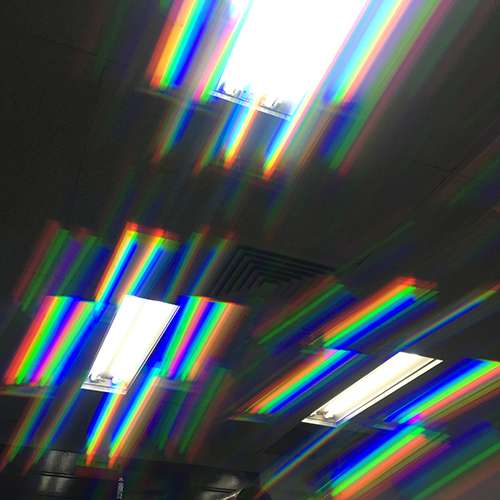
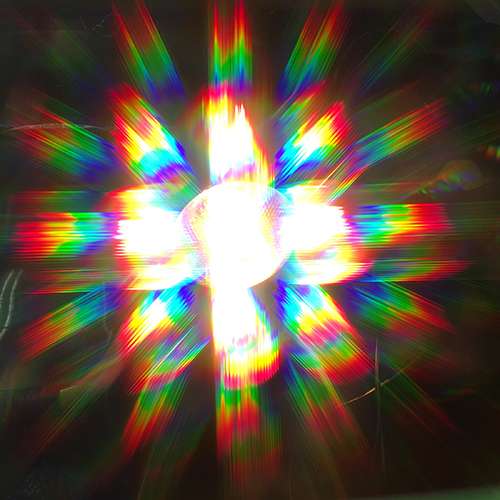
- Magic specs – See rainbows all around with these diffraction glasses
- Mirror boxes – Hidden compartments can create ‘magical’ illusions. How do they work?
- Flys eye scopes – What is the difference between human and insect eyes?
- Insect clickers – A simple device used in communications during wartime
- Music Box – An investigation into sound travelling through different materials.
- Slinky shake – A visual depiction on how soundwaves propagate through the air.
- Straw flute – A simple yet effective way of demonstrating a standing wave. Students love it!
- Xylophones – Compare different xylophones and their pitch
- Twirl tubes – Students work together to create chords of varying pitch. Great fun!
- Thunder drum – A demonstration on amplifying sound and blocking vibrations.
Science workshop content
Looking for a more specific focus?
If you want to dive deeper into a single topic, explore our dedicated
Light and Colour workshop or the
Science of Sound programme.
What Students Experience: The Light and Sound Lab
Our presenter first demonstrates colour addition vs subtraction using a colourful light display. Students then rotate through hands-on stations to explore refraction, reflection, image formation, and optical illusions. We investigate how sound is created by vibrations, and how variables like length and speed dictate pitch. We conclude with demonstrations on sound travelling as a wave, connecting classroom theory to global research.
1. Spectrum Analysis
The session opens with high-impact demonstrations of the visible spectrum. Students witness the difference between mixing light (additive) and mixing pigments (subtractive) to understand how we perceive colour.
2. Hands-on Discovery
Students rotate through specialised stations to explore physical phenomena. They manipulate light through refraction and reflection and investigate how the physical properties of objects—like length and vibration speed—dictate pitch.
3. The Wave Finale
We bring both concepts together in a stunning conclusion, demonstrating how sound travels as a wave. We discuss real-world scientific applications, connecting classroom theory to global physics research.
Real Classroom Feedback
A fantastic day exploring light and sound! Our students loved the hands-on stations and the optical illusions. A great way to bring our Science unit to life.
Thank you Fizzics Education! The Light and Sound Lab was perfectly paced and highly engaging. The students learned so much about vibrations and waves.
A brilliant workshop. The girls were fully engaged in the investigation of light properties and sound waves. A spectacular finale!
⬅️ Swipe to see more examples ➡️
Our Commitment to Quality Science Education
A Trusted School Partner for 20 Years
Fizzics Education delivers reliable, syllabus-aligned visits that engage students and meet the practical requirements of the Australian classroom.
✓
✓

Australian Curriculum Mapping
Australian National Curriculum Mapping for all our science incursions
Australian ACARA Content Outcomes:
Science F-10 Version 9.0
Foundation
- explore the ways people make and use observations and questions to learn about the natural world AC9SFH01
- pose questions and make predictions based on experiences AC9SFI01
Year 2
- explore different actions to make sounds and how to make a variety of sounds, and recognise that sound energy causes objects to vibrate AC9S2U02
Year 1 & 2
- describe how people use science in their daily lives, including using patterns to make scientific predictions AC9S1H01, AC9S2H01
- pose questions to explore observed simple patterns and relationships and make predictions based on experiences AC9S1I01, AC9S2I01
- compare observations with predictions and others’ observations, consider if investigations are fair and identify further questions with guidance AC9S1I05, AC9S2I05
Year 3 & 4
- examine how people use data to develop scientific explanations AC9S3H01, AC9S4H01
- consider how people use scientific explanations to meet a need or solve a problem AC9S3H02, AC9S4H02
- pose questions to explore observed patterns and relationships and make predictions based on observations AC9S3I01, AC9S4I01
- compare findings with those of others, consider if investigations were fair, identify questions for further investigation and draw conclusions AC9S3I05, AC9S4I05
Year 5
- identify sources of light, recognise that light travels in a straight path and describe how shadows are formed and light can be reflected and refracted AC9S5U03
- explain observable properties of solids, liquids and gases by modelling the motion and arrangement of particles AC9S5U04
Year 5 & 6
- investigate how scientific knowledge is used by individuals and communities to identify problems, consider responses and make decisions AC9S5H02, AC9S6H02
- pose investigable questions to identify patterns and test relationships and make reasoned predictions AC9S5I01, AC9S6I01
- compare methods and findings with those of others, recognise possible sources of error, pose questions for further investigation and select evidence to draw reasoned conclusions AC9S5I05, AC9S6I05
Design and Technologies F-10 Version 9.0
Years 5 & 6
- explain how electrical energy can be transformed into movement, sound or light in a product or system AC9TDE6K02
Australian National Curriculum Mapping for all our science workshops & shows

NSW K-10 Science Syllabus Mapping
NSW K – 10 Science Syllabus mapping for all our incursions
NSW Science & Technology Syllabus Content
A student:
- describes common forms of energy and explores some characteristics of sound energy ST1-8PW-S
- investigates how forces and energy are used in products ST1-9PW-ST
- describes the characteristics and effects of common forms of energy, such as light and heat ST2-8PW-ST
- explains how the properties of materials determines their use for a range of purposes ST3-7MW-T
NSW Science and Technology K–6 Syllabus (Implementation from 2027)
For explanatory points & implementation advice for each dot point, please visit the NESA Science and Technology K–6 Curriculum site
Stage 1
ST1-SCI-01
measures and describes changes in living things, materials, movement, Earth and the sky
- Recognise that light and sound can travel through air, water and some solids and are affected by those materials
- Recognise that sound is created and carried by vibrations
- Test how different materials and actions affect the volume and pitch of sound
- Pose questions, test and describe how light can be reflected, refracted, dispersed or absorbed by materials
- Describe how translucent, transparent, opaque and reflective materials interact with light
ST1-PQU-01
poses questions based on observations and information to investigate cause and effect
Stage 2
ST2-PQU-01
poses questions to create fair tests that investigate the effects of energy on living things and physical systems
Stage 3
ST3-PQU-01
poses questions to identify variables and conducts fair tests to gather data
Print a PDF which details K to 6 mapping of all our NSW science visits

VIC Science Syllabus Content
VIC Curriculum F–10 Version 2.0
For explanatory points & implementation advice for each dot point, please visit the VIC Curriculum F-10 site.
Science
Foundation to Level 2
- sound can make materials vibrate and vibrating materials can make sound; different actions can be used to produce sounds of varying pitch and volume VC2S2U12
- objects can be made of one or more different materials; these materials have observable properties. VC2S2U04
- experiences can be used as a basis for posing questions to explore observed patterns and relationships, and to make predictions. VC2S2I01
- observations, findings and ideas can be shared with others by using everyday and some scientific vocabulary. VC2S2I06
Levels 3 & 4
- the properties of natural and made materials, including fibres, metals, glass and plastics, influence their use and re-use. VC2S4U05
- scientific investigations to answer questions or test predictions can be planned and conducted using provided scaffolds, including identifying the attributes of fair tests, and considering the safe use of materials and equipment. VC2S4I02
Levels 5 & 6
- light can be produced from many sources; light travels in a straight path, can form shadows, and can be absorbed, transmitted, reflected or refracted by objects. VC2S6U08
- repeatable scientific investigations to answer questions can be planned and conducted, including, as appropriate, deciding the variables to be changed, measured and controlled in fair tests, considering potential risks, planning for the safe and ethical use of equipment and materials, and obtaining permissions for investigations conducted on Country and Place or in protected areas. VC2S6I02
VIC F – 6 Science Syllabus mapping for all our incursions
Design and Technologies
Levels 5 & 6
- explain how electrical energy can be transformed into movement, sound or light in a product or system VC2TDE6C01
Print a PDF which details P to 6 mapping of all our VIC science visits
Session Requirements
👥 Capacity & Timing
👨🎓 Attendance: Max 32 students per class.
🏫 Target: Appropriate for Years 1 to 6.
⏰ Duration: 90 minutes.
🛠️ Set/Pack: 45 mins setup + 45 mins pack down.
📍 Space & Power
🏗️ Layout: 2 Tables arranged around a room. Chairs are not required.
🔌 Power: Access to 3 electrical power sockets.
🌑 Light Control: Ability to darken the room is essential.
🖥️ Handy to have: A whiteboard or screen in the room.
✨ Presentation Note: For us to provide the best possible learning experience, the materials used during the presentation may be varied to suit the conditions and the audience. Please chat with our presenter if there is a particular focus that you’d like us to cover.
🔍 Focus Areas: If you want to concentrate on just light or sound, check out our dedicated Light & Colour Workshop or the Science of Sound Workshop.
Did you know about our larger stage shows?
Designed to engage up to 240 students, pair this workshop with one of these school favourites:






