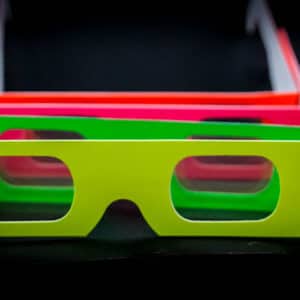
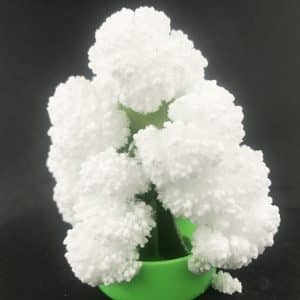
Curious Kids – Science of Toys Discover the science of toys; push/pull forces, light/sound & magnetism Enquire Now Station-based science activities! This science workshop utilises stations based around push and pull forces, gravity and energy change. Designed to complement the Physical Phenomena content strand for Early Stage 1 and Stage 1, your students investigate energy and use their senses to discover how the science activities and toys operate. OPTION: We can concentrate on ‘push and pull forces’ only if required. A great way to expand your physical phenomena science unit! Available as a primary school science incursion within Australia or as a video conference to any school around the globe! Trustpilot. Online Class Version We’ve run live interactive distance programs since 2010 and are highly experienced in making online classes engaging for students on a variety of web conferencing platforms. All of the same curriculum points will be covered, but the activities may vary from those listed for face-to-face incursions. Our online classes include demonstrations, Q&A, and hands-on activities (you will receive a materials list upon booking). Full child protections are in place We usually connect to classes & homes via Zoom, however if you wish to use a different software we can work with you on getting the connection live. If you connect with us via Zoom Full system requirements for Zoom here Each student should test their Zoom connection here. Once the date & time is arranged we will send you simple connection instructions (one click & you’re in!) Quick Links Past projects Requirements Cost per Science Show Free Science Resources Back to Primary Science Visits 150 Free Experiments Fizzics in the Media Australian Curriculum Mapping for all science workshops & shows Australian ACARA Content Outcomes: The way objects move depends on a variety of factors, including their size and shape (ACSSU005). Light and sound are produced by a range of sources and can be sensed (ACSSU020). A push or a pull affects how an object moves or changes shape (ACSSU033). Australian National Curriculum Mapping for all our science workshops & shows NSW SCIENCE SYLLABUS CONTENT for all our incursions NSW K – 10 Science Syllabus mapping for all our incursions NSW Science Syllabus Content A student: STe-5PW-ST observes the way objects move and relates changes in motion to push and pull forces ST1-8PW-S describes common forms of energy and explores some characteristics of sound energy ST1-9PW-ST investigates how forces and energy are used in products Science and Technology K–6 Syllabus (Implementation from 2027) For explanatory points & implementation advice for each dot point, please visit the NESA Science and Technology K–6 Curriculum site STE-SCI-01 identifies and describes characteristics of living things, properties of materials, and movement – Recognise that properties of materials can be observed using the senses – Observe and manipulate materials to describe their properties using Tier 2 vocabulary – Test how the movement of an object is affected by its shape – Experiment to observe how an object’s movement is affected by its material STE-PQU-01 poses questions based on observations to collect data ST1-SCI-01 measures and describes changes in living things, materials, movement, Earth and the sky – Recognise that light and sound can travel through air, water and some solids and are affected by those materials – Pose questions, test and describe how light can be reflected, refracted, dispersed or absorbed by materials – Recognise that sound is created and carried by vibrations – Test how different materials and actions affect the volume and pitch of sound – Recognise that a force is a push or a pull that can make things either start moving, stop moving, change speed, direction or shape – Pose questions and test the effects of forces on an object’s movement – Test how frictional forces affect moving objects – Test how the force of magnetism affects objects ST1-PQU-01 poses questions based on observations and information to investigate cause and effect NSW K – 10 Science Syllabus mapping for all our incursions Print a PDF which details K to 6 mapping of all our science visits VIC Curriculum F–10 Version 2.0 objects can be made of one or more different materials; these materials have observable properties. VC2S2U04 materials can be changed physically by different actions without changing their material composition, including by bending, twisting, stretching, crushing, squashing and breaking into smaller pieces. VC2S2U06 the way objects move depends on a variety of factors including their size, shape and material. VC2S2U10 pushes and pulls are forces that can change an object’s movement or shape and can be represented in terms of strength and direction. VC2S2U11 experiences can be used as a basis for posing questions to explore observed patterns and relationships, and to make predictions. VC2S2I01 observations, findings and ideas can be shared with others by using everyday and some scientific vocabulary. VC2S2I06 solids, liquids and gases have observable properties; adding or removing heat energy leads to a change of state between solids, liquids and gases. VC2S4U04 the properties of natural and made materials, including fibres, metals, glass and plastics, influence their use and re-use. VC2S4U05 forces, including frictional, gravitational, electrostatic and magnetic, can be exerted by one object on another through direct contact or from a distance and affect the motion (speed and direction) of objects. VC2S4U10 scientific investigations to answer questions or test predictions can be planned and conducted using provided scaffolds, including identifying the attributes of fair tests, and considering the safe use of materials and equipment. VC2S4I02 light can be produced from many sources; light travels in a straight path, can form shadows, and can be absorbed, transmitted, reflected or refracted by objects. VC2S6U08 repeatable scientific investigations to answer questions can be planned and conducted, including, as appropriate, deciding the variables to be changed, measured and controlled in fair tests, considering potential risks, planning for the safe and ethical use of equipment and materials, and obtaining permissions for investigations conducted on Country and Place or in protected areas. VC2S6I02 VIC F – 6 Science Syllabus mapping for all our incursions Print a PDF which details P to 6 mapping of all our VIC science visits School Testimonials View All Croydon Park Public School Feedback on: K to 2 Curious Kids All students were totally engaged in the hands-on activities and extremely attentive during the demonstrations. Well planned, age appropriate and promoted higher order and lateral thinking. Highly recommended. Berala Public School Feedback on: K to 2 Curious Kids Students were very enthusiastic during the performance and discussed many of the forces explored following the show. All were active participants. [This] workshop was an excellent support & challenge to our 'powering on' unit of work. It demonstrated what we had been learning but also posed more questions and challenges. We appreciated the teacher workshop for professional learning. Highly recommended. Science Show Activities The Vortex Race the coins down the spiral! Mirror Mirages What makes the image hover in the air? X-rays sleuth Can you identify the animal? Balancing Birds Perch the birds on your head, shoulder, hand or foot Tornado Twister Create a tornado in a bottle! Slippery Snakes Try to hold onto these little critters Frog Flip Out! Push these frogs and watch them hop! Magic Microphones Make a sound, see the vibrations. Pin Head Make a 3D model of your body Rainmakers Make the balls spiral down, how does the noise happen? Marvelous Magnets Identify which items will stick to the magnetic wands Gyro-Fly Wheels How fast can you make the magnets spin? Optical Illusions How does your brain work Mega sphere This ball grows from 1 to 4 foot... it;s all about levers! Mixing your words A classic demonstration on psychology - can you beat the test? Magic glasses View the entire visible light spectrum through these cool glasses Vortex fog rings Shoot them across the room! Bicarb rocket Launch a film canister high! Nail chair See a demonstration on how forces can be spread out. Feedback on this school science incursion Trustpilot Requirements Appropriate for Years K to 2 with a maximum of 30 students per class Access to 1 electrical power socket and 12 tables Chairs are not required Duration 60 or 90 minutes, set up time 45 minutes and pack up time 45 minutes For us to provide the best possible learning experience, the materials used during the presentation may be varied to suit the conditions and the audience. Please chat with our presenter if there is a particular focus that you’d like us to cover. During Social Distancing – Contact us and we’ll tailor a program to suit both your school and the State’s social distancing requirements. Further details here Go further – Complete Units of Work to support your teaching! Hours of High-Quality videos, printable experiments, quizzes, vocabulary lists, Scope & sequences, cross-curricular teaching ideas, marking rubrics & more Save time & engage students in STEM Find out more! Did you know about our larger stage shows? Designed to engage groups of up to 240 students, pair this workshop with one of these school favourites! Big Science Big Fun tick tick BOOM! Destination Moon Food Science Show Deep Blue Oceans Cost $580 inc. GST for a 60-minute workshop or $660 inc. GST for a 90-minute workshop. Available as an online class anywhere in the world. Find out more here Go further with the Forces & Movement Unit of Work Find out about offers & discounts here! In a regional area? Find out how we can attend your school as part of a country science tour! Call 1300 856 828, or click below to make a booking for your primary school. Print a PDF for mapping of all our K to 6 science visits Trustpilot Find out more here Enquire Now Extension Ideas! STEM Full Day Accelerator - Primary Create a Full Day STEM Accelerator or join us for a rapid science upskill! For schools outside of metropolitan areas please contact us to discuss how this science workshop can be run online or visit your school as part of a regional visit. Click below to know more! Science Full day STEM accelerator – Primary Teachers Teacher Professional Learning – One hour STEM Ideation Coding Full Day TPL – Primary Teachers Online courses Read More STEM Full Day Accelerator - Primary Create a Full Day STEM Accelerator or join us for a rapid science upskill! For schools outside of metropolitan areas please contact us to discuss how this science workshop can be run online or visit your school as part of a regional visit. Click below to know more! Science Full day STEM accelerator – Primary Teachers Teacher Professional Learning – One hour STEM Ideation Coding Full Day TPL – Primary Teachers Online courses Read More Extension Ideas! Scientist Q & A Often students attend our science workshops and shows with questions that stem beyond the covered topic area. Ask a scientist aims to give students a chance to get their questions answered! Run as a 30-minute session at a cost of $70 inc. GST. Read More Scientist Q & A Often students attend our science workshops and shows with questions that stem beyond the covered topic area. Ask a scientist aims to give students a chance to get their questions answered! Run as a 30-minute session at a cost of $70 inc. GST. Read More Fizzics Education Awards Related Shows A Grant Option for Schools! We work with you to create a STEM program that meets your grant submission needs. >40 Shows & Workshops for K to 6 Available across NSW, VIC, ACT, QLD or beyond! Chemical Science Year 2 Digital Technologies Year 3 Earth and Space Year 4 Health and Physical Education Year 5 Physical Science Year 6 New South Wales Whole School Victoria Teacher Professional Development Queensland South Australia Australian Capital Territory STEM Kindergarten Biological Science Year 1 Read More Enquire Now Earth and Space K to 2 Years K to 2 Maximum 30 students Science workshop (NSW & VIC) 60 or 90 minutes Online Class Available Earth and Space Human Endeavor Physical Science New South Wales Victoria Kindergarten Year 1 Year 2 Read More Enquire Now …tick, tick BOOM! Years K to 6 Maximum 240 students Science show (NSW, ACT & VIC) 60 minutes Human Endeavor Physical Science Science Inquiry New South Wales Victoria Year 3 Year 4 Year 5 Year 6 Whole School Chemical Science Read More Enquire Now
Australian ACARA Content Outcomes: The way objects move depends on a variety of factors, including their size and shape (ACSSU005). Light and sound are produced by a range of sources and can be sensed (ACSSU020). A push or a pull affects how an object moves or changes shape (ACSSU033). Australian National Curriculum Mapping for all our science workshops & shows
NSW K – 10 Science Syllabus mapping for all our incursions NSW Science Syllabus Content A student: STe-5PW-ST observes the way objects move and relates changes in motion to push and pull forces ST1-8PW-S describes common forms of energy and explores some characteristics of sound energy ST1-9PW-ST investigates how forces and energy are used in products Science and Technology K–6 Syllabus (Implementation from 2027) For explanatory points & implementation advice for each dot point, please visit the NESA Science and Technology K–6 Curriculum site STE-SCI-01 identifies and describes characteristics of living things, properties of materials, and movement – Recognise that properties of materials can be observed using the senses – Observe and manipulate materials to describe their properties using Tier 2 vocabulary – Test how the movement of an object is affected by its shape – Experiment to observe how an object’s movement is affected by its material STE-PQU-01 poses questions based on observations to collect data ST1-SCI-01 measures and describes changes in living things, materials, movement, Earth and the sky – Recognise that light and sound can travel through air, water and some solids and are affected by those materials – Pose questions, test and describe how light can be reflected, refracted, dispersed or absorbed by materials – Recognise that sound is created and carried by vibrations – Test how different materials and actions affect the volume and pitch of sound – Recognise that a force is a push or a pull that can make things either start moving, stop moving, change speed, direction or shape – Pose questions and test the effects of forces on an object’s movement – Test how frictional forces affect moving objects – Test how the force of magnetism affects objects ST1-PQU-01 poses questions based on observations and information to investigate cause and effect NSW K – 10 Science Syllabus mapping for all our incursions Print a PDF which details K to 6 mapping of all our science visits VIC Curriculum F–10 Version 2.0 objects can be made of one or more different materials; these materials have observable properties. VC2S2U04 materials can be changed physically by different actions without changing their material composition, including by bending, twisting, stretching, crushing, squashing and breaking into smaller pieces. VC2S2U06 the way objects move depends on a variety of factors including their size, shape and material. VC2S2U10 pushes and pulls are forces that can change an object’s movement or shape and can be represented in terms of strength and direction. VC2S2U11 experiences can be used as a basis for posing questions to explore observed patterns and relationships, and to make predictions. VC2S2I01 observations, findings and ideas can be shared with others by using everyday and some scientific vocabulary. VC2S2I06 solids, liquids and gases have observable properties; adding or removing heat energy leads to a change of state between solids, liquids and gases. VC2S4U04 the properties of natural and made materials, including fibres, metals, glass and plastics, influence their use and re-use. VC2S4U05 forces, including frictional, gravitational, electrostatic and magnetic, can be exerted by one object on another through direct contact or from a distance and affect the motion (speed and direction) of objects. VC2S4U10 scientific investigations to answer questions or test predictions can be planned and conducted using provided scaffolds, including identifying the attributes of fair tests, and considering the safe use of materials and equipment. VC2S4I02 light can be produced from many sources; light travels in a straight path, can form shadows, and can be absorbed, transmitted, reflected or refracted by objects. VC2S6U08 repeatable scientific investigations to answer questions can be planned and conducted, including, as appropriate, deciding the variables to be changed, measured and controlled in fair tests, considering potential risks, planning for the safe and ethical use of equipment and materials, and obtaining permissions for investigations conducted on Country and Place or in protected areas. VC2S6I02 VIC F – 6 Science Syllabus mapping for all our incursions Print a PDF which details P to 6 mapping of all our VIC science visits
STEM Full Day Accelerator - Primary Create a Full Day STEM Accelerator or join us for a rapid science upskill! For schools outside of metropolitan areas please contact us to discuss how this science workshop can be run online or visit your school as part of a regional visit. Click below to know more! Science Full day STEM accelerator – Primary Teachers Teacher Professional Learning – One hour STEM Ideation Coding Full Day TPL – Primary Teachers Online courses Read More
STEM Full Day Accelerator - Primary Create a Full Day STEM Accelerator or join us for a rapid science upskill! For schools outside of metropolitan areas please contact us to discuss how this science workshop can be run online or visit your school as part of a regional visit. Click below to know more! Science Full day STEM accelerator – Primary Teachers Teacher Professional Learning – One hour STEM Ideation Coding Full Day TPL – Primary Teachers Online courses Read More
Scientist Q & A Often students attend our science workshops and shows with questions that stem beyond the covered topic area. Ask a scientist aims to give students a chance to get their questions answered! Run as a 30-minute session at a cost of $70 inc. GST. Read More
Scientist Q & A Often students attend our science workshops and shows with questions that stem beyond the covered topic area. Ask a scientist aims to give students a chance to get their questions answered! Run as a 30-minute session at a cost of $70 inc. GST. Read More
This website uses cookies to improve user experience. By using our website you consent to all cookies in accordance with our Cookie Policy.
Thank you for looking to subscribing to our newsletter 🙂 Through this service you’ll be first to know about the newest free experiments, science news and special offers. PLUS: Get a free Kitchen Chemistry Booklet with >20 experiments, how to use variables plus a handy template!
Please fill out the details below and an email will be sent to you. Once you get that just click on the link to confirm your subscription and you're all done!