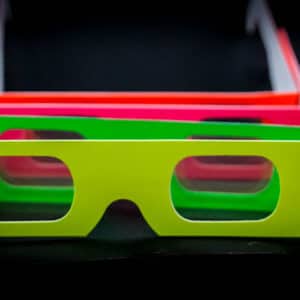
BIG SCIENCE BIG FUN! An awesome science show performance with all the cool stuff for your next school visit! Enquire Now See gigantic bubbles, flying toilet paper, hair-raising electricity experiments, bubbling liquid nitrogen demos, levitating beach balls, volunteers on a nail chair, a giant gyroscope, fire balls, coloured shadows, a flame equalizer and much more! This great ‘science sampler’ was originally developed as the main stage show for 2008 Australian Science Festival in Canberra as a way of introducing science into the greater community. Perfect for schools that want a professional large stage performance in their school hall, with an added bonus that a show catering up to 240 students at a time is also more economical per student. Students love this as an end of school term treat or as something to get the kids back into science! Trustpilot Quick Links Past projects Requirements Cost per Science Show Free Science Resources Back to Secondary Science Incursions 150 Free Experiments Fizzics in the Media Australian Curriculum Mapping for all science workshops & shows Australian National Curriculum Mapping for all our science incursions Australian ACARA Content Outcomes: Science F-10 Version 9.0 Year 7 investigate and represent balanced and unbalanced forces, including gravitational force, acting on objects, and relate changes in an object’s motion to its mass and the magnitude and direction of forces acting on it AC9S7U04 use particle theory to describe the arrangement of particles in a substance, including the motion of and attraction between particles, and relate this to the properties of the substance AC9S7U05 Year 8 compare physical and chemical changes and identify indicators of energy change in chemical reactions AC9S8U07 Year 7 & 8 explain how new evidence or different perspectives can lead to changes in scientific knowledge AC9S7H01 AC9S8H01 examine how proposed scientific responses to contemporary issues may impact on society and explore ethical, environmental, social and economic considerations AC9S7H03 AC9S8H03 develop investigable questions, reasoned predictions and hypotheses to explore scientific models, identify patterns and test relationships AC9S7I01 AC9S8I01 analyse data and information to describe patterns, trends and relationships and identify anomalies AC9S7I05 AC9S8I05 construct evidence-based arguments to support conclusions or evaluate claims and consider any ethical issues and cultural protocols associated with using or citing secondary data or information AC9S7I07 AC9S8I07 Year 9 use wave and particle models to describe energy transfer through different mediums and examine the usefulness of each model for explaining phenomena AC9S9U04 Year 9 & 10 explain how scientific knowledge is validated and refined, including the role of publication and peer review AC9S9H01 AC9S10H01 Investigate how advances in technologies enable advances in science, and how science has contributed to developments in technologies and engineering AC9S9H02 AC9S10H02 develop investigable questions, reasoned predictions and hypotheses to test relationships and develop explanatory models AC9S9I01 AC9S10I01 analyse and connect a variety of data and information to identify and explain patterns, trends, relationships and anomalies AC9S9I05 AC9S10I05 construct arguments based on analysis of a variety of evidence to support conclusions or evaluate claims, and consider any ethical issues and cultural protocols associated with accessing, using or citing secondary data or information AC9S9I07 AC9S10I07 Australian National Curriculum Mapping for all our science workshops & shows NSW SCIENCE SYLLABUS CONTENT for all our incursions NSW Science 7–10 Syllabus (2023) Stage 4 A student: identifies questions and makes predictions to guide scientific investigations SC4-WS-02 – Identify questions and problems that can be investigated scientifically – Make predictions based on scientific knowledge and observations explains how the properties of substances enable separation in a range of techniques SC4-SOL-01 – Compare the properties of dilute, concentrated, saturated and supersaturated solutions explains how uses of elements and compounds are influenced by scientific understanding and discoveries relating to their properties SC4-PRT-01 – Identify some common elements in everyday objects – Conduct a series of investigations to identify and compare the physical properties of metals, non-metals and metal explains how energy causes geological and chemical change SC4-CHG-01 – Undertake experiments to identify the indicators of physical and chemical changes – Describe the initial and final changes that are observed in a chemical reaction, including writing a word equation to represent a chemical reaction. describes the effects of forces in everyday contexts SC4-FOR-01 – Explain forces as either direct (contact) or indirect (non-contact) – Conduct a practical investigation on the effects of a range of direct and indirect forces – Investigate examples of forces and magnetism in familiar contexts Stage 5 asks questions or makes predictions using observations SCLS-WS-02 – Ask questions about familiar objects and events based on observations – Make predictions based on observations explains the factors that affect the rate of chemical reactions SC5-RXN-02 – Investigate and explain how concentration, surface area, temperature and catalysts affect the rate of reactions describes the features and applications of different forms of waves SC5-WAM-01 – Use the wave model to explain how energy is transferred without the net transfer of particles – Use models to compare and describe the features of transverse and longitudinal waves – Compare the different wave regions of the electromagnetic spectrum – Investigate the features of waves, including amplitude, frequency, speed and wavelength by exploring a range of wave types – Investigate applications of absorption, reflection and refraction in everyday life NSW K – 10 Science Syllabus mapping for all our NSW incursions VIC Curriculum F–10 Version 2.0 For explanatory points & implementation advice for each dot point, please visit the VIC Curriculum F-10 site. Levels 7 and 8 the particle and kinetic theories of matter can be used to describe the arrangement and motion of particles in a substance, including the attraction between particles, and to explain the properties and behaviour of substances, including melting point, boiling point, density, compressibility, gas pressure, viscosity, diffusion, sublimation, and expansion and contraction. VC2S8U05 physical changes can be distinguished from chemical changes; a chemical change can be identified by a colour change, a temperature change, the production of a gas (including laboratory preparation and testing of oxygen, carbon dioxide and hydrogen gases) or the formation of a precipitate. VC2S8U08 balanced and unbalanced forces acting on objects, including gravitational force, may be investigated and represented using force diagrams; changes in an object’s motion can be related to its mass and the magnitude and direction of the forces acting on it. VC2S8U14 energy exists in different forms, including thermal, chemical, gravitational and elastic, and may be classified as kinetic or potential; energy transfers (conduction, convection and radiation) and transformations occur in simple systems and can be analysed in terms of energy efficiency. VC2S8U15 investigable questions, reasoned predictions and hypotheses can be developed in guiding investigations to identify patterns, test relationships and analyse and evaluate scientific models. VC2S8I01 scientific methods, conclusions and claims can be analysed to identify assumptions, possible sources of error, conflicting evidence and unanswered questions. VC2S8I06 evidence-based arguments can be constructed to support conclusions or evaluate claims, including consideration of ethical issues and protocols associated with using or citing secondary data or information. VC2S8I07 Levels 9 & 10 wave and particle models can be used to describe energy transfer (conduction, convection and radiation) through different media; waves (electromagnetic and mechanical) have different properties, features (including amplitude, wavelength, frequency and speed) and applications. VC2S10U14 chemical reactions are described by the Law of Conservation of Mass and involve the rearrangement of atoms; they can be modelled using a range of representations, including word and simple balanced chemical equations. VC2S10U08 chemical reactions include synthesis, decomposition and displacement reactions and can be classified as exothermic or endothermic; reaction rates are affected by factors including temperature, concentration, surface area of solid reactants, and catalysts. VC2S10U09 investigable questions, reasoned predictions and hypotheses can be used in guiding investigations to test and develop explanatory models and relationships. VC2S10I01 the validity and reproducibility of investigation methods and the validity of conclusions and claims can be evaluated, including by identifying assumptions, conflicting evidence, biases that may influence observations and conclusions, sources of error and areas of uncertainty. VC2S10I06 arguments based on a variety of evidence can be constructed to support conclusions or evaluate claims, including consideration of any ethical issues and cultural protocols associated with accessing, using or citing secondary data or information. VC2S10I07 School Testimonials View All Yarra Valley Grammar Feedback on: Big Science Big Fun It was seamless from start to finish. Ben the presenter was knowledgeable and really funny. He focused on energy which is the topic we are doing so the whole show was terrific. I thought the pracs were relevant and appropriate for the age group. MacKillop Catholic College Feedback on: tick tick BOOM! The presentation engaged our students and maybe lit another spark or two of interest in them. Thank you very much! Science Show Demonstrations Air vortices Shooting compressed air rings over the class - discussion on pressure Bernoulli balls Float balls in mid-air, relating curved surfaces to wing design Coloured shadows Colour addition vs colour subtraction Fire ball Learn about the fire triangle in this highly visual demonstration Flying toilet paper Demonstration on how the Coanda effect helps planes to fly Giant gyroscope A student uses a giant gyroscope to spin on a rotating platform Gigantic bubbles Have a look at surface tension in a different way Laser sights How are lasers used in atmospheric research? Liquid Nitrogen Demos Flying glove, popping tins, nitrogen sprinkler, bubble column, fog and more Mega hoberman sphere An expanding sphere (1ft to 4ft). Gravity, forces, friction & big bang. Nail chair How can you sit on a nail chair and be OK? Dispelling magic myths... Newton colour wheel Colour addition experiment for the entire audience. Rubens Tube A 'flame equalizer', how does it work? Slinky Shake A visual representation of sound waves Van de Graf hair rise Opposite charges attract, like charges repel... related to a 'Fun fly stick' toy Flying foil plates Another version of liker charges repel Glowing fluorescent tube How does an electromagnetic field do this? A school science show visit that students love Feedback on the Big Science school incursion Trustpilot Requirements Appropriate for Years 7 to 10 with a maximum of 240 students per science show Access to 2 electrical power sockets and 3 tables Chairs are not required A white screen or whiteboard can be handy but not essential Duration 60 minutes, set up time 45 minutes and pack up time 45 minutes Ability to turn off your fire alarms if we are to run the Rubens tube or fireball demonstration For us to provide the best possible learning experience, the materials used during the presentation may be varied to suit the conditions and the audience. Please chat with our presenter if there is a particular focus that you’d like us to cover. During Social Distancing – Contact us and we’ll tailor a program to suit both your school and the State’s social distancing requirements. Further details here Cost $1560 inc. GST per science show performance (this works out at $6.50 inc. GST per student). Find out about offers & discounts here! In a regional area? Find out how we can attend your school as part of a country science tour! Call 1300 856 828, or click below to make a booking for your school. Print a PDF for mapping of all our science visits Trustpilot Find out more here Enquire Now Fizzics Education Awards Related Shows Stars & Planets Years 7 to 10 Maximum 30 students Science workshop 60 or 90 minutes Online Class Available Science Inquiry New South Wales Victoria Australian Capital Territory Year 7 Year 8 Year 9 Year 10 Earth and Space Human Endeavor Read More Enquire Now Geology Rocks! Years 7 to 10 Maximum 30 students Science Workshop (NSW & VIC only) 60 minutes Online Class Available Human Endeavor Science Inquiry New South Wales Victoria Year 7 Year 8 Year 9 Year 10 Earth and Space Read More Enquire Now Career School – High School (Years 10 -11) Years 10 to 11 Maximum 100 students School workshop 90 minutes Australian Capital Territory Year 10 Careers Year 11 New South Wales Victoria Read More Enquire Now
Australian National Curriculum Mapping for all our science incursions Australian ACARA Content Outcomes: Science F-10 Version 9.0 Year 7 investigate and represent balanced and unbalanced forces, including gravitational force, acting on objects, and relate changes in an object’s motion to its mass and the magnitude and direction of forces acting on it AC9S7U04 use particle theory to describe the arrangement of particles in a substance, including the motion of and attraction between particles, and relate this to the properties of the substance AC9S7U05 Year 8 compare physical and chemical changes and identify indicators of energy change in chemical reactions AC9S8U07 Year 7 & 8 explain how new evidence or different perspectives can lead to changes in scientific knowledge AC9S7H01 AC9S8H01 examine how proposed scientific responses to contemporary issues may impact on society and explore ethical, environmental, social and economic considerations AC9S7H03 AC9S8H03 develop investigable questions, reasoned predictions and hypotheses to explore scientific models, identify patterns and test relationships AC9S7I01 AC9S8I01 analyse data and information to describe patterns, trends and relationships and identify anomalies AC9S7I05 AC9S8I05 construct evidence-based arguments to support conclusions or evaluate claims and consider any ethical issues and cultural protocols associated with using or citing secondary data or information AC9S7I07 AC9S8I07 Year 9 use wave and particle models to describe energy transfer through different mediums and examine the usefulness of each model for explaining phenomena AC9S9U04 Year 9 & 10 explain how scientific knowledge is validated and refined, including the role of publication and peer review AC9S9H01 AC9S10H01 Investigate how advances in technologies enable advances in science, and how science has contributed to developments in technologies and engineering AC9S9H02 AC9S10H02 develop investigable questions, reasoned predictions and hypotheses to test relationships and develop explanatory models AC9S9I01 AC9S10I01 analyse and connect a variety of data and information to identify and explain patterns, trends, relationships and anomalies AC9S9I05 AC9S10I05 construct arguments based on analysis of a variety of evidence to support conclusions or evaluate claims, and consider any ethical issues and cultural protocols associated with accessing, using or citing secondary data or information AC9S9I07 AC9S10I07 Australian National Curriculum Mapping for all our science workshops & shows
NSW Science 7–10 Syllabus (2023) Stage 4 A student: identifies questions and makes predictions to guide scientific investigations SC4-WS-02 – Identify questions and problems that can be investigated scientifically – Make predictions based on scientific knowledge and observations explains how the properties of substances enable separation in a range of techniques SC4-SOL-01 – Compare the properties of dilute, concentrated, saturated and supersaturated solutions explains how uses of elements and compounds are influenced by scientific understanding and discoveries relating to their properties SC4-PRT-01 – Identify some common elements in everyday objects – Conduct a series of investigations to identify and compare the physical properties of metals, non-metals and metal explains how energy causes geological and chemical change SC4-CHG-01 – Undertake experiments to identify the indicators of physical and chemical changes – Describe the initial and final changes that are observed in a chemical reaction, including writing a word equation to represent a chemical reaction. describes the effects of forces in everyday contexts SC4-FOR-01 – Explain forces as either direct (contact) or indirect (non-contact) – Conduct a practical investigation on the effects of a range of direct and indirect forces – Investigate examples of forces and magnetism in familiar contexts Stage 5 asks questions or makes predictions using observations SCLS-WS-02 – Ask questions about familiar objects and events based on observations – Make predictions based on observations explains the factors that affect the rate of chemical reactions SC5-RXN-02 – Investigate and explain how concentration, surface area, temperature and catalysts affect the rate of reactions describes the features and applications of different forms of waves SC5-WAM-01 – Use the wave model to explain how energy is transferred without the net transfer of particles – Use models to compare and describe the features of transverse and longitudinal waves – Compare the different wave regions of the electromagnetic spectrum – Investigate the features of waves, including amplitude, frequency, speed and wavelength by exploring a range of wave types – Investigate applications of absorption, reflection and refraction in everyday life NSW K – 10 Science Syllabus mapping for all our NSW incursions VIC Curriculum F–10 Version 2.0 For explanatory points & implementation advice for each dot point, please visit the VIC Curriculum F-10 site. Levels 7 and 8 the particle and kinetic theories of matter can be used to describe the arrangement and motion of particles in a substance, including the attraction between particles, and to explain the properties and behaviour of substances, including melting point, boiling point, density, compressibility, gas pressure, viscosity, diffusion, sublimation, and expansion and contraction. VC2S8U05 physical changes can be distinguished from chemical changes; a chemical change can be identified by a colour change, a temperature change, the production of a gas (including laboratory preparation and testing of oxygen, carbon dioxide and hydrogen gases) or the formation of a precipitate. VC2S8U08 balanced and unbalanced forces acting on objects, including gravitational force, may be investigated and represented using force diagrams; changes in an object’s motion can be related to its mass and the magnitude and direction of the forces acting on it. VC2S8U14 energy exists in different forms, including thermal, chemical, gravitational and elastic, and may be classified as kinetic or potential; energy transfers (conduction, convection and radiation) and transformations occur in simple systems and can be analysed in terms of energy efficiency. VC2S8U15 investigable questions, reasoned predictions and hypotheses can be developed in guiding investigations to identify patterns, test relationships and analyse and evaluate scientific models. VC2S8I01 scientific methods, conclusions and claims can be analysed to identify assumptions, possible sources of error, conflicting evidence and unanswered questions. VC2S8I06 evidence-based arguments can be constructed to support conclusions or evaluate claims, including consideration of ethical issues and protocols associated with using or citing secondary data or information. VC2S8I07 Levels 9 & 10 wave and particle models can be used to describe energy transfer (conduction, convection and radiation) through different media; waves (electromagnetic and mechanical) have different properties, features (including amplitude, wavelength, frequency and speed) and applications. VC2S10U14 chemical reactions are described by the Law of Conservation of Mass and involve the rearrangement of atoms; they can be modelled using a range of representations, including word and simple balanced chemical equations. VC2S10U08 chemical reactions include synthesis, decomposition and displacement reactions and can be classified as exothermic or endothermic; reaction rates are affected by factors including temperature, concentration, surface area of solid reactants, and catalysts. VC2S10U09 investigable questions, reasoned predictions and hypotheses can be used in guiding investigations to test and develop explanatory models and relationships. VC2S10I01 the validity and reproducibility of investigation methods and the validity of conclusions and claims can be evaluated, including by identifying assumptions, conflicting evidence, biases that may influence observations and conclusions, sources of error and areas of uncertainty. VC2S10I06 arguments based on a variety of evidence can be constructed to support conclusions or evaluate claims, including consideration of any ethical issues and cultural protocols associated with accessing, using or citing secondary data or information. VC2S10I07
This website uses cookies to improve user experience. By using our website you consent to all cookies in accordance with our Cookie Policy.
Thank you for looking to subscribing to our newsletter 🙂 Through this service you’ll be first to know about the newest free experiments, science news and special offers. PLUS: Get a free Kitchen Chemistry Booklet with >20 experiments, how to use variables plus a handy template!
Please fill out the details below and an email will be sent to you. Once you get that just click on the link to confirm your subscription and you're all done!