
Make A Simple Compass
Learn how to make a simple compass using materals that can be found around the house. Learn about the magnetic field surrounding the Earth as well!
Adult supervision for setup
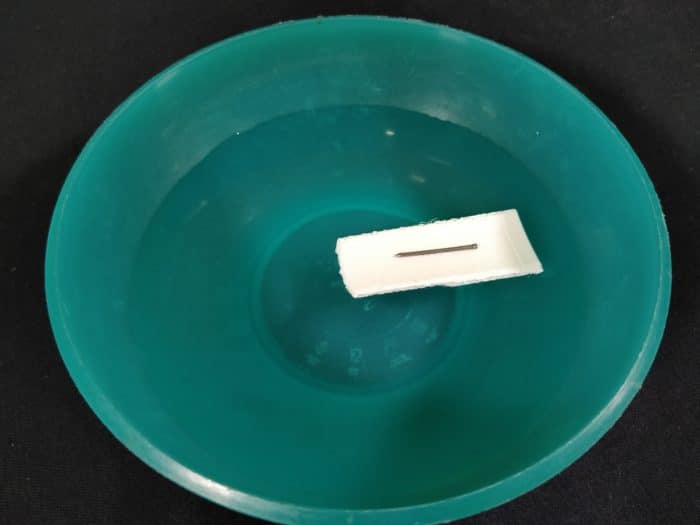
You will need
- One iron needle
- A small piece of Styrofoam
- One bar magnet
- One flat pie plate
Method
-
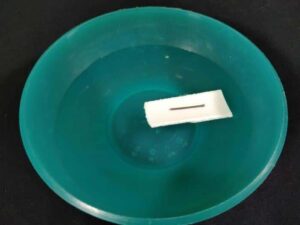
Fill the pie plate with water to about 3cm in depth.
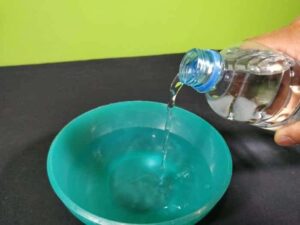
-
Float the Styrofoam in the middle of the plate.
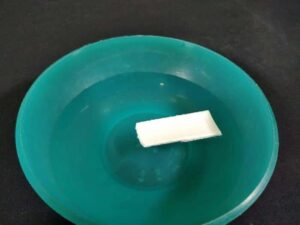
-
Carefully stroke the needle lengthways along the bar magnet, around 30 times.
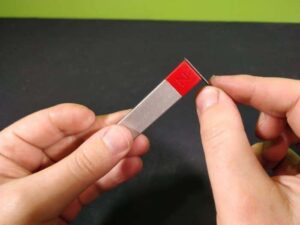
-
Gently place the needle on the Styrofoam and watch what happens.
-
Get the Electricity & Magnetism Unit of Work here!
- How does electricity actually flow?
- What makes magnets become magnetic?
- Why is there electromagnetism and what does this tell us about electricity & magnetism?
- From series & parallel circuits to conductors & insulators, there’s a lot to explore & learn!
Includes cross-curricular teaching ideas, student quizzes, a sample marking rubric, scope & sequences & more.

-
School science visits since 2004!
– Curriculum-linked & award-winning incursions.
– Over 40 primary & high school programs to choose from.
– Designed by experienced educators.
– Over 2 million students reached.
– Face to face incursions & online programs available.
– Early learning centre visits too!
-

The science behind it
Why Does This Happen?
The Science of a Simple Compass
The Earth behaves like one gigantic bar magnet. This massive magnetic field is generated by the “geodynamo” effect—the constant swirling of molten iron and nickel in the Earth’s outer core. A compass is simply a smaller magnet that is free to spin so it can align itself with this global field.
Magnetic Domains and Alignment
An iron needle is made up of tiny regions called magnetic domains. In a normal needle, these domains point in all different directions, canceling each other out.
- Magnetizing the Needle: By rubbing a strong magnet along the needle in one direction, you force these tiny domains to “line up” and point the same way. This turns the needle into a temporary magnet.
- Reducing Friction: If you place the needle on a table, friction prevents it from moving. By floating it on water, you provide a near-frictionless environment, allowing the torque from Earth’s magnetic field to pull the needle until it points toward Magnetic North.
A History of Navigation
This technology has been used for centuries. Early navigators used “lodestone”—a naturally magnetized mineral called magnetite. The name lodestone literally means “the stone that leads.” Before GPS and modern maps, this simple interaction between iron and the Earth’s core was the only way to find your way across the open ocean.
Variables to test
Find out more on variables here.
-
Magnetic Saturation
How many strokes along the magnet do you need to do before it works? Is there a point where more rubbing no longer makes the needle stronger? -
Field Strength
Change the strength of the magnet (Safety: use adult help with strong neodymium magnets!). Does a stronger magnetic field align the domains more effectively? -
Ferromagnetism
Would this work with pieces of copper, aluminum, or zinc? (Hint: Only certain metals are ferromagnetic, meaning their domains can stay aligned!) -
Interference
What happens if you place a cell phone or another piece of metal near your floating compass? How do local magnetic fields affect the needle’s accuracy?

Teacher's note
Curriculums change, and so does the way you implement them in your classroom. Please use your own experience and knowledge of your students to use these resources to best effect for student learning.
Still want the curriculum links?
Here are the suggested links:
Australian Curriculum (ACARA) Science:
NSW Science syllabuses:
Victorian Curriculum Science:
Want this experiment — and many more — running in your classroom?
Have us visit your school — every student gets three hands-on experiments in 60–90 minutes with a qualified presenter.








