
Electrostatic Soda Can Attractor
Explore static electricity using a balloon & a soda can… it's all about how opposites attract! Part of >150 free science experiments on the Fizzics site.
Adult supervision for setup
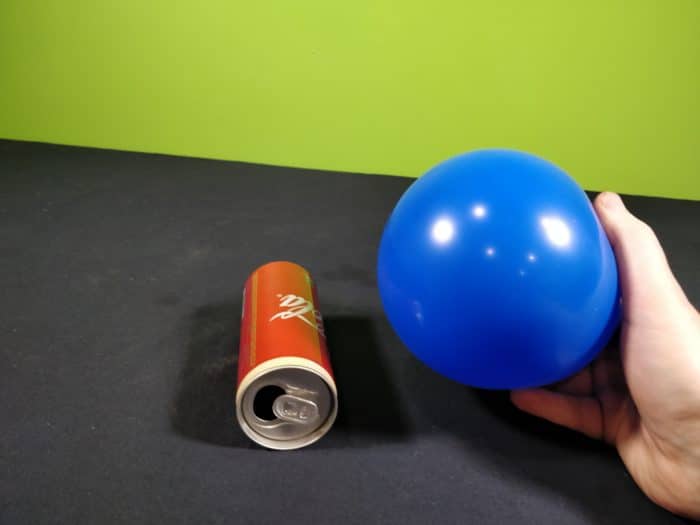
You will need
- One soft drink / soda can (the smaller 200mL cans work best)
- One balloon
- One human volunteer with hair!
Method
-
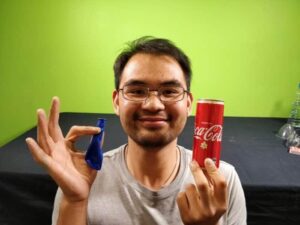
Make sure the can is empty and dry
-
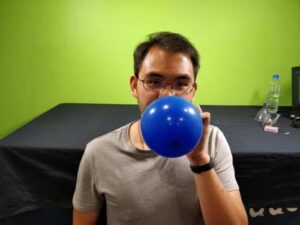
Blow up the balloon.
-
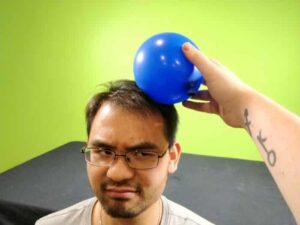
Rub the balloon vigorously on the head of your volunteer, until their hair starts to stands on end.
-
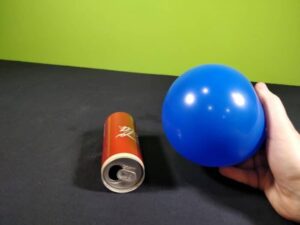
Lie the soft drink can on a flat surface, on its side.
Hold the part of the balloon that was touching your volunteer’s head close to the soft drink can, but do not touch it. You should see it roll towards the balloon, seemingly by itself!
Try getting the can to roll and then reverse the direction of motion without touching it.
All static electricity experiments work better on dry days. The greater humidity draws charge away from the objects that you’re using.
-
Get the Electricity & Magnetism Unit of Work here!
- How does electricity actually flow?
- What makes magnets become magnetic?
- Why is there electromagnetism and what does this tell us about electricity & magnetism?
- From series & parallel circuits to conductors & insulators, there’s a lot to explore & learn!
Includes cross-curricular teaching ideas, student quizzes, a sample marking rubric, scope & sequences & more.
-
School science visits since 2004!
– Curriculum-linked & award-winning incursions.
– Over 40 primary & high school programs to choose from.
– Designed by experienced educators.
– Over 2 million students reached.
– Face to face incursions & online programs available.
– Early learning centre visits too!
-

The science behind it
Why Does This Happen?
The Science of the Electrostatic Soda Can Attractor
Everything in the universe is made of atoms: tiny particles that contain protons (positive charge), electrons (negative charge), and neutrons (neutral). Usually, these charges are balanced, but they can be moved to create static electricity.
How the Balloon Becomes Charged
When you rub a balloon on your hair, some of the electrons from your hair “jump ship” onto the balloon.
- Positive Hair: Your hair is left with more protons than electrons, giving it an overall positive charge.
- Negative Balloon: The balloon now has an excess of electrons, giving it a negative charge. Because opposite charges attract, your hair stands up to try and get close to the balloon!
The “Tug of War” on the Can
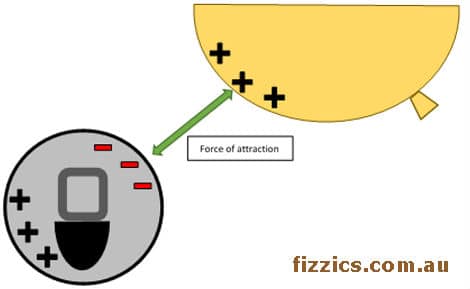
When the negatively charged balloon is brought near the aluminum soda can, it causes the charges inside the metal to shift through electrostatic induction.
- Repulsion: The negative electrons in the can are repelled by the negative balloon and move to the far side of the can.
- Attraction: This leaves the side of the can closest to the balloon with a net positive charge. This attraction is strong enough to pull the can across the table!
From Balloons to Lightning
Static electricity is the same force that gives you a zap on a trampoline or slide. On a massive scale, it causes lightning. Inside a storm cloud, tiny particles of ice bump into each other, causing a massive build-up of charge. When the electrical difference becomes too great, it is unleashed as a lightning bolt. A single moderate thunderstorm can produce over 700 megawatts of power!
Variables to test
Find out more on variables here.
- Apparatus Material: Try using a PVC plastic pipe instead of a balloon. Does the surface area or material type change the strength of the attraction?
- Conductivity and Moisture: If the soda can is wet inside, does it affect the results? Water can “leak” static charge away—does this slow the can down?
- Gas and Mass: Does a helium balloon work better than an air-filled one? Does a water balloon work at all, or is it too heavy to move?
- Metal Composition: Will this work with a steel spaghetti can? Aluminum is non-magnetic but highly conductive; does the mass of the steel make a difference?

Teacher's note
Curriculums change, and so does the way you implement them in your classroom. Please use your own experience and knowledge of your students to use these resources to best effect for student learning.
Still want the curriculum links?
Here are the suggested links:
Australian Curriculum (ACARA) Science:
NSW Science syllabuses:
Victorian Curriculum Science:
Want this experiment — and many more — running in your classroom?
Have us visit your school — every student gets three hands-on experiments in 60–90 minutes with a qualified presenter.








