
Sticky Static Balloons
Learn more about static electricity with this classic science experiment using water balloons! Part of >150 free science experiments for kids 🙂
Adult supervision for setup
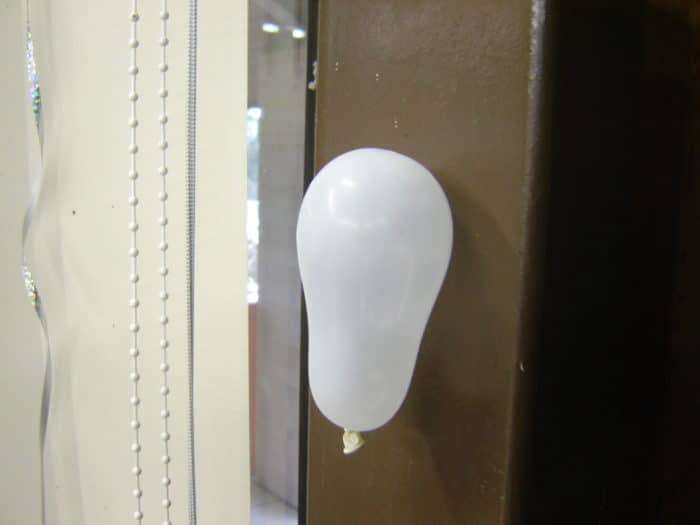
You will need
- One water balloon
- One balloon pump
- One cotton shirt
Method
-
Fill the water balloon with air using the balloon pump.
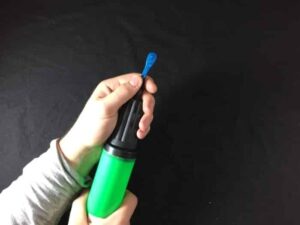
-
Rub the balloon on your shirt quickly for 10 seconds.
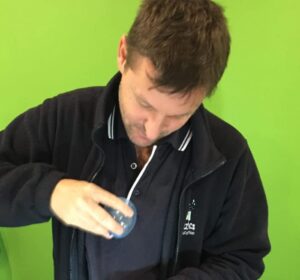
-
Place the balloon against a wall or your friend’s cheek!

-
Get the Electricity & Magnetism Unit of Work here!
- How does electricity actually flow?
- What makes magnets become magnetic?
- Why is there electromagnetism and what does this tell us about electricity & magnetism?
- From series & parallel circuits to conductors & insulators, there’s a lot to explore & learn!
Includes cross-curricular teaching ideas, student quizzes, a sample marking rubric, scope & sequences & more.

-
School science visits since 2004!
– Curriculum-linked & award-winning incursions.
– Over 40 primary & high school programs to choose from.
– Designed by experienced educators.
– Over 2 million students reached.
– Face to face incursions & online programs available.
– Early learning centre visits too!
-

The science behind it
Why Does This Happen?
The Science of Sticky Static Balloons
Have you ever rubbed a balloon on your hair and watched it stick to a wall? This isn’t glue—it’s Static Electricity! Everything in the universe is made of atoms, which contain protons (positive charge) and electrons (negative charge). Usually, these charges are perfectly balanced, making the object neutral.
Triboelectric Charging
When you rub a balloon against another material, like a woolly sweater or your hair, you are using friction to physically “strip” electrons from one surface and move them to the other.
- Charge Imbalance: The object that gains electrons becomes negatively charged, while the object that loses them becomes positively charged.
- Polarization: When you bring the negatively charged balloon near a neutral wall, it repels the electrons in the wall’s atoms. This leaves the surface of the wall with a temporary positive charge.
- The “Stick”: Because opposite charges attract, the negative balloon clings to the positive surface of the wall.
Interactive Simulation
See the invisible electrons move in real-time with this simulation from the University of Colorado PhET Project:
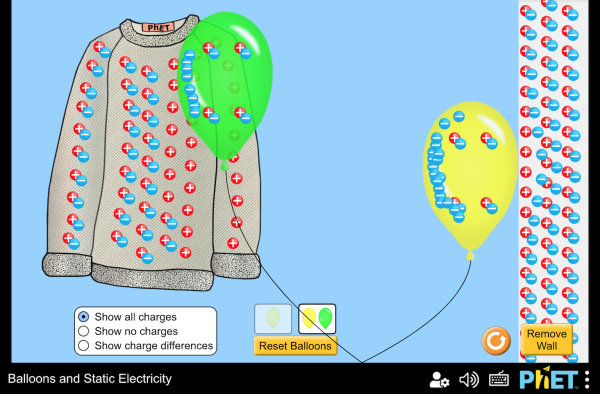
| Click to Run |
Variables to test
Find out more on variables here.
- Material Interaction: Try rubbing the balloon on different cloth materials (wool, polyester, cotton). Which material is the best electron donor?
- Energy Input: Does the speed of rubbing or the total number of rubs increase the strength of the charge? Is there a limit to how much charge a balloon can hold?
- Mass vs. Charge: Compare large balloons to small ones. Does a larger surface area help it stick better, or does the extra weight make it fall off sooner?
- Humidity: Does this work better on a dry day or a humid day? Water in the air is a conductor—does it help or hinder the static build-up?
Experiment Extension

Teacher's note
Curriculums change, and so does the way you implement them in your classroom. Please use your own experience and knowledge of your students to use these resources to best effect for student learning.
Still want the curriculum links?
Here are the suggested links:
Australian Curriculum (ACARA) Science:
NSW Science syllabuses:
Victorian Curriculum Science:
Want this experiment — and many more — running in your classroom?
Have us visit your school — every student gets three hands-on experiments in 60–90 minutes with a qualified presenter.








