
Rising ghosts halloween experiment
A halloween science experiment for kids! Make the ghosts rise with a little bit of static electricity… so easy to do! Find out more…
Adult supervision for setup
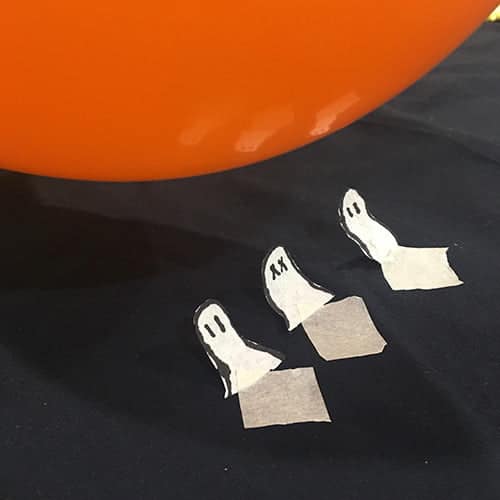
You will need
- A balloon
- A pen
- Sticky tape
- Scissors
- Paper towelling (for variable testing; try coffee filter paper, wrapping paper and regular paper too!)
- Woollen cloth (for variable testing; try cotton or satin too!)
- A desk
Method
-
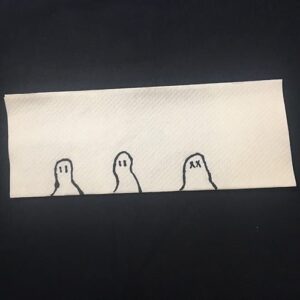
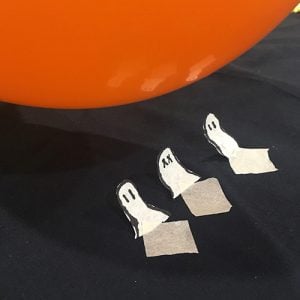
Draw some simple outlines of ghosts on your paper towelling. Extension idea; try different size ghosts for your experiment too!
-
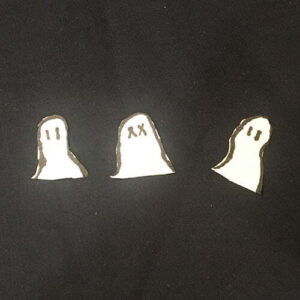
Cut out your paper ghosts and then tape them to your desk.
-
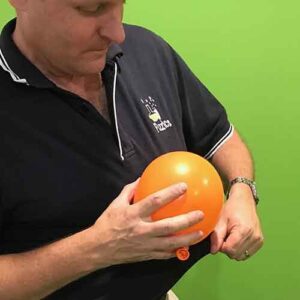
Rub your balloon on your shirt or alternatively on some woollen cloth.
-
Bring your charged balloon towards your taped paper ghosts. Can you get them to rise? Extension idea; why not try to get them to fly up to the balloon by not taping them to the desk?
-
Get the Electricity & Magnetism Unit of Work here!
- How does electricity actually flow?
- What makes magnets become magnetic?
- Why is there electromagnetism and what does this tell us about electricity & magnetism?
- From series & parallel circuits to conductors & insulators, there’s a lot to explore & learn!
Includes cross-curricular teaching ideas, student quizzes, a sample marking rubric, scope & sequences & more.
-
School science visits since 2004!
– Curriculum-linked & award-winning incursions.
– Over 40 primary & high school programs to choose from.
– Designed by experienced educators.
– Over 2 million students reached.
– Face to face incursions & online programs available.
– Early learning centre visits too!
-

The science behind it
Why does this work?
The Science of Rising Ghosts
The “Rising Ghosts” experiment is a spooky way to explore Static Electricity. Everything around us is made of atoms, which contain tiny particles called electrons (negative charge) and protons (positive charge). Usually, these charges are balanced, and objects are neutral.
Triboelectric Charging
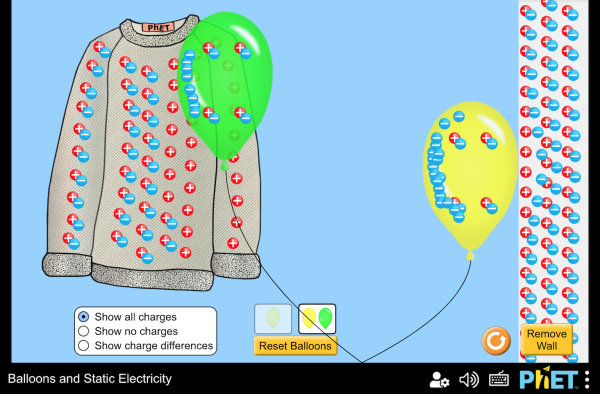
When you rub a balloon against your hair or a woolly sweater, you are using friction to move electrons from one material to another. This is called triboelectric charging.
- Electron Transfer: One object loses electrons and becomes positively charged, while the other gains electrons and becomes negatively charged.
- Electrostatic Attraction: In this experiment, the charged balloon creates an electric field. This field attracts the neutral paper ghosts by a process called induction, where the charges inside the paper shift slightly to create an attraction.
- The Force of Attraction: If the electrostatic force is stronger than the force of gravity, the ghosts will “rise” from the table and stick to the balloon!
Interactive Simulation
Check out this interactive simulation created by the University of Colorado PhET Project to see these invisible charges in action:
| Click to Run |
Variables to test
Find out more on variables here.
-
Mass and Surface Area
How big can you make the paper ghosts? At some point, the ghost will become too heavy for the electrostatic force to lift. -
Material Conductivity
What happens if you use cellophane or aluminum foil? Do different materials react more strongly to the balloon’s charge? -
Environmental Humidity
Try the experiment on a rainy day versus a dry day. Water molecules in the air can “bleed off” static charge. Does high humidity make the ghosts harder to lift? -
Paper Density
Does the thickness of the paper make a difference? Compare tissue paper to cardboard to see how weight-to-surface-area ratios affect the “flight.”
Extension Experiment


Teacher's note
Curriculums change, and so does the way you implement them in your classroom. Please use your own experience and knowledge of your students to use these resources to best effect for student learning.
Still want the curriculum links?
Here are the suggested links:
Australian Curriculum (ACARA) Science:
NSW Science syllabuses:
Victorian Curriculum Science:
Want this experiment — and many more — running in your classroom?
Have us visit your school — every student gets three hands-on experiments in 60–90 minutes with a qualified presenter.








