
A Simple Lemon Battery
Learn the science behind electrical currents and batteries at home with this simple, fun lemon and coin based experiment!
Adult supervision for setup
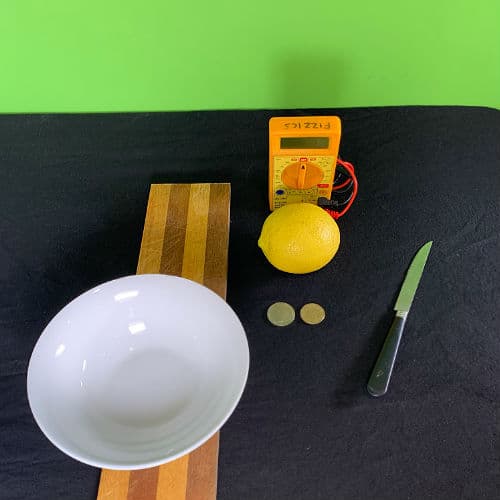
You will need
- One lemon or orange
- A copper coin or copper metal
- A 'silver' zinc coin or aluminium metal
- One knife (adults only)
- A chopping board
- A bowl
- A Multimeter (you can get this from a hardware or electronics store)
Method
-
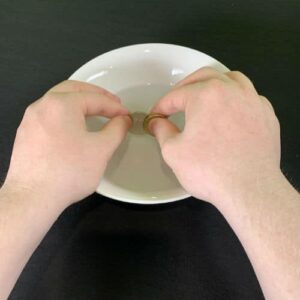
Wash the coins thoroughly and dry them.
-
Roll the lemon or orange across a bench, pushing down to ‘juice’ the lemon.

-
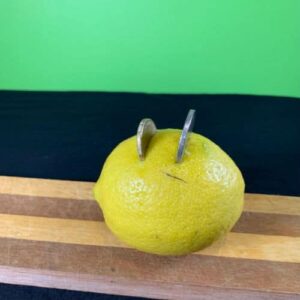
Ask an adult to carefully cut two small slits in the rind, fairly close together.
Place the coins into the slits, making sure they don’t touch each other.
-
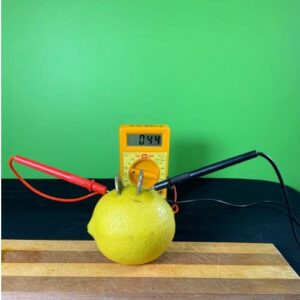
Try measuring the current created in the circuit using a multimeter. You will need to touch one electrode to one of the metals and then the other electrode to the other metal.
What happens if you swap electrodes from one metal to another?
-
Get the Electricity & Magnetism Unit of Work here!
- How does electricity actually flow?
- What makes magnets become magnetic?
- Why is there electromagnetism and what does this tell us about electricity & magnetism?
- From series & parallel circuits to conductors & insulators, there’s a lot to explore & learn!
Includes cross-curricular teaching ideas, student quizzes, a sample marking rubric, scope & sequences & more.

-
School science visits since 2004!
– Curriculum-linked & award-winning incursions.
– Over 40 primary & high school programs to choose from.
– Designed by experienced educators.
– Over 2 million students reached.
– Face to face incursions & online programs available.
– Early learning centre visits too!
-

The science behind it
Why Does This Happen?
The coins are made of two different materials, i.e. copper and zinc – not really silver! When you place two different metals apart in an acid, a current of electricity will flow if you complete the circuit. The acid in the lemon allowed the copper atoms to travel to the Zinc coin, whilst electrons from the zinc coin travel towards the copper coin. You’ve made a simple Voltaic Cell.
Variables to test
- Try a lime, a grapefruit, a mandarin and other citrus fruits. Do they have any difference compared to the lemon?
- What about trying a potato, a beetroot, pumpkin or any other kitchen vegetable or fruit!
- Try different combinations of coins.
- Try different metals in the fruit.

Teacher's note
Curriculums change, and so does the way you implement them in your classroom. Please use your own experience and knowledge of your students to use these resources to best effect for student learning.
Still want the curriculum links?
Here are the suggested links:
Australian Curriculum (ACARA) Science:
NSW Science syllabuses:
Victorian Curriculum Science:
Want this experiment — and many more — running in your classroom?
Have us visit your school — every student gets three hands-on experiments in 60–90 minutes with a qualified presenter.








