
Create a naked & bouncy egg
The classic naked egg science experiment! Use kitchen chemistry to dissolve the egg shell – a fantastic activity for kids at home or school 🙂
Adult supervision for setup
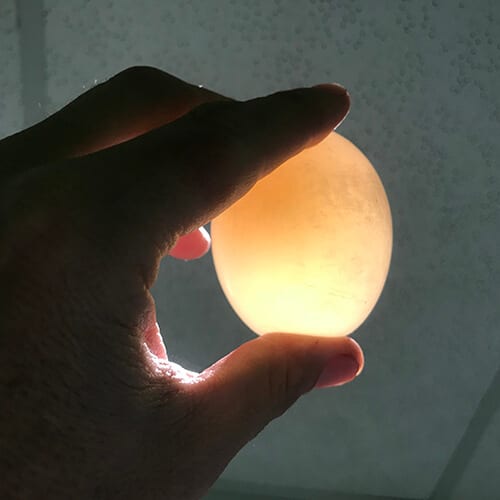
You will need
- One Egg
- A 500mL bottle of clear white vinegar
- One Drinking Glass
- Be aware of egg vapour allergies in your class
Method
-
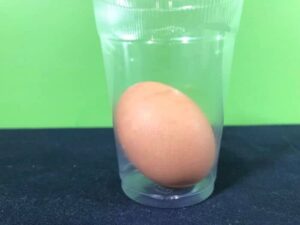
Put the egg into the glass.
-
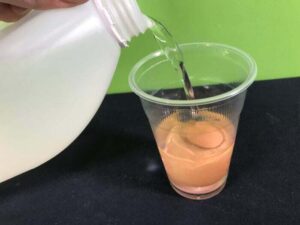
Pour vinegar into the glass until it completely covers the egg.
-
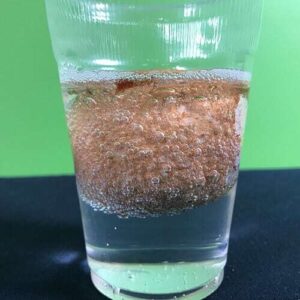
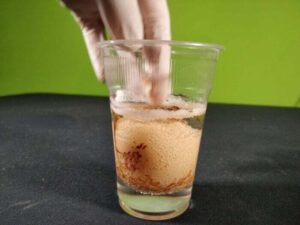
Have a look closely at the surface of the eggshell. You should see it start to be covered in tiny bubbles.
-
Leave the glass, vinegar and egg overnight where it won’t be touched.
-
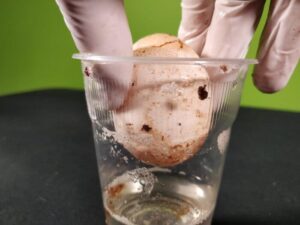
After about 24 hours has passed, check the egg again. The shell will have started to dissolve.
-
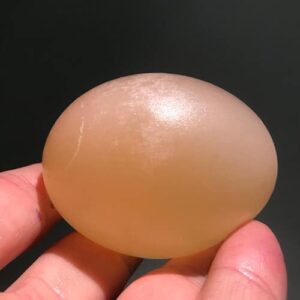
After a few days (up to a week if you have weaker vinegar), carefully take the egg out of the glass and feel it. What does it feel like?
VERY carefully drop the egg into a table from about 5cm up. What does the egg do?
NB: If it doesn’t work the first time, change your vinegar and repeat with the same egg… you’ll get there!
-
School science visits since 2004!
– Curriculum-linked & award-winning incursions.
– Over 40 primary & high school programs to choose from.
– Designed by experienced educators.
– Over 2 million students reached.
– Face to face incursions & online programs available.
– Early learning centre visits too!

-

-
Want to dive into acid-base chemistry?
Get the 30-minute video + PDF + curriculum links for your class here!
The science behind it
What’s going on?
The Science of the Naked and Bouncy Egg
Eggshells are surprisingly strong, made primarily of a mineral compound called Calcium Carbonate (CaCO3). This is the same material found in sea shells and limestone! Vinegar is a diluted form of acetic acid. When you submerge the egg, a chemical reaction occurs between the acid and the base (the shell).
The acid breaks the CaCO3 apart. The calcium dissolves into the liquid, while the carbonate is released as carbon dioxide gas (CO2). Those thousands of tiny bubbles you see on the surface of the egg are literally the shell turning into gas!
CaCO3 + 2CH3COOH → Ca(CH3COO)2 + H2O + CO2
Once the shell is completely dissolved, you are left with a “naked” egg held together only by its thin membrane. This membrane is semi-permeable, meaning it acts like a filter that lets some molecules (like water) pass through while keeping others (like egg proteins) inside. This membrane is quite stretchy, which is why the egg can bounce gently from low heights!
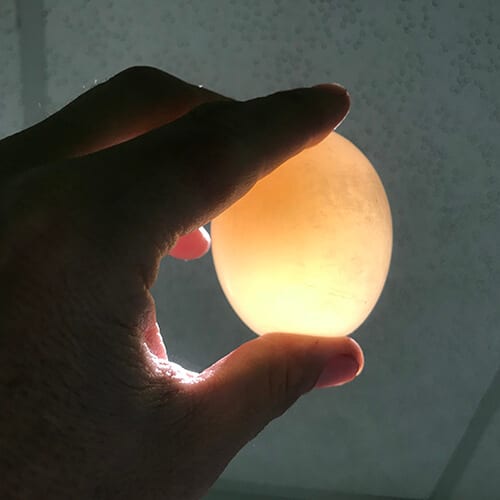
The Power of Osmosis
You can use your naked egg to witness osmosis—the movement of water across a membrane from a high concentration to a low concentration:
- Swelling: Place the egg in pure water. Water molecules will rush into the egg to balance the concentration, making it swell.
- Shrivelling: Place it in salty water or corn syrup. Because there is more water inside the egg than outside, water flows out, leaving the egg looking deflated.
- Dyeing: Add food colouring to the water. The dye molecules travel through the membrane, colouring the entire inside of the egg!
Environmental Connection
This experiment highlights the dangers of acid rain. When pollutants make rainwater acidic, it can dissolve the shells of eggs laid by wild birds or the shells of marine creatures. If a bird’s body is too acidic, it can’t form a strong shell in the first place, leading to a collapse in bird populations.
Variables to test
Find out more on variables here.
- Acid Concentration: Try diluting the vinegar with water. Does a lower pH level slow down the rate of the chemical reaction?
- Egg Variety: Compare a standard white chicken egg to a brown egg or even a quail egg. Does the shell thickness change how long it takes to become naked?
- Thermal Energy: Put one experiment in the fridge and leave one on the bench. Higher temperatures usually increase molecular collisions; does the warm egg dissolve faster?

Teacher's note
Curriculums change, and so does the way you implement them in your classroom. Please use your own experience and knowledge of your students to use these resources to best effect for student learning.
Still want the curriculum links?
Here are the suggested links:
Australian Curriculum (ACARA) Science:
NSW Science syllabuses:
Victorian Curriculum Science:
Want this experiment — and many more — running in your classroom?
Have us visit your school — every student gets three hands-on experiments in 60–90 minutes with a qualified presenter.








