
Dry ice + spoons
Learn about sublimation and how matter changes state with this simple, fun experiment. All that's needed is two metal spoons and a bit of dry ice
Adult supervision for setup
You will need
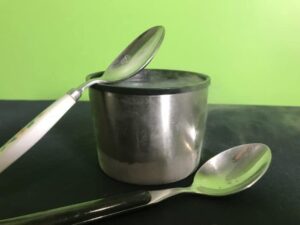
- Dry ice pellets
- 2 metal spoons
- Adult help
Method
-
Place a pellet of dry ice on a spoon.
-
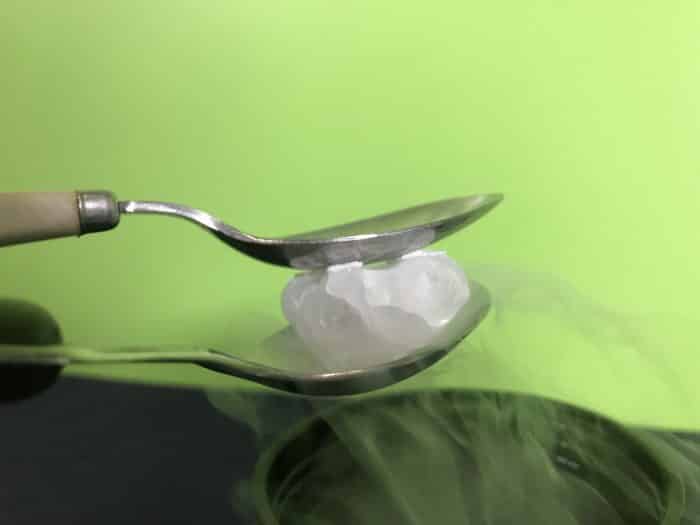
Place another spoon on top of the other spoon, resting on top of the dry ice pellet.
Gently squeeze the two spoons together as if they were BBQ tongs.
With the right pressure they should begin to vibrate and squeal!
-
Get the Unit of Work on States of Matter here!
- What are the different states of matter?
- How does heat affect the size of materials?
- How does liquid nitrogen affect materials and much more!
Includes cross-curricular teaching ideas, student quizzes, a sample marking rubric, scope & sequences & more

-
School science visits since 2004!
– Curriculum-linked & award-winning incursions.
– Over 40 primary & high school programs to choose from.
– Designed by experienced educators.
– Over 2 million students reached.
– Face to face incursions & online programs available.
– Early learning centre visits too!
-

The science behind it
What is going on?
Dry ice sublimates, meaning it changes from a solid to a gas without the liquid phase. Trapping the dry ice between two spoons creates a squealing sound due to the gas pushing against the spoons as it expands. The faster the spoons vibrate the higher the pitch.
Variables to test
- Does the pitch change with the size of spoons?
- What if you use forks instead?
- Try plastic spoons, do they work?

Teacher's note
Curriculums change, and so does the way you implement them in your classroom. Please use your own experience and knowledge of your students to use these resources to best effect for student learning.
Still want the curriculum links?
Here are the suggested links:
Australian Curriculum (ACARA) Science:
NSW Science syllabuses:
Victorian Curriculum Science:
Want this experiment — and many more — running in your classroom?
Have us visit your school — every student gets three hands-on experiments in 60–90 minutes with a qualified presenter.








