
Red car goes black?
A red car goes black? Learn about how changing the colour of a light affects the colour of an object in this cool science experiment!
Adult supervision for setup
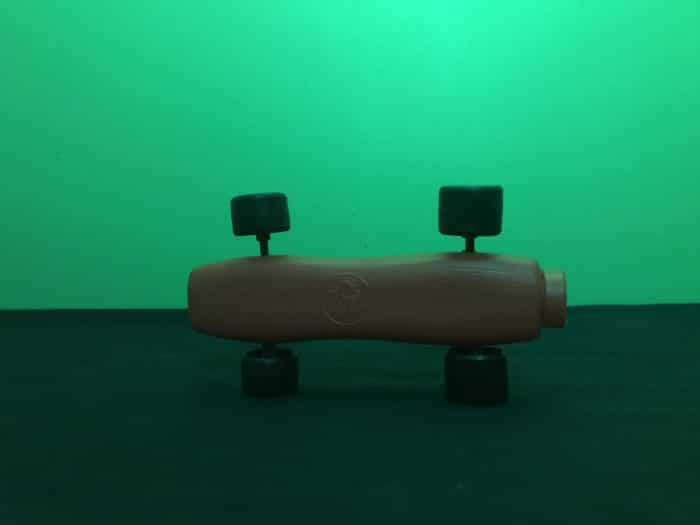
You will need
- A strong torch or green spotlight
- A strong rubber band
- Green cellophane
- One red object (e.g., a red toy car or a tomato)
- A very dark room
- Note: If you have a green spotlight, the effect is more pronounced.
Method
-
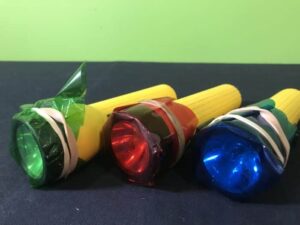
Place the green cellophane over the torch and secure it with a rubber band. Alternatively, turn on your green spotlight.
NB: You could also try different torches to see the effect!
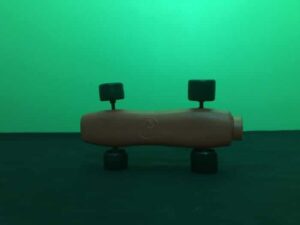
Darken the room and shine the green light on the red object.
-
What colour do you see when normal lights are on?
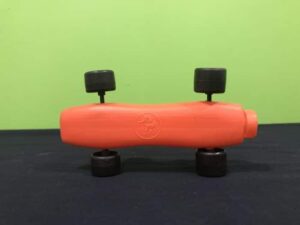
-
Try different coloured objects and lights. Is the effect always the same?
This science experiment works very well if you have access to a green spotlight.
-
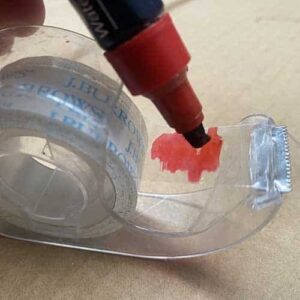
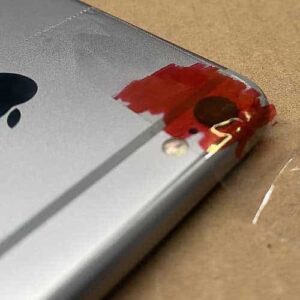
BTW – If you can’t get cellophane and torches, you can also colour some sticky tape with a felt tip pen. You can then place this over a phone camera lens.
-
Try different pen inks – does this have the same effect as the cellophane and torch?
-
School science visits since 2004!
– Curriculum-linked & award-winning incursions.
– Over 40 primary & high school programs to choose from.
– Designed by experienced educators.
– Over 2 million students reached.
– Face to face incursions & online programs available.
– Early learning centre visits too!
-

-
Get the Unit of Work on Light & Colour here!
- What is colour addition vs subtraction?
- What is opacity, translucence & transparency?
- What is the difference between refraction & reflection?
- Explore UV light, lenses, thermochromism and more!
Includes cross-curricular teaching ideas, student quizzes, a sample marking rubric, scope & sequences & more
The science behind it
What is going on?
The Science of Colour Absorption and Reflection
The “Red Car Goes Black” experiment is a great way to see how light and colour interact. We often think of an object’s colour as a permanent feature, but in reality, the colour we see depends entirely on the light source and how the material reflects that light.
The Visible Light Spectrum
White light (like sunlight or a standard torch) is made up of all the colours of the rainbow. This is called the visible light spectrum. These colours range in wavelength from violet (short wavelength, around 400nm) to red (long wavelength, around 700nm).
- Selective Reflection: A red car looks red because its paint contains pigments that reflect red light back to your eyes while absorbing all the other colours (orange, yellow, green, blue, indigo, and violet).
- The “Black” Effect: When you shine a pure green light on a red car, there is no red light available to be reflected. The red paint absorbs the green light entirely. Since no light is reflected back to your eyes, the car appears black!
Variables to test
Find out more on variables here.
-
Light Intensity
Try different strength green lights on your red car. Does a brighter light make it easier to see the car, or does it just look like a “brighter” shade of black? -
Colour Combinations
What happens if you shine blue light on the red car? Does it produce the same black effect, or does the car take on a different hue? -
Surface Material
Does the experiment still work with a red apple or a piece of red cloth? Does the texture or “shininess” of the object change how well the light is absorbed? -
Complementary Colours
Try the reverse! What happens if you shine a red light on a green object? Testing complementary colours is a great way to see subtractive colour theory in action.
To ensure a fair test, try to conduct this experiment in a completely dark room so that no stray white light from windows or hallways interferes with your coloured torch!

Teacher's note
Curriculums change, and so does the way you implement them in your classroom. Please use your own experience and knowledge of your students to use these resources to best effect for student learning.
Still want the curriculum links?
Here are the suggested links:
Australian Curriculum (ACARA) Science:
NSW Science syllabuses:
Victorian Curriculum Science:
Want this experiment — and many more — running in your classroom?
Have us visit your school — every student gets three hands-on experiments in 60–90 minutes with a qualified presenter.








