
Edible flubber
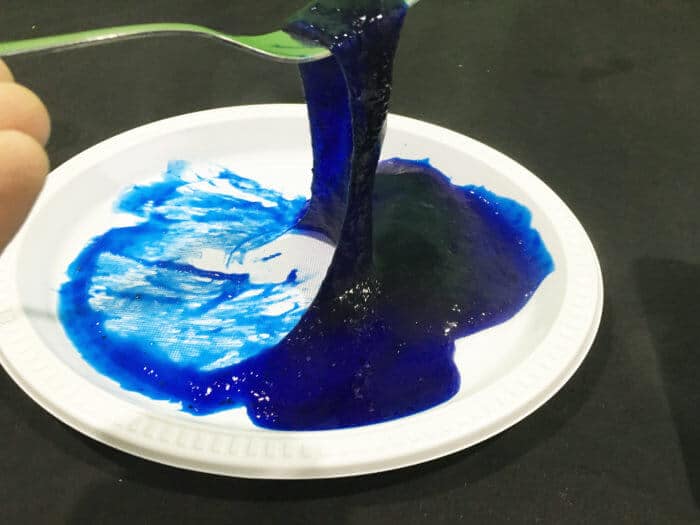
Easy science experiment to do at home making slimy flubber with psyllium husk powder or Metamucil bought from the supermarket. Gooey fun!
Adult supervision for setup
You will need
- One cup of cold water
- Food colouring (optional)
- One Teaspoon
- Psyllium husk powder
- A microwave-proof bowl
- A microwave
- Adult help
Method
-
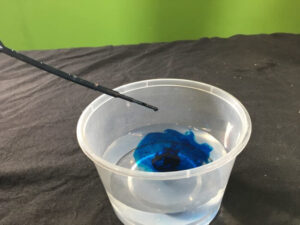
Pour the water and food colouring into the bowl and mix.
-
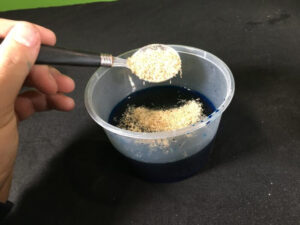
Add some psyllium husk powder and stir until it until the mixture had combine.
-
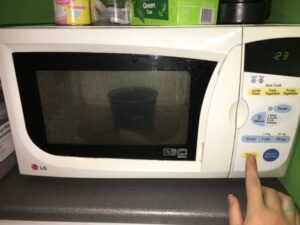
Microwave on high for 30 seconds, the longer the heating process, the more rubbery the flubber gets. Alternatively, add hot water.
Parental supervision is advised!
Be careful – the mixture will be hot!
-
Cautiously, and with the help of an adult, remove the bowl from the microwave and tip the content out onto a plate and let it cool.
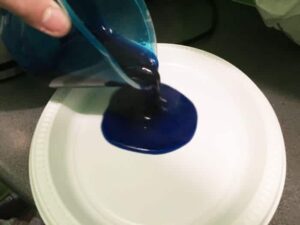
-
After it has cooled, pick up the slime and play.
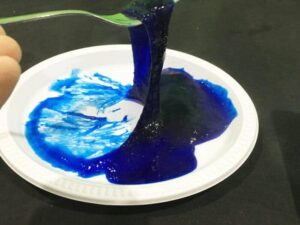
-
Get the Unit of Work on States of Matter here!
- What are the different states of matter?
- How does heat affect the size of materials?
- How does liquid nitrogen affect materials and much more!
Includes cross-curricular teaching ideas, student quizzes, a sample marking rubric, scope & sequences & more

-
School science visits since 2004!
– Curriculum-linked & award-winning incursions.
– Over 40 primary & high school programs to choose from.
– Designed by experienced educators.
– Over 2 million students reached.
– Face to face incursions & online programs available.
– Early learning centre visits too!
-

The science behind it
How does the flubber slime form?
The Science of Edible Flubber
Psyllium is a type of seed, and its outer shell or husk is a powerhouse of plant biology. It is commonly used as a dietary fibre supplement or a food thickener because it contains mucilage—a gel-forming polysaccharide. This substance is highly hydrophilic (water-loving), meaning it readily binds with water molecules.
When you first combine water with psyllium husk powder, the mucilage begins to hydrate, causing the mixture to thicken. This creates a colloidal suspension, where the liquid water is dispersed throughout the solid psyllium particles. To turn this into “flubber,” we use a microwave to provide thermal energy, which rapidly increases the rate of dispersion and helps the polysaccharide chains expand and link together.
Once cooled, the resulting slime is cold and clammy. Unlike some synthetic slimes, this edible version does not “self-heal”; once the molecular bonds are broken by cutting or tearing, the pieces won’t easily fuse back together.
Note: While this slime is technically edible, mass consumption is not recommended. Always check the label on your psyllium husk powder for serving suggestions and dietary information.
Looking for more textures? Check out our comprehensive guide to SLIME!
Variables to test
Find out more on variables here.
-
Initial Thermal Energy
Does starting with boiling water versus cold water change the final texture? This tests if the rate of hydration affects the strength of the gel. -
Solute Concentration
Change the amount of psyllium husks used. Does a higher concentration of polysaccharides result in a stiffer, more rubbery flubber? -
Particle Surface Area
Grind the psyllium husks in a coffee grinder versus adding them whole. Increasing the surface area of the solid particles usually speeds up the chemical interaction with the water. -
Microwave Power Settings
Does a “low and slow” heating method change the consistency compared to a high-power blast? This explores how energy intensity influences the molecular structure of the slime.
For a truly scientific result, make sure you only change one of these variables at a time. This keeps your experiment valid and your conclusions accurate!

Teacher's note
Curriculums change, and so does the way you implement them in your classroom. Please use your own experience and knowledge of your students to use these resources to best effect for student learning.
Still want the curriculum links?
Here are the suggested links:
Australian Curriculum (ACARA) Science:
NSW Science syllabuses:
Victorian Curriculum Science:
Want this experiment — and many more — running in your classroom?
Have us visit your school — every student gets three hands-on experiments in 60–90 minutes with a qualified presenter.








