
Find your Blind Spot
Discover an fun way to find your blind spot using easy to find materials. Part of > 150 free science experiments on the site!
Adult supervision for setup

You will need
- Paper
- Scissors
- Pen
- Ruler
Method
-
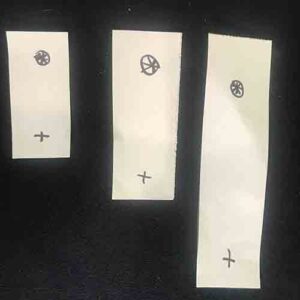
Use a ruler to create a two lines to cut along later.
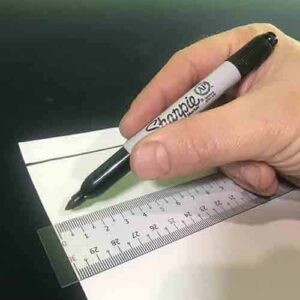
-
Make a cross shape on one side of the paper strip
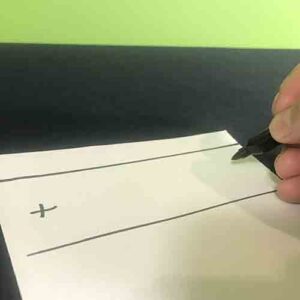
-
Make a target shape on the other side of the paper and then cut out the paper strip.
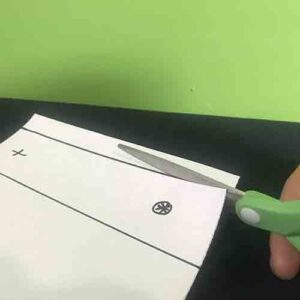
-
Hold the paper strip up to your face, so that the cross is in front of your right eye.
The picture of the ‘target’ should be to the right of your face. Close your left eye. Focusing on the cross, slowly move the paper away from your face.
As you move the page away from your face, you notice that at some point you can’t see the ‘target’ within your peripheral vision; you’ve found where your blind is!
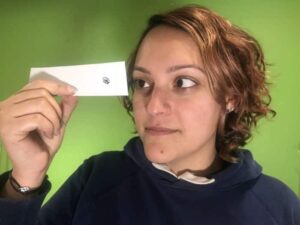
-
Try different lengths of paper strip – does this make a difference?
-
School science visits since 2004!
– Curriculum-linked & award-winning incursions.
– Over 40 primary & high school programs to choose from.
– Designed by experienced educators.
– Over 2 million students reached.
– Face to face incursions & online programs available.
– Early learning centre visits too!
-

-
Get the Unit of Work on the human body here!
- Learn about the major body systems
- Dive into the five senses
- How does digestion, respiration, circulation and many other processes work and more!
Includes cross-curricular teaching ideas, student quizzes, a sample marking rubric, scope & sequences & more

The science behind it
Why Does This Happen?
The back of the eye, known as the retina, has a layer of cells that senses light and converts it into electrical impulses. These impulses are then sent to the brain via the optic nerve, enabling us to see.
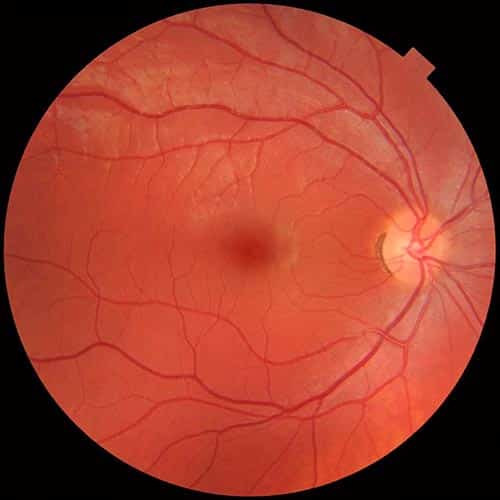
The blind spot is due to the lack of photoreceptor cells in the area of the retina where the optic nerve exits the eye. This spot is known as the optic disc. Since there are no cells to detect light in this area, it creates a blind spot in our visual field.
You can see the blind spot area in the image below as a light circle area (to the right of the image).
Variables to test
- Shorten or lengthen the distance between the marks on your paper. Does this make a difference?

Teacher's note
Curriculums change, and so does the way you implement them in your classroom. Please use your own experience and knowledge of your students to use these resources to best effect for student learning.
Still want the curriculum links?
Here are the suggested links:
Australian Curriculum (ACARA) Science:
NSW Science syllabuses:
Victorian Curriculum Science:
Want this experiment — and many more — running in your classroom?
Have us visit your school — every student gets three hands-on experiments in 60–90 minutes with a qualified presenter.








