
How to keep fruit from going brown
Don't you just hate it when fruit goes brown! Then learn in this science experiement how to stop fruit going brown and why it does!
Adult supervision for setup
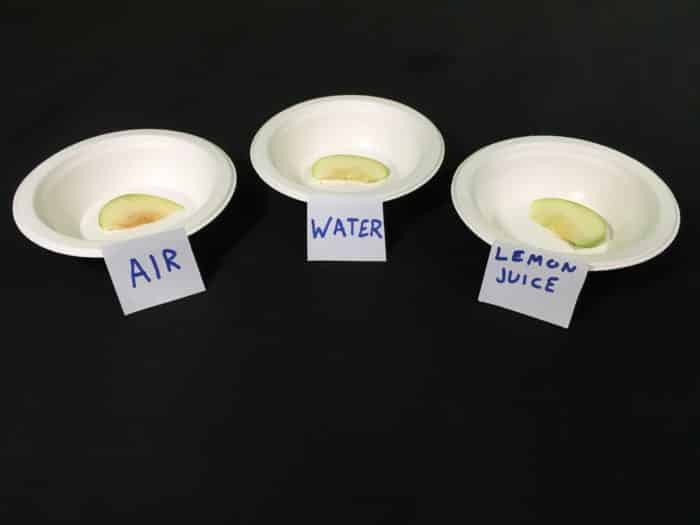
You will need
- One apple
- One 175mL bottle of lemon juice
- One glass of water
- One sharp knife
- Three bowls
- Adult supervision
Method
-
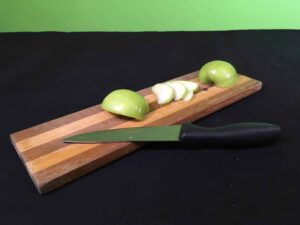
Use the knife to cut the apple into thin slices. You will need three slices for this experiment.
-
Place one slice of apple in each bowl.
-
Leave one bowl with just an apple in it.
-
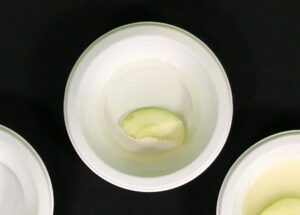
Pour water into the second bowl until it covers the apple.
-
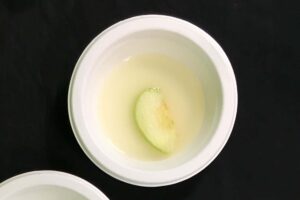
Pour lemon juice into the third bowl until it covers the apple.
-
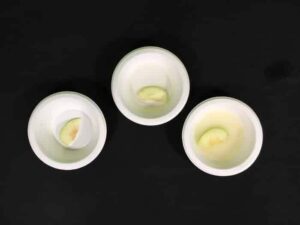
Leave the bowls aside for at least 30 minuets
-
After 30 minutes, check the three apples slices.
What do you notice about them?
Have they all turned brown, why and why not?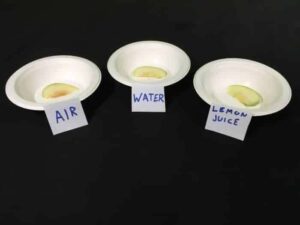
-
Get the Unit of Work on Plant Biology here!
- Learn about the parts of a flower
- Discover how vascular tissue transports water & sugars around the plant
- Learn about plant pigments and adaptations to the environment
- From photosynthesis to transpiration & more, there’s a heap covered!
Includes cross-curricular teaching ideas, student quizzes, a sample marking rubric, scope & sequences & more
-
School science visits since 2004!
– Curriculum-linked & award-winning incursions.
– Over 40 primary & high school programs to choose from.
– Designed by experienced educators.
– Over 2 million students reached.
– Face to face incursions & online programs available.
– Early learning centre visits too!

-

The science behind it
Why Does This Happen:
The Science of How to Keep Fruit from Going Brown
When you cut up an apple or a potato, you are breaking the plant’s cell walls and exposing the insides to the air. This triggers a chemical reaction called enzymatic browning. In this process, oxygen from the air reacts with compounds in the fruit called phenols, aided by an enzyme called polyphenol oxidase. This reaction creates new substances called melanins—the same dark pigments found in your hair and skin—which is why the fruit turns brown. This overall process is a type of oxidation.
- Exposed to Air: The apple turns brown quickly because oxygen has direct and easy access to the cells.
- Covered in Water: The apple browns more slowly because the water acts as a physical barrier. However, water contains dissolved oxygen (the same gas fish breathe through their gills), which eventually reaches the cells and starts the browning process.
- Lemon Juice (The Hero): Lemon juice contains ascorbic acid, better known as Vitamin C. Ascorbic acid is a powerful antioxidant. When oxygen enters the juice, it has a choice: react with the apple cells or the Vitamin C. The oxygen “prefers” to oxidise the Vitamin C first. As long as there is active Vitamin C present, the apple stays fresh! Once the Vitamin C is all used up, the oxygen will begin browning the apple again.
Because Vitamin C keeps food fresh for longer, we call it a preservative. In the food industry, we use many different preservatives:
Antioxidants (like Vitamin C) stop oxygen-based spoilage, while antimicrobials kill the bacteria and fungi that might try to grow on our snacks.
Variables to test
Find out more on variables here.
-
Fruit Comparisons
Which fruits go brown first? Compare apples, bananas, avocados, and pears. Do some have more enzymes than others? -
Concentration Gradient
Try different concentrations of lemon juice. Does a 10% solution work as well as 100% juice? This helps you find the most efficient way to preserve your fruit salad! -
Alternative Antioxidants
Could you use other fruit juices like orange or pineapple? What about a Vitamin C tablet dissolved in water? This tests if the pH level or the specific chemical matters more. -
Atmospheric Pressure
If you have a bell jar or a vacuum sealer, can you slow the oxidation process by removing the air entirely? This removes the reactant (oxygen) from the equation. -
Temperature Effects
Does putting the treated apple in the fridge versus on the bench make a difference? Cold temperatures usually slow down the kinetic energy of chemical reactions.
Remember, for a “fair test,” ensure all fruit slices are cut to the same size and come from the same piece of fruit. This keeps your experiment valid!

Teacher's note
Curriculums change, and so does the way you implement them in your classroom. Please use your own experience and knowledge of your students to use these resources to best effect for student learning.
Still want the curriculum links?
Here are the suggested links:
Australian Curriculum (ACARA) Science:
NSW Science syllabuses:
Victorian Curriculum Science:
Want this experiment — and many more — running in your classroom?
Have us visit your school — every student gets three hands-on experiments in 60–90 minutes with a qualified presenter.








