
Leaning to the Light
Find out about the leaning to the light experiment that gets the kids involved and having a fun learning experience. A experiment worth doing!
Adult supervision for setup
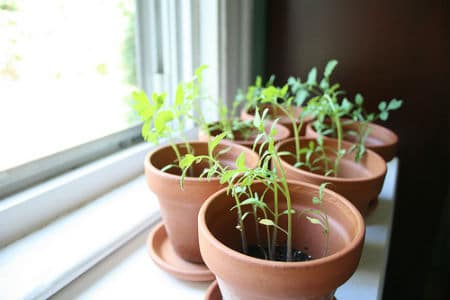
You will need
- Two clear plastic jars
- One packet of bean seeds
- Paper towels
- Water
- One dark Cupboard
- One Sunlit Window
Method
-
- Place the paper towels around the inside edge of each jar.
- Place a bean seed between the paper towel and the side of each plastic jar.
- Wet the paper towels and place the jars on a sunlit window ledge until germination.
- After germination, place one jar inside a dark cupboard within the same room.
The plant placed in the dark cupboard becomes white, grows poorly and dies first.

-
Get the Unit of Work on Plant Biology here!
- Learn about the parts of a flower
- Discover how vascular tissue transports water & sugars around the plant
- Learn about plant pigments and adaptations to the environment
- From photosynthesis to transpiration & more, there’s a heap covered!
Includes cross-curricular teaching ideas, student quizzes, a sample marking rubric, scope & sequences & more
-
School science visits since 2004!
– Curriculum-linked & award-winning incursions.
– Over 40 primary & high school programs to choose from.
– Designed by experienced educators.
– Over 2 million students reached.
– Face to face incursions & online programs available.
– Early learning centre visits too!
-

The science behind it
Why Does This Happen?
The movement of plants towards light is called ‘phototropism’. ‘Photo’ means light, whereas tropism means ‘to move’. Plants grow by plant cells getting longer or splitting into new cells. The cells on the side away from the light grow much faster than those on the sunlight side. This causes the plant stems to bend towards the light. Phototropism allows the plant leaves to get the full benefit of sunlight energy.
The green chemical in plant leaves is called chlorophyll (“Clo – ro – fill”). Chlorophyll changes sunlight into energy and sugar. The plant in the dark cupboard loses its green colour because sunlight helps to make chlorophyll.
Without chlorophyll plant growth stops as there is no more energy or sugars being produced, and the plant dies.
Variables to test
- Try using different coloured lights such as magenta, red, blue or green lights from a lighting warehouse. Does this make a difference?

Teacher's note
Curriculums change, and so does the way you implement them in your classroom. Please use your own experience and knowledge of your students to use these resources to best effect for student learning.
Still want the curriculum links?
Here are the suggested links:
Australian Curriculum (ACARA) Science:
NSW Science syllabuses:
Victorian Curriculum Science:
Want this experiment — and many more — running in your classroom?
Have us visit your school — every student gets three hands-on experiments in 60–90 minutes with a qualified presenter.








