
Make a lung model
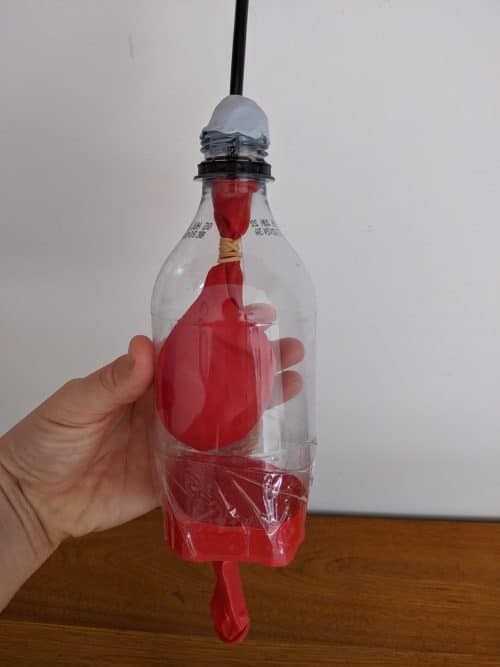
Create a lung model in a plastic bottle using easy to source materials. A fantastic way to show how the diaphragm works to bring air into the lungs!
Adult supervision for setup
You will need
- A clean dry plastic bottle (around 600mL works well but other sizes are OK too)
- Two balloons
- A straw
- Scissors
- Sticky tape, masking tape or electrical tape
- A rubber band
- Blu-tack, modelling clay, plasticine or firm playdough
Method
-
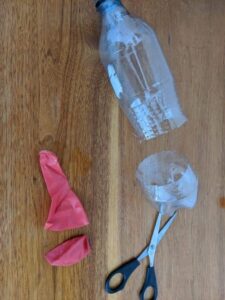
Carefully cut the bottom off the plastic bottle and cut the top (the rounded part) off one of the balloons.
-
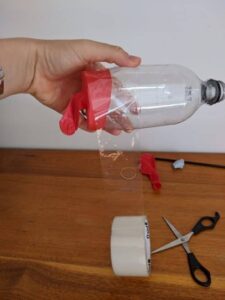
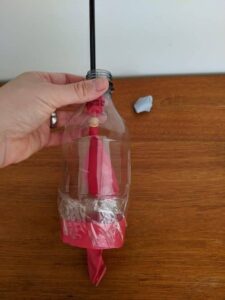
Stretch the cut part of the balloon over the bottom of the bottle so it forms a thin skin like the surface of a drum, with the neck of the balloon hanging free. Secure with tape. This balloon represents the diaphragm.
-
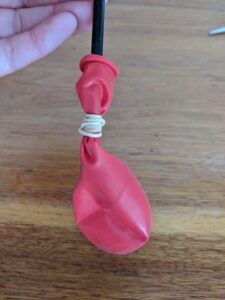
Put the straw inside the other balloon and attach them using the rubber band. Be careful to make it tight enough that it won’t slip off but not too tight to crush the straw (you need air to flow through).
-
Put the balloon inside the bottle. It should be hanging free and not touching the other balloon. This hanging balloon represents the lung.
-
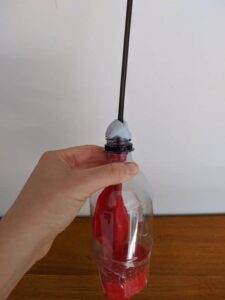
Hold the straw in place using the blu-tack (or other modelling material) to create a lid. Ensure the entire neck of the bottle is covered to make an air-tight seal.
-
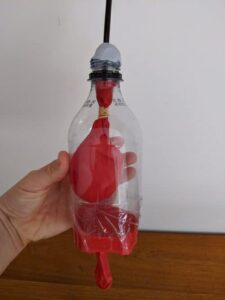
Your lung model is ready to use!
-
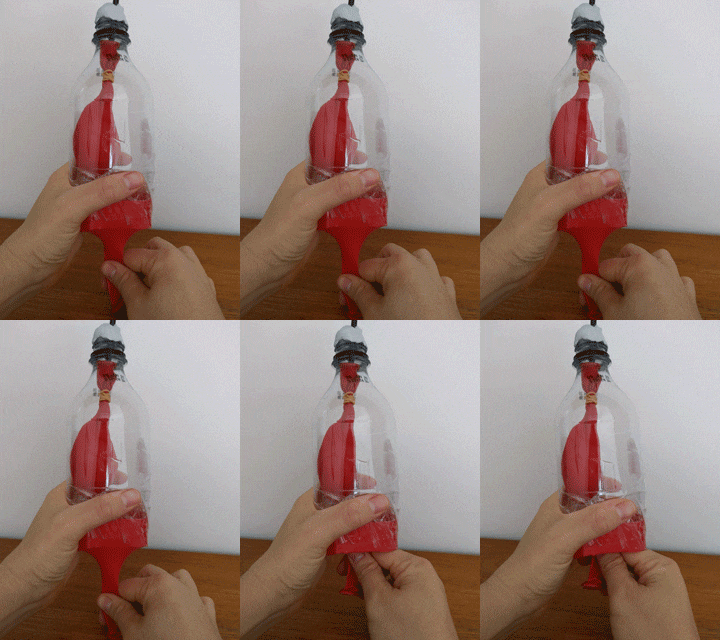
Carefully pull the balloon at the base of the bottle up and down and watch as the other balloon inflates. This represents the action of the diaphragm and the inflation of the lungs.
-
School science visits since 2004!
– Curriculum-linked & award-winning incursions.
– Over 40 primary & high school programs to choose from.
– Designed by experienced educators.
– Over 2 million students reached.
– Face to face incursions & online programs available.
– Early learning centre visits too!
-

-
Get the Unit of Work on the human body here!
- Learn about the major body systems
- Dive into the five senses
- How does digestion, respiration, circulation and many other processes work and more!
Includes cross-curricular teaching ideas, student quizzes, a sample marking rubric, scope & sequences & more
The science behind it
Why Does This Happen?
When you breathe in, your diaphragm – the muscle at the base of your lungs, contracts. This expands your chest cavity, lowering the air pressure of the cavity below the air pressure outside, and inflating the lungs.
You can see this same principle at work in this ‘homemade lung’. When you pull on the diaphragm balloon, it lowers the air pressure in the bottle. This pulls in air from outside the bottle, allowing the balloon at the top – the lung – to inflate.
Variables to test
- Change the size of the balloons.
- Change the size of the bottle.
- Can you make this work with more than one balloon as a “lung”

Teacher's note
Curriculums change, and so does the way you implement them in your classroom. Please use your own experience and knowledge of your students to use these resources to best effect for student learning.
Still want the curriculum links?
Here are the suggested links:
Australian Curriculum (ACARA) Science:
NSW Science syllabuses:
Victorian Curriculum Science:
Want this experiment — and many more — running in your classroom?
Have us visit your school — every student gets three hands-on experiments in 60–90 minutes with a qualified presenter.








