
Make a straw flute
Make a straw flute and explore how soundwaves work! Easy to create and surprisingly fun for students of all ages. Seriously strange sounds await!
Adult supervision for setup
You will need
- Two plastic straws of different diameters
- Scissors
- Adult help
Method
-
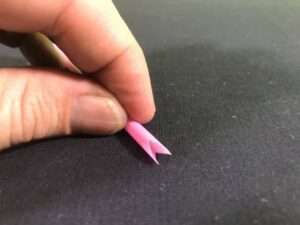
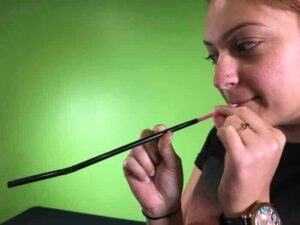
Cut the end of the smaller straw into a point. You’ll find it easier if you then flatten & crease the straw so that the straw flaps can move more easily. The two points of the straw are the mouthpiece of your straw flute and act a little like a reed in a woodwind instrument.
-
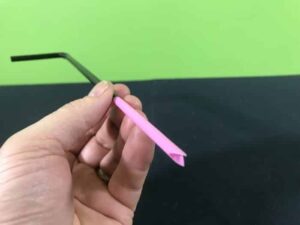
Slide the smaller straw into the larger straw. This way your straw flute has the option to become a trombone!
-
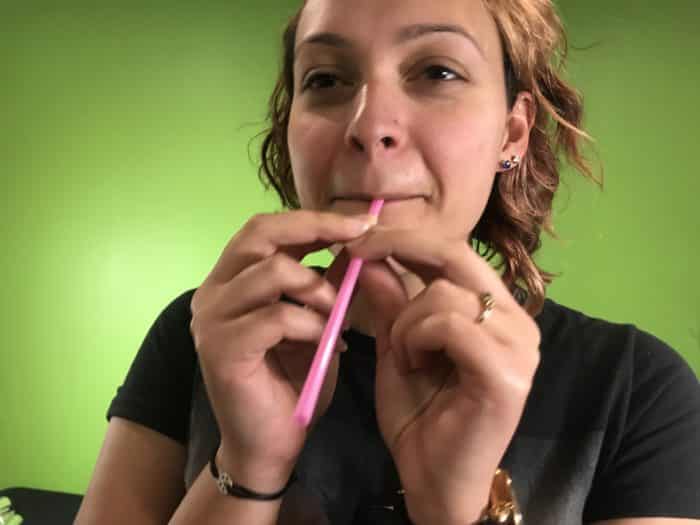
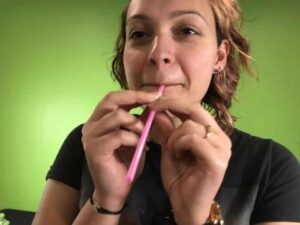
Insert the pointed end of the straw into your mouth and blow. If the pointed end of the straw is in the correct spot in your mouth you will get the end to vibrate, creating a kazoo-like sound. If you cannot hear the sound slowly move the point back and forth, in and out of your mouth, until you hear it.
-
You should find that if you slide the large straw back and forth that the pitch changes too! You can also carefully cut the straw as you blow through it, creating a higher and higher sound.
-
School science visits since 2004!
– Curriculum-linked & award-winning incursions.
– Over 40 primary & high school programs to choose from.
– Designed by experienced educators.
– Over 2 million students reached.
– Face to face incursions & online programs available.
– Early learning centre visits too!
-

-
Get the Unit of Work on Sound here!
- What is amplitude?
- What is frequency?
- How does sound travel and what does it look like and more!
Includes cross-curricular teaching ideas, student quizzes, a sample marking rubric, scope & sequences & more

The science behind it
Why Does This Happen?
The Science of the Straw Flute
The straw flute is a fantastic way to explore Acoustics and Vibrations. When you blow through the flattened “reeds” of the straw, you cause them to vibrate open and shut extremely fast. This creates a sound wave that travels down the tube.
Standing Waves and Pitch
Inside your straw, the sound wave bounces back and forth, creating a pattern called a standing wave. The frequency (or pitch) of the sound depends on how many times that wave vibrates per second.
- Nodes and Antinodes: The standing wave is made of Nodes (points where air molecules don’t move much) and Antinodes (points where air molecules move with maximum energy).
- Frequency vs. Length: As you shorten the straw, you shorten the space the wave has to travel. This forces the wave to vibrate faster, increasing the frequency and making the pitch higher.
- The Relationship: Conversely, if you increase the length of the straw, you lengthen the standing wave. This reduces the number of vibrations per second, resulting in a lower pitch.
Tips for Success
Getting a sound out of a straw flute takes a bit of practice! Here is how to find that “sweet spot”:
- The Lips: Place the “V” points just behind your lips and gently pull the straw forward while blowing steady air.
- Air Pressure: Don’t blow too hard! If you use too much force, the reeds will simply stay shut. Use a controlled, gentle stream of air.
- Straw Selection: Thinner, cheaper straws usually work better because the plastic is easier to vibrate. You can even join a thin straw into a wider bendy straw to create a “slide trombone” effect!
Variables to test
Find out more on variables here.
-
Length
Cut the straw into different lengths. Can you create a full musical scale? -
Diameter
Does a wide “smoothie” straw sound different than a thin “juice” straw? How does air volume affect the tone? -
Material
Will it work with paper straws? Paper is more porous and less elastic than plastic—how does this change the vibration? -
Overblowing
Try blowing harder or softer. Can you force the straw to play a “harmonic” (a higher note than usual) by blowing faster?
Watch the Experiment

Teacher's note
Curriculums change, and so does the way you implement them in your classroom. Please use your own experience and knowledge of your students to use these resources to best effect for student learning.
Still want the curriculum links?
Here are the suggested links:
Australian Curriculum (ACARA) Science:
NSW Science syllabuses:
Victorian Curriculum Science:
Want this experiment — and many more — running in your classroom?
Have us visit your school — every student gets three hands-on experiments in 60–90 minutes with a qualified presenter.








