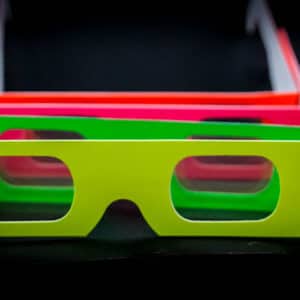
Podcast: Teaching Physics through History with Kathy Joseph Follow Us: Comments 0 Podcast: Teaching Physics through History with Kathy Joseph About From Faraday to Volta, there are plenty of amazing stories when it comes to the history of physics. So how do you teach it best to grab the intention of learners? We speak with Kathy Joseph, host of the YouTube channel Kathy Love Physics and author of The Lightning Tamers: True Stories of the Dreamers and Schemers Who Harnessed Electricity and Transformed Our World to learn more. Hosted by Ben Newsome from Fizzics Education More Information About the FizzicsEd Podcast About Kathy Joseph Kathy Joseph is a physicist, educator, and historian who has dedicated her career to humanising the world of physics. Based in the San Francisco Bay Area, Kathy has a 12-year background as a high school physics teacher and has also taught at the university level. She now spends her time conducting deep archival research and producing high-quality documentary videos for her popular YouTube channel, Kathy Loves Physics. By analysing the personal lives and technical breakthroughs of the people behind our greatest discoveries, Kathy makes the history of science relatable and gripping. Her work is specialised in uncovering the “missing links” in scientific chronicles, ensuring that the contributions of often-overlooked innovators are recognised by a global audience. Learn more: www.KathyLovesPhysics.com Top 3 Learnings from this Episode Physics as “Magic Revealed”: Physics can be taught as a series of magic tricks where the educator performs an experiment and then reveals the “secret” through physical laws. History Combats Physics Illiteracy: Teaching through chronological history makes the subject less intimidating than starting with complex maths, engaging a broader range of learners. The Iterative Nature of Discovery: Scientific breakthroughs are rarely isolated events; they are part of a chain of ideas, often involving serendipity and building upon the work of others. The Lightning Tamers True Stories of the Dreamers and Schemers Who Harnessed Electricity We flick on a light switch without a second thought, but the journey to that simple action is filled with bizarre and fascinating tales. In The Lightning Tamers, Kathy Joseph explores the evolution of electricity—a saga where fortunes were lost, rivalries were pursued with favour, and experiments occasionally led to beards being set on fire or discoveries involving frog legs on iron fences. This is a physics and engineering chronicle disguised as an electric time-travel adventure. Kathy shares how the breakthroughs of men and women in science are inextricably linked, organising the narrative to show how one discovery sparked the next. By utilising storytelling to explain complex electromagnetic theory, she provides a programme for understanding how electricity transformed our world. Get the book on Amazon Associated Articles & Resources Inspired by the history of electricity? Explore our library of free resources tailored for Australian educators looking to spark curiosity about physics and engineering: Physics Resources Science Literacy Resources Science Teaching Resources Access 150+ Free Science Experiments and Resources Want to bring hands-on science to your school? Book an award-winning workshop or show that builds fundamental thinking skills through high-energy, interactive experiments. Browse School Workshops Published: February 9, 2023 APA 7 Citation: Newsome, B. (Host). (2023, February 9). Teaching Physics through History with Kathy Joseph [Audio podcast transcript]. In FizzicsEd Podcast. Fizzics Education. https://www.fizzicseducation.com.au/podcast/fizzicsed/podcast-teaching-physics-through-history-with-kathy-joseph/ Copy APA Citation Ben Newsome CF is the recipient of the 2023 UTS Chancellor’s Award for Excellence and a Churchill Fellow. He is a global leader in science communication and the founder of Fizzics Education. [00:00:00]Ben Newsome: You’re listening to the Fizzics Ed Podcast. For hundreds of ideas, free experiments and more, go to fizzicseducation.com.au. And now, here’s your host, Ben Newsome. [00:00:20]Ben Newsome: Welcome to the Fizzics Ed Podcast. No matter where you are, this is all about science education that makes sense and is inviting and enthralling and engaging for learners, and really talking with people who make it so. Kathy Joseph is one of those people. She has joined us on the Fizzics Ed Podcast to chat about her love of physics and importantly, how she goes about teaching it. She has a 12-year background as a high school physics teacher and she’s recently written a book called The Lightning Tamers: True Stories of the Dreamers and Schemers Who Harnessed Electricity and Transformed Our World. She’s got a background in teaching university, but she really loves teaching physics through her YouTube channel, Kathy Loves Physics, where she has over 100,000 subscribers nearly and has over 6 million views. There’s many people involved. It’s really a passion of hers that’s become a genuinely busy thing for her to do. Let’s get right into how she thinks, what she loves, and importantly, how she teaches science. [00:01:16]Ben Newsome: This is the Fizzics Ed Podcast. We’re all about science, edtech and more. To see 100 fun, free experiments you can do with your class, go to fizzicseducation.com.au. That’s physics spelled P-H-I-Z-Z-I-C-S, and click “100 Free Experiments”. [00:01:40]Kathy Joseph: Yes! I was just saying how excited I am to talk to another physics teacher and physics person. It’s so exciting. [00:01:50]Kathy Joseph: But the thing is, as I’m sure every physics teacher has noticed, there’s a disturbing amount of science and specifically physics illiteracy in the world. I think people get so stuck on the maths that they feel they can’t understand what’s going on in the world, and then they either give up on physics—give up on understanding the world around them in a physical way—or they gravitate towards pseudoscience because they feel, “Oh wow, I can understand pseudoscience. It doesn’t have any maths in it,” and then they feel comfortable with that. For me, that’s the real challenge. We are all inquisitive people. Everyone, from childhood on, wants to know how the world works. [00:02:59]Ben Newsome: Totally. I actually remember this was back in my undergraduate days. I didn’t do physics in high school, I did it in university. It was like the door opened, so to speak. Suddenly I started to think about how heat actually worked. “Oh, so materials will actually expand or contract based on what’s going on. Oh, that’s what the atoms are actually doing. Oh, that’s how liquids flow that way. Got it.” I could play with the maths and moving integers around, but knowing how the world works at a fundamental level with simple experiments that teach a deep thing was so fascinating to me. I love it. [00:03:37]Kathy Joseph: Right. I feel it makes us magicians, but we’re always telling the tricks. We do a magic trick and then we say, “Let me explain to you exactly how I got this can to implode.” [00:03:52]Ben Newsome: I’ve got to ask: how did you fall into physics teaching? [00:04:02]Kathy Joseph: Physics teaching? I think it started because I’m from San Francisco and we have this great museum here called the Exploratorium. It was built in the ’70s and everything is supposed to be hands-on. I went there as a child on a school field trip and you’d do a mini experiment, and then it tells you what to do, and then something unusual happens. Then you flip the thing and it says, “This is why this unusual thing is happening.” I felt it was so magical and beautiful to me. I was like, “I understand how this thing works. Let me look at the next thing.” That thing worked. I just fell in love with the subject. I wanted to get my PhD to be a physics professor. Turns out being good in classes and being good at research in the university are different things. Then I switched to being a high school teacher, which I loved. I didn’t love the discipline, I didn’t love the administration. [00:05:17]Ben Newsome: I’d love to have a guest who just says, “I love the administration. I love the discipline.” I’d love to have that guest because there aren’t many people who actually say that. [00:05:24]Kathy Joseph: I think there are some people who have a very good sense of how to control the class and they feel really confident with that. I was just, “Please stop hitting each other.” [00:05:43]Ben Newsome: You want to somehow control the horde so they survive this 45-minute lesson to somehow make it to lunch alive. [00:05:51]Kathy Joseph: Sometimes things just fell into place. I remember one time I was showing the students polarisers. I turned the polariser one way and you could see through them. I turned them 90 degrees and a few kids swore. Usually they’re like, “Holy beep!” I didn’t even get them in trouble because I was so glad that they felt that magic. [00:06:33]Ben Newsome: Totally. What’s neat about physics is that when you can then show the students or your kids just what’s going on in the real world. You mentioned polarised lenses. I remember sitting in a 3D movie. I’m not a 3D movie fan, I actually get a little seasick, but the lenses are polarised. I was holding the two 3D glasses together and, “Hey, Jack, check this out.” I turned it one way and then I turned it the other way. He didn’t realise because you grow up as a child thinking 3D glasses only work with the red and the blue lens that you shove over your eyes and look at red and blue images that are out of focus and your brain pulls it together. Well, it doesn’t work if you’re dealing with a million colours in a Hollywood production film. Just the polarising thing, which would have made your students suggest interesting words while they were watching what was going on, had my child going, “Wow!” This was before Avatar. [00:07:33]Kathy Joseph: Right. I think most physics teachers rely on these amazing demonstrations which are awesome. But I slowly started to figure out that what we were missing was where it came from, and that had as much wow as these amazing demonstrations, sometimes more. [00:08:08]Ben Newsome: Absolutely. Even just thinking now, in that very first subject of physics, the physics professor rocked up with this quite a wry smile on his face. He said, “This is the box.” We were wondering what was inside the box. He goes, “No, seriously, it’s the box.” It was a cardboard box. So we did physics for six or eight weeks with a cardboard box. He put the cardboard box on a string and swung it around, he turned it to a pendulum, he slid it across the desk. He did all these things that were fundamental to how movement worked with a cardboard box. [00:08:35]Ben Newsome: As you mentioned just before we hit record on this thing, we were talking about how history really influences our thinking of how science came from where we are now, where we might go in the future. There are so many interesting stories. What are some of your favourite historical stories when it comes to physics? There’s a lot of them. [00:08:50]Kathy Joseph: Gosh, there’s a lot. When you were talking about that, I was thinking about an early experiment that I really adore, which was how Galileo measured the weight of air with a balance scale with sand. He was like, “I wonder if air has a weight.” He put a bottle on a balance scale, and he pumped it full of air and then he found it weighed a little bit more. He had a bottle with air and he filled it halfway with water without letting any of the air escape, weighed it, then let the air escape so he knew the volume, and weighed it again. With grains of sand, he figured out the density of air. Then he freaked out because it weighed too much if you had the atmosphere, if you had a large building. He had a student named Torricelli, like Torrs. And Torricelli’s like, “No, it’s fine. We’re living at the bottom of an ocean of air. We’re like crabs at the bottom.” It’s just whoa! [00:09:59]Ben Newsome: You just reminded me, I was flicking through Netflix about two nights ago. I’m a bit of a documentary buff. I was looking through this and there was one talking about Alien Worlds, positing different ways other living things might exist on other planets. I saw the excerpt and it was talking about these flying things on this highly dense gaseous planet. It was describing it as if it’s an ocean. Frankly, it is an ocean. [00:10:31]Kathy Joseph: Right. Exactly. What’s amazing to me is how many times the history of science has so much serendipity. One of my favourite scientists of all time is Michael Faraday. The more I look into him, the more he discovered. I argue you wouldn’t have Maxwell’s equations without Faraday. [00:11:02]Ben Newsome: Yes. I was thinking just then like Bill Bryson, he’s written my favourite book, A Short History of Nearly Everything. I love that book. He really gets right into the history and how these scientists fought and played. Please correct me if I’m wrong because this is a snippet of memory: you mentioned Faraday and you mentioned Maxwell. Maxwell loved the maths. If I remember correctly, Faraday really wasn’t that fantastic at mathematics, but really got the science. Is that right? [00:11:29]Kathy Joseph: That is completely correct. Faraday went to school for one week. Then his teacher told his brother to get a switch to hit him with for having a speech impediment or lisp. Both brothers went, “We’re gone,” and he never learned any maths. He never included any equation. His insight, especially when he made the Faraday Cage in 1837, this was six years after he discovered magneto-electric induction, where moving a magnet induces electricity. [00:12:05]Kathy Joseph: He was actually inspired by an experiment by Coulomb, Charles-Augustin de Coulomb, who discovered Coulomb’s Law and also discovered that charges were on the surface of things. So he built this giant cage and, as he put it, lived inside it while experiments were going on on the outside. I have this image of him sitting inside this metal cage, drinking tea and looking at his electroscope not doing anything while sparks are hitting the outside. [00:12:41]Ben Newsome: Gosh, that actually reminds me of that very famous image of Tesla sitting near this massive coil and it’s just going nuts, and he’s just sitting there with his legs crossed. [00:12:52]Kathy Joseph: Right. That was actually done with double exposure. But if you think about it, it’s an astonishing photograph from over 120 years ago. It was done in 1900 and it still makes you go, “Ah!” It’s still startling. I think actually the book you were thinking about was not A Short History of Nearly Everything because that one did not have a lot about Faraday in it. I think you’re thinking about E=mc^2: A Biography of the World’s Most Famous Equation. [00:13:29]Ben Newsome: Yeah, I’ve read that too. You read a lot of books in this game. [00:13:34]Kathy Joseph: Yes. That one they made into a TV show called Einstein’s Big Idea. The part about Faraday was what inspired me to get into the history of science. I love Bill Bryson and I was inspired by the E=mc^2 equation book. But I feel most history of science books are trying to teach the history. They’re just trying to teach enough of the science so you understand the history. I’m not interested in that. I’m interested in using the history to teach the science. [00:14:32]Kathy Joseph: I find that surprisingly powerful. Because I’m focused on using the history to tell the science, I don’t feel I need to tell every facet of the person’s life. Which actually makes their story more interesting. If you watch a movie, it’s not like they say the main character was born on this date at this time and their parents were from this and then they went to middle school and then high school. You start in the action. But when we read a history of science, it’s usually like this person was born on this date and then they did this and you’re like, “Well, is that interesting? Is that important?” [00:14:55]Ben Newsome: This reminds me of a past guest. They do an amazing job where they portray Marie Curie to the nth degree. Complete fluent Polish speaker, but goes through not just the “Hey, I grew up and this is whatever,” goes through the snippets of time during the discoveries that were made and what she might have been thinking. What’s really neat about it is it’s really in true character. You can ask questions from the audience and she’ll answer in that time period. It’s fun. The history in its context is what we’re really talking about in a lot of different ways. Why should this history matter to us now? Where are we going? [00:15:43]Kathy Joseph: I think it’s more that we used to teach science through its history. If you read science books from the 1700s, even the 1800s, they will often teach it through the people who discovered it. It turns out to be a very natural way to get people interested in the subject because you don’t have to explain why that subject is interesting. You are talking about, let’s say Ohm’s Law. You don’t have to say, “Here’s Ohm’s Law.” You can say, “Here was Ohm. He was a pretty poor kid and his father wanted him to be a locksmith, but he was so good at maths that his father let him and his brother go to school and give up on being locksmiths and be mathematicians and scientists.” [00:16:46]Kathy Joseph: When he produced his law, everyone hated it and he lost his job and he was miserable for 20 years. Because a few years before, Ampère—André-Marie Ampère of “amps” fame—had done an experiment where he put two batteries in a row and he found that it gave him a bigger shock but it didn’t make the compass needle move more, because he didn’t know about internal resistance. [00:17:15]Kathy Joseph: Because that experiment went counter to that and for some other reasons, Ohm was discounted. Then you feel bad for Ohm and you get through this whole story, and then you will have a sense of what voltage is, what current is, what resistance is, what internal resistance is—all of those ideas come straight from how it was discovered. It’s so much more powerful. [00:17:52]Ben Newsome: And when you couple it with demonstrations that underline the fact, it really is powerful for the student. I was sitting there thinking about a demonstration I do with Ohm’s Law. I do it with “magic ghost balls.” It’s a little ping-pong ball where everyone holds hands. You just keep adding kids until finally the resistance is just ridiculous and it’s not going to happen. If you happen to max out your kids—because I’ve got 85 or 100 kids—they usually come in for a show. [00:18:25]Ben Newsome: I go, “Right, let’s line up around the hall. Let’s see what we can do.” Surprisingly, as long as they all hold hands—there’s usually the kid that doesn’t, so you’ve got to watch for them—but you get it all to close circuit and it just works. Then we start dropping the kids off until the thing works. I think 80 or 100 was my record. But the point is, I’d say to the kids, “What if we got all of Sydney on this? Let’s get over a million people on this. At what point would this not work?” Clearly there’s still something going around, but it’s just not enough to make the LED light up and make the little buzzer make its sound. You can link simplistic hands-on demonstrations to a deep-level piece of science that can be used in lots of different ways. [00:19:10]Kathy Joseph: It reminds me, in the 1700s electrical demonstrations were the height of fashion. Especially in France. One of the things that was done one time was that there was a guy named Abbé Nollet, and he would entertain the king by electrifying a hundred soldiers at a time, or two hundred monks in their habit… watch them jump. Then his assistant tried it and it didn’t work. The assistant was like, “Well, these men are not manly enough for them to be shocked. They are missing the manliness.” So someone said, “Let’s try it with castrati.” It turned out the castrati got shocked too. [00:20:05]Kathy Joseph: Then someone realised that he forgot to insulate or the ground was wet and they got a shock through their leg and they realised that you have to insulate the person to get it to go around. They had known that a little bit before, but he forgot. The whole image of the people being shocked and the castrati… it can get wild in the history, but I feel the other thing that I love about it is because it’s chronological, the science doesn’t start with complexity, it starts simply and it grows. [00:20:49]Ben Newsome: Isn’t there… I don’t even know if this has even been proven or not, but there’s an artefact out of Egypt that suggests they had made a Leyden jar 2,000 years ago or something like that? I don’t know if it’s been proven, but it’s a question mark. [00:21:05]Kathy Joseph: The Baghdad Battery, I think is what it’s called. [00:21:09]Ben Newsome: Is that what it is? It wasn’t in Egypt, it was out that way. Thank you. I was wondering about it. I had this memory of this clay-looking thing with a piece of copper in it. [00:21:18]Kathy Joseph: Yeah, I think that one’s a little overdone. Science is only useful if it influences the next person who influences the next person. Sometimes things get lost for years and then get revitalised. Maybe they used this early battery for electroplating, it just seems unlikely to me. Even if they did, it didn’t work as a battery. [00:21:50]Kathy Joseph: Arguably the first battery was Volta with his pile of two different metals with salt water in between. Or you could argue that Galvani made the first battery when he took two different kinds of metal and put it in a frog and it jumped. He accidentally did that when he took a dead frog and put it on a fence and it jumped on its own. [00:22:18]Ben Newsome: I didn’t know about the fence thing. [00:22:23]Kathy Joseph: Galvani was an anatomy professor and he was working on the hearing of various animals and someone stole it. He’s like, “I’m going to work on electricity.” So he bought a static electricity machine and he had an assistant, or maybe it was his wife, it’s unclear. He had this static electricity machine and he had a Leyden jar because the Leyden jar was invented by then, so he could put charges on there and get big sparks. He put a dead frog on the table and someone touched it with an electrified prong and it jumped. He’s like, “Oh my gosh, I’m bringing this to life.” Dr. Frankenstein style. [00:23:06]Ben Newsome: Yeah, Mary Shelley got excited about this. [00:23:08]Kathy Joseph: Yes, she literally was inspired by his nephew for her book. She said something in her book of Frankenstein of like, “We know we can bring bodies back from the dead, galvanism tells us of these things.” I’m like, “Yep, totally galvanism.” Anyway, they start electrifying every dead animal they can find. They bring the frog outside to see if it’ll jump in an atmospheric storm. But they hang it on a fence and the frog leg jumps on the fence because it was an iron fence and it had copper wiring around the dead frog. [00:23:55]Kathy Joseph: He didn’t think it was the two metals, he thought it was bringing it back to life. Volta thought it was the magic of the metals, but he didn’t think of an acid. Then Volta couldn’t get anything to work with two metals, but he could if he put it in his mouth. He’s like, “Maybe you need salt water.” That’s how he ended up with his pile, which gave a big shock, and then they figured out that it decomposed water, it would decompose it into oxygen and hydrogen. [00:24:38]Ben Newsome: What I love about what you just described there is it’s the iterative process of the way design thinking works. It just straight up is “Maybe it’ll work with X, Y, Z.” [00:24:49]Kathy Joseph: Exactly. That’s part of what we’re not teaching our students right now. If you have a student who becomes a research scientist, what history do they know of how discoveries are made? Nothing. All we know is it happened by accident sometimes—lightning bolt, apple on the head, all the usual tropes. But we never get the details of the various ways people make discoveries. [00:25:25]Kathy Joseph: So that we can feel like, “Oh my gosh, I haven’t thought of something amazing and new,” not thinking like, “Oh, you take old stuff and you twist it a little bit, you try it in a slightly different area or at a slightly different temperature, or you just redo the experiment just like they explained it, and maybe you find something different.” Without the history we’re losing the people who struggle with the maths and we’re doing a disservice for the people who love this and want to do this forever. [00:26:11]Ben Newsome: Well, the good news is that you’re doing your part to help out with this. I believe—okay, we’re time-stamping this chat—but last year you released a book in October. Tell us about it. [00:26:19]Kathy Joseph: I did. This is my first book and I think I have seven books planned. I’ve gone a little crazy. [00:26:33]Ben Newsome: That’ll happen. I’ve got a friend who’s written out a bunch of different drafts for a whole bunch of books, totally not on science. You totally can do the drafts and work it out over time. [00:26:42]Kathy Joseph: This was more that I started out about seven years ago to write a history of science book to explain how electricity got into the home, written specifically for adults who didn’t know anything about science. That was my aim. As I wrote it, it turned into a bunch of linked short stories that went into all directions. While I was writing this, I’m like, “Huh, this turns into the history of radio. Let’s see where that goes. Oh wow, history of quantum mechanics. Here I go with that.” It turned into the Frankenstein monster with everything in there. [00:27:30]Kathy Joseph: Then I was like, “Okay, wait, no. I cannot write a thousand-page book, no one wants to read that.” I pared it down to my original story, which was how electricity got into the home, and those other sections ended up in my… like my next book is on the radium revolution—how we discovered X-rays and how we discovered the electron and how that led to radium and the age of the Earth and ends with Bohr’s model. I also have the evolution of wireless. I have a lot of things going on. I probably shouldn’t say that. [00:28:13]Ben Newsome: No, but what you’re talking about is fair enough though, because these snippets of ideas do get woven together. [00:28:20]Kathy Joseph: Exactly. What happened was about six years ago I was like, “How do I get anyone to buy my book?” My best friend said, “Start a YouTube channel.” I found that making these mini-documentaries, which I have gone into many of the subjects, so I have a whole bunch on the history of radio, a whole bunch of quantum mechanics, spectroscopy and all sorts of subjects, as well as quite a lot on the history of electricity and not just the war of the currents, but starting in 1580 and ending in today. Like, why do we have these myths about Nikola Tesla? And why do we believe some of these pseudoscience things? [00:29:15]Kathy Joseph: My book came out in October and that is about the history of electricity. I’ve found that it’s not only been received well by my intended audience, which was adults who know nothing about science, but also scientists and engineers. Because as a YouTube channel you get to know your audience a little better than a book writer, you just put it out there and hope someone reads it. [00:29:50]Ben Newsome: You probably have the same thing with the podcast. You get people telling you, “I don’t like this, I like this.” [00:29:58]Kathy Joseph: For me, I get a lot of responses from people who are experts in this but still learn more from where it came from. [00:30:08]Ben Newsome: The thing is, as a science teacher or a science professional, reading the books about the stories that you love is partly comforting and you always find something new that you didn’t realise. Even in this conversation, I had no idea about the frog on the fence. That’s cool. It’s partly a comfort and it’s part of being studious as well, of being aware of what’s out there. [00:30:35]Ben Newsome: People are going to have different takes on the same subject that you work in. I think it’s a good thing to read deeply into things. I always truly believe that everyone’s got more than one novel in themselves, they’ve got a heap of books in them if they just plan it out. It’s definitely important. I’m guessing people find it in the usual places they can distribute and all the rest? [00:30:58]Kathy Joseph: All the rest. Also, I wanted to say that I have a lot of videos, I have close to a hundred videos and each one is ranging between seven minutes and 40 minutes and I purposefully don’t swear in them. Although I did find this poem from James Clerk Maxwell, which was called “The British Ass,” which I just thought was hilarious. He meant donkey. I was like, “Let’s raise a cheer to the British ass.” I have to include that. [00:31:50]Kathy Joseph: I include the scripts for it on my website, kathylovesphysics.com, so that if you are a teacher and you wanted to show a little bit to your students or you wanted to get a little bit of the material. With the more recent ones, I include not only citations but clickable citations. You can click on it, it’ll go to Google Books or wherever and you can read what was written in 1827. It’ll get you directly there so you don’t have to know how to search for it. I really want other teachers to use this information to help them teach that subject. I want people to start thinking about teaching science through where it came from. [00:32:38]Ben Newsome: It totally does. If you had a bunch of students about to become teachers for their very first year, they’re about to hit that physics classroom somewhere, what advice would you give them as they’re just walking out the door? [00:32:55]Kathy Joseph: Oh gosh, I would say—I really do believe, not only first-time teachers but any-time teachers—the more context you can put in there, the better. I know the problem is we don’t have textbooks that are history-based above fourth grade. And we don’t have serious physics books that are history-based. But you can totally do it. I did a 35-minute video on Maxwell’s equations that was history-based that derived all four equations, said how it was useful, talked about Hertz and Einstein and everything in under 40 minutes because I knew where everything came from and it made it easier to explain. [00:33:45]Kathy Joseph: If you are a first-year teacher or longtime teacher and you think it’s interesting, pick one or two subjects that you would like to try this way and see if you can find it from me or if you can find it from somewhere else where you can put together the story a little bit of where it came from. You’ll be amazed how inspired you are, not only by the subject but what experiments you can come up with because in olden times they didn’t have all this equipment, so it’s really easy to recopy their experiments sometimes. [00:34:31]Ben Newsome: That’s great advice. Absolutely. I like the idea of just picking one or two things and diving deep. [00:34:40]Kathy Joseph: Because otherwise, people are always telling teachers to do this and that and the other. I’m like, with what time? [00:34:47]Ben Newsome: Oh yeah, I bet there’s a whole bunch of teachers going through various versions of celebrations happening in cars or while they’re walking the dog listening to this. Yes, people are telling teachers what to do all the time. [00:34:56]Kathy Joseph: Right, it’s like, “Oh, you have all this time off in the summer.” Like, really? No, I was so busy as a teacher, I’m so much less busy now. If you can just pick a few things and then every time grow on it, you’ll be amazed the reaction you get from your students, the more engagement. You don’t have to quiz your students on it. You just have to give it a little background and then you can still go to your usual testing, you don’t need to say, “In what year did Hans Christian Ørsted…” It’s fine. [00:35:41]Ben Newsome: You often see it with our team as they grow through beginnings as presenters. So we’re science presenters, our job is to go out to schools and do the things that are great fun. You usually see mastery about a year to two years into it, when it’s no longer about just the singular topic of which we’re doing—it might be a forces programme, might be electricity, might be pressure, whatever it is that we’re doing. The initial idea is that people go out and they just do the demonstrations and have the conversations around the topic of which they’ve been asked to go to the school and do. [00:36:15]Ben Newsome: Mastery starts to show when they start interlinking and tangenting and playing with the audience and doing all those things. We need to get through set experiments and demonstrations because that’s why we’re there, but it’s now a true conversation with the audience and simply exploring ideas as opposed to a script. We deliberately don’t use scripts for this reason, because we want people to teach in the true sense of the word. [00:36:42]Kathy Joseph: I think that’s great. It’s fascinating to me because in my videos I have a complete script. I script out every word I say. [00:36:55]Ben Newsome: Yeah, but you’re being recorded ad infinitum. Mind you, there’s no script in this chat by the way! [00:37:01]Kathy Joseph: That’s true, there’s no script in this one. So there’s more “ums” and sometimes my sentence goes off in ways I didn’t mean it to when I started. But that’s part of the medium of a YouTube video where you want it to be very tight and organised because I’m not interacting with an audience. [00:37:35]Kathy Joseph: You’re right, I did a talk at a conference and at the talk I did it in a very different way than I’d ever done a talk before, which is I had PowerPoints with pictures and occasional quotes, but mostly the picture was the original documentation and then I talked about it. I had in mind where it was going, and it went so well because instead of having a PowerPoint where you’re reading all the dots that are up there… [00:38:05]Ben Newsome: Oh yeah. How many people listening to this have sat through an innovative teaching discussion where we now sit through reading the PowerPoint discussion? I’ve sat through a few. [00:38:18]Kathy Joseph: Oh my gosh, yes, all of us have. They’re always like, “How to make teaching more exciting,” and you’re like, “Wow, your talk about how to make things exciting when you’re teaching is really not exciting.” [00:38:31]Ben Newsome: I use a PowerPoint where I just put the images up frankly to remind me of what I was going to talk about. Then I go, “Oh yeah, that’s what I was going to talk about,” and then I just talk. Then I go, “Okay, now I’ve done that, let’s go to the next image. Oh yeah, that’s what I was going to talk about next.” That keeps the structure but also allows me to free-flow as I go. [00:38:51]Kathy Joseph: Exactly. It’s a lovely way to do it. It’s really freeing. I agree with you. [00:39:03]Ben Newsome: That’s good fun. Well Kathy, thank you so much for joining on the podcast. So we’ve got to go to kathylovesphysics.com, is that right? [00:39:10]Kathy Joseph: That is correct. Or my YouTube channel is Kathy Loves Physics. I have a theme. And my book is called The Lightning Tamers. [00:39:21]Ben Newsome: There you go. I actually do want to read The Lightning Tamers. By the way, Kathy with a K so everyone knows what to look for. Thank you so much. Enjoy your evening. It’s coming into lunchtime. I’m going to have my lunch very soon. Much appreciated and thanks again and well done getting a book out and the YouTube channel out there. You’re inspiring a lot of people and that’s what this is all about. [00:39:46]Kathy Joseph: Oh, thanks so much. Thanks for doing this, this is wonderful. [00:39:49]Ben Newsome: This is the Fizzics Ed Podcast. We’re excited about science. Grab a copy of our new book, Be Amazing: How to Teach Science the Way Primary Kids Love, from our website. Just search “Be Amazing Book.” It’s available in hardcopy and ebook. Go to fizzicseducation.com.au. That’s physics spelled P-H-I-Z-Z-I-C-S. [00:40:12]Ben Newsome: Well there we go, we just heard from Kathy Joseph who really loves her physics teaching and she’s got some great stories about electricity and how it’s developed over the years. It’s definitely worth checking out that book, The Lightning Tamers: True Stories of the Dreamers and Schemers Who Harnessed Electricity and Transformed Our World. Definitely go over to her YouTube channel, Kathy Loves Physics. There’s a lot of different documentary-style videos that you can check out, and it’s well worth your time. That’s enough for this particular episode. We’ve got plenty more coming up as usual on the Fizzics Ed Podcast. You’ve been listening to me, Ben Newsome, and this is the Fizzics Ed Podcast and I’ll catch you another time. [00:40:48]Ben Newsome: You’ve been listening to another Fizzics Ed Podcast. We’re excited about science. Subscribe to us on iTunes to download the next episode as soon as it’s released. And don’t forget, for hundreds of ideas, free experiments, our new Be Amazing book and more, go to fizzicseducation.com.au. That’s physics spelled P-H-I-Z-Z-I-C-S. [00:41:15]Announcer: This podcast is part of the Australian Educators Online Network. AEON.net.au. Frequently Asked Questions Why is history important when teaching physics? Teaching physics through its history makes the subject more accessible by providing context and humanising the discoveries. It helps students understand that science is a process of trial and error, rather than just a collection of complex mathematical equations. This approach often engages learners who might otherwise feel intimidated by the maths involved. Who was Michael Faraday and why is he a key figure in physics? Michael Faraday was a self-taught scientist with very little formal schooling and almost no mathematical training. Despite this, he was a brilliant experimentalist who discovered magneto-electric induction and invented the Faraday Cage. His work laid the essential groundwork for James Clerk Maxwell to later develop his famous electromagnetic equations. How did the discovery of “animal electricity” influence science and literature? Luigi Galvani’s experiments with twitching frog legs led to the concept of “galvanism.” This idea—that electricity could reanimate or influence biological tissue—directly inspired Mary Shelley to write Frankenstein. Scientifically, it sparked a debate with Alessandro Volta, eventually leading to the invention of the first chemical battery. Why was Georg Ohm’s work initially rejected by the scientific community? When Georg Ohm first proposed what we now know as Ohm’s Law, it was widely dismissed, and he even lost his teaching job. His findings on resistance and voltage seemed to contradict experiments by André-Marie Ampère, who had not accounted for the internal resistance of batteries. It took nearly two decades for Ohm’s contributions to be properly recognised. What is a simple way for teachers to start using history in their science lessons? Kathy Joseph suggests that teachers don’t need to overhaul their entire curriculum at once. Instead, they should pick one or two topics and research the historical “wow” moments or the struggles behind those discoveries. Using simple, historical experimental setups often requires less specialised equipment and can make the science feel more relatable to students. Extra thought ideas to consider The power of serendipity in scientific discovery Many of the most significant breakthroughs in physics occurred by accident or through unexpected observations, such as Galvani noticing a frog leg jump on an iron fence. By highlighting these moments, educators can teach students the value of observation and curiosity, showing that “mistakes” are often the gateway to new knowledge. Scientific progress as a collaborative, iterative chain No discovery happens in a vacuum. History shows a clear chain of influence—from Faraday’s visualisations to Maxwell’s maths, or from Galvani’s frogs to Volta’s battery. Emphasising this interconnectedness helps students move away from the “lone genius” myth and understand that they too can contribute to a larger body of scientific work. Discussion points summarised from the FizzicsEd Podcast, verified and edited by Ben Newsome CF Want to bring hands-on science to your school? Book an award-winning workshop or show that builds fundamental thinking skills through high-energy, interactive experiments. Browse School Workshops With interviews with leading science educators and STEM thought leaders, this science education podcast is about highlighting different ways of teaching kids within and beyond the classroom. It’s not just about educational practice & pedagogy, it’s about inspiring new ideas & challenging conventions of how students can learn about their world! Hosted by Ben Newsome Other Episodes Episode: 114 " Engage them! " Comments 0 Podcast: Primary Science with Dr Jo Montgomery Ben Newsome January 10, 2021 Podcast Edchat Outreach primary education We hang out with Dr Jo Montgomery (aka Dr Jo Science), a primary science specialist who works with students across the UK to help them get excited & inspired in STEM! Read More Listen Episode: 128 " Real games, real learning! " Comments 0 Podcast: Using games to teach science – Part 1 with Richard Durham Ben Newsome August 15, 2021 Podcast Education Teaching Games Physical games offer an incredible opportunity for people to explore & learn concepts. This can be applied in STEM education! We chat with Richard Durham, a passionate advocate for game design and the Curriculum Development Manager for the Faculty of Creative Arts and Industries at the University of Auckland. This... Read More Listen Love Science? Subscribe! Join our newsletter Receive more lesson plans and fun science ideas. PROGRAMS COURSES SHOP SCIENCE PARTIES Calendar of Events HIGH SCHOOL Science@Home 4-Week Membership 12PM: March 2024 Feb 26, 2024 - Mar 29, 2024 12PM - 12PM Price: $50 - $900 Book Now! PRIMARY Science@Home 4-Week Membership 2PM: March 2024 Feb 26, 2024 - Mar 22, 2024 2PM - 2PM Price: $50 - $900 Book Now! Light and Colour Online Workshop, Jan 18 PM Jan 18, 2024 2PM - 3PM Price: $50 Book Now! Light and Colour Online Workshop, Jan 18 AM Jan 18, 2024 9AM - 11AM Price: $50 Book Now! Lego Robotics, Sydney Olympic Park Jan 2024 Jan 24, 2024 9AM - 12PM Price: $50 Book Now! Creative Coding, Sydney Olympic Park Jan 2024 Jan 24, 2024 1PM - 4PM Price: $50 Book Now! Creative Coding, Sydney Olympic Park July 11 2023 Jul 11, 2023 9AM - 4PM Price: $100 Book Now! Fizzics Education STEAM Day: Robots vs Dinosaurs, Lalor, Apr 14 Apr 14, 2023 9AM - 12PM Price: $45 - $50 Book Now! Creative Coding, Sydney Olympic Park April 14 2023 Apr 14, 2023 9AM - 4PM Price: $100 Book Now! Science@Home After School 4-Week Membership: March 2023 Mar 06, 2023 - Mar 31, 2023 4PM - 5PM Price: $40 - $1200 Book Now! Featured Article 50 questions kids can investigate about the environment Topics Apps [11] Distance Education [52] Kitchen Chemistry [7] Safety [2] Distance Learning [19] Student encouragement [2] online [5] image [1] Africa [1] English [1] Agriculture [5] Eastershow [2] Maker Space [11] Scicomm [141] primary education [47] STEAM [11] virtual [2] gamification [2] Asia Pacific [1] Mindset [1] Art [17] Edchat [222] Maths [14] Scied [34] literacy [9] Higher education [4] Child online safety [1] Esports [1] Easter [1] Data [1] Augmented Reality [4] Edtech [68] Media [18] Science [6] secondary education [45] teacher [1] dis [0] biotechnology [1] curriculum [2] TEDx [1] AussieED [1] Education [217] Museums [31] Science News [4] Christmas [1] Vacation care [1] Film [1] computational thinking [2] high [1] Awards [14] Educhange [5] Music [3] Social Media [8] experiments [6] middle school [2] Inquiry-based learning [5] digital technologies [5] Earth science [2] Big History [1] Environment [40] NASA [6] Soils [1] seasonal [1] Artificial Intelligence [4] List [1] Games [1] Medicine [1] Biology [45] Events [47] National Science Week [4] Space Science [36] competitions [13] Sustainability [13] Student investigation [2] Social Emotional Learning [4] CAST test [1] Books [3] Farming [1] Outdoors [36] Sport [8] careers [12] UN SDGs [4] collaboration [1] Engineering [4] US Education [1] China [1] Food [5] Outreach [36] STEM [235] Physics [7] Global [2] K to 2 education [1] Virtual reality [2] citizen science [2] Churchill Fellowship [19] Gaming [8] Ozscied [2] Teaching [266] Chemistry [5] International [1] Photography [1] Play [1] numeracy [1] Cleveland [1] Gifted [6] Podcasts [118] Television [2] design thinking [8] Chinese student visits [1] Parenting [4] preservice teaching [5] Higher order thinking [1] Club [4] History [4] Pop Culture [4] Toys & Gadgets [1] project-based learning [6] Science & Technology Camps [1] Lesson ideas [1] Comedy [2] Philosophy [1] Coding [14] Indigenous [3] Preschool [25] Video Conferencing [40] family [2] Design [2] Lab Tech [1] math [0] Pakistan [1] Cooking [3] Kids [36] Remote Education [18] Virtual Excursions [9] Inclusive education [6] Oceans [6] Leadership [2] Electricity [1] Agritech [1] Dinosaurs [7] Kids Parties [5] Robotics [12] Edutech [26] Classroom management [1] video conference [1] special needs [1] scholarship [1] Botany [1] Load More Topics
From Faraday to Volta, there are plenty of amazing stories when it comes to the history of physics. So how do you teach it best to grab the intention of learners? We speak with Kathy Joseph, host of the YouTube channel Kathy Love Physics and author of The Lightning Tamers: True Stories of the Dreamers and Schemers Who Harnessed Electricity and Transformed Our World to learn more. Hosted by Ben Newsome from Fizzics Education
About Kathy Joseph Kathy Joseph is a physicist, educator, and historian who has dedicated her career to humanising the world of physics. Based in the San Francisco Bay Area, Kathy has a 12-year background as a high school physics teacher and has also taught at the university level. She now spends her time conducting deep archival research and producing high-quality documentary videos for her popular YouTube channel, Kathy Loves Physics. By analysing the personal lives and technical breakthroughs of the people behind our greatest discoveries, Kathy makes the history of science relatable and gripping. Her work is specialised in uncovering the “missing links” in scientific chronicles, ensuring that the contributions of often-overlooked innovators are recognised by a global audience. Learn more: www.KathyLovesPhysics.com Top 3 Learnings from this Episode Physics as “Magic Revealed”: Physics can be taught as a series of magic tricks where the educator performs an experiment and then reveals the “secret” through physical laws. History Combats Physics Illiteracy: Teaching through chronological history makes the subject less intimidating than starting with complex maths, engaging a broader range of learners. The Iterative Nature of Discovery: Scientific breakthroughs are rarely isolated events; they are part of a chain of ideas, often involving serendipity and building upon the work of others. The Lightning Tamers True Stories of the Dreamers and Schemers Who Harnessed Electricity We flick on a light switch without a second thought, but the journey to that simple action is filled with bizarre and fascinating tales. In The Lightning Tamers, Kathy Joseph explores the evolution of electricity—a saga where fortunes were lost, rivalries were pursued with favour, and experiments occasionally led to beards being set on fire or discoveries involving frog legs on iron fences. This is a physics and engineering chronicle disguised as an electric time-travel adventure. Kathy shares how the breakthroughs of men and women in science are inextricably linked, organising the narrative to show how one discovery sparked the next. By utilising storytelling to explain complex electromagnetic theory, she provides a programme for understanding how electricity transformed our world. Get the book on Amazon Associated Articles & Resources Inspired by the history of electricity? Explore our library of free resources tailored for Australian educators looking to spark curiosity about physics and engineering: Physics Resources Science Literacy Resources Science Teaching Resources Access 150+ Free Science Experiments and Resources Want to bring hands-on science to your school? Book an award-winning workshop or show that builds fundamental thinking skills through high-energy, interactive experiments. Browse School Workshops Published: February 9, 2023 APA 7 Citation: Newsome, B. (Host). (2023, February 9). Teaching Physics through History with Kathy Joseph [Audio podcast transcript]. In FizzicsEd Podcast. Fizzics Education. https://www.fizzicseducation.com.au/podcast/fizzicsed/podcast-teaching-physics-through-history-with-kathy-joseph/ Copy APA Citation Ben Newsome CF is the recipient of the 2023 UTS Chancellor’s Award for Excellence and a Churchill Fellow. He is a global leader in science communication and the founder of Fizzics Education. [00:00:00]Ben Newsome: You’re listening to the Fizzics Ed Podcast. For hundreds of ideas, free experiments and more, go to fizzicseducation.com.au. And now, here’s your host, Ben Newsome. [00:00:20]Ben Newsome: Welcome to the Fizzics Ed Podcast. No matter where you are, this is all about science education that makes sense and is inviting and enthralling and engaging for learners, and really talking with people who make it so. Kathy Joseph is one of those people. She has joined us on the Fizzics Ed Podcast to chat about her love of physics and importantly, how she goes about teaching it. She has a 12-year background as a high school physics teacher and she’s recently written a book called The Lightning Tamers: True Stories of the Dreamers and Schemers Who Harnessed Electricity and Transformed Our World. She’s got a background in teaching university, but she really loves teaching physics through her YouTube channel, Kathy Loves Physics, where she has over 100,000 subscribers nearly and has over 6 million views. There’s many people involved. It’s really a passion of hers that’s become a genuinely busy thing for her to do. Let’s get right into how she thinks, what she loves, and importantly, how she teaches science. [00:01:16]Ben Newsome: This is the Fizzics Ed Podcast. We’re all about science, edtech and more. To see 100 fun, free experiments you can do with your class, go to fizzicseducation.com.au. That’s physics spelled P-H-I-Z-Z-I-C-S, and click “100 Free Experiments”. [00:01:40]Kathy Joseph: Yes! I was just saying how excited I am to talk to another physics teacher and physics person. It’s so exciting. [00:01:50]Kathy Joseph: But the thing is, as I’m sure every physics teacher has noticed, there’s a disturbing amount of science and specifically physics illiteracy in the world. I think people get so stuck on the maths that they feel they can’t understand what’s going on in the world, and then they either give up on physics—give up on understanding the world around them in a physical way—or they gravitate towards pseudoscience because they feel, “Oh wow, I can understand pseudoscience. It doesn’t have any maths in it,” and then they feel comfortable with that. For me, that’s the real challenge. We are all inquisitive people. Everyone, from childhood on, wants to know how the world works. [00:02:59]Ben Newsome: Totally. I actually remember this was back in my undergraduate days. I didn’t do physics in high school, I did it in university. It was like the door opened, so to speak. Suddenly I started to think about how heat actually worked. “Oh, so materials will actually expand or contract based on what’s going on. Oh, that’s what the atoms are actually doing. Oh, that’s how liquids flow that way. Got it.” I could play with the maths and moving integers around, but knowing how the world works at a fundamental level with simple experiments that teach a deep thing was so fascinating to me. I love it. [00:03:37]Kathy Joseph: Right. I feel it makes us magicians, but we’re always telling the tricks. We do a magic trick and then we say, “Let me explain to you exactly how I got this can to implode.” [00:03:52]Ben Newsome: I’ve got to ask: how did you fall into physics teaching? [00:04:02]Kathy Joseph: Physics teaching? I think it started because I’m from San Francisco and we have this great museum here called the Exploratorium. It was built in the ’70s and everything is supposed to be hands-on. I went there as a child on a school field trip and you’d do a mini experiment, and then it tells you what to do, and then something unusual happens. Then you flip the thing and it says, “This is why this unusual thing is happening.” I felt it was so magical and beautiful to me. I was like, “I understand how this thing works. Let me look at the next thing.” That thing worked. I just fell in love with the subject. I wanted to get my PhD to be a physics professor. Turns out being good in classes and being good at research in the university are different things. Then I switched to being a high school teacher, which I loved. I didn’t love the discipline, I didn’t love the administration. [00:05:17]Ben Newsome: I’d love to have a guest who just says, “I love the administration. I love the discipline.” I’d love to have that guest because there aren’t many people who actually say that. [00:05:24]Kathy Joseph: I think there are some people who have a very good sense of how to control the class and they feel really confident with that. I was just, “Please stop hitting each other.” [00:05:43]Ben Newsome: You want to somehow control the horde so they survive this 45-minute lesson to somehow make it to lunch alive. [00:05:51]Kathy Joseph: Sometimes things just fell into place. I remember one time I was showing the students polarisers. I turned the polariser one way and you could see through them. I turned them 90 degrees and a few kids swore. Usually they’re like, “Holy beep!” I didn’t even get them in trouble because I was so glad that they felt that magic. [00:06:33]Ben Newsome: Totally. What’s neat about physics is that when you can then show the students or your kids just what’s going on in the real world. You mentioned polarised lenses. I remember sitting in a 3D movie. I’m not a 3D movie fan, I actually get a little seasick, but the lenses are polarised. I was holding the two 3D glasses together and, “Hey, Jack, check this out.” I turned it one way and then I turned it the other way. He didn’t realise because you grow up as a child thinking 3D glasses only work with the red and the blue lens that you shove over your eyes and look at red and blue images that are out of focus and your brain pulls it together. Well, it doesn’t work if you’re dealing with a million colours in a Hollywood production film. Just the polarising thing, which would have made your students suggest interesting words while they were watching what was going on, had my child going, “Wow!” This was before Avatar. [00:07:33]Kathy Joseph: Right. I think most physics teachers rely on these amazing demonstrations which are awesome. But I slowly started to figure out that what we were missing was where it came from, and that had as much wow as these amazing demonstrations, sometimes more. [00:08:08]Ben Newsome: Absolutely. Even just thinking now, in that very first subject of physics, the physics professor rocked up with this quite a wry smile on his face. He said, “This is the box.” We were wondering what was inside the box. He goes, “No, seriously, it’s the box.” It was a cardboard box. So we did physics for six or eight weeks with a cardboard box. He put the cardboard box on a string and swung it around, he turned it to a pendulum, he slid it across the desk. He did all these things that were fundamental to how movement worked with a cardboard box. [00:08:35]Ben Newsome: As you mentioned just before we hit record on this thing, we were talking about how history really influences our thinking of how science came from where we are now, where we might go in the future. There are so many interesting stories. What are some of your favourite historical stories when it comes to physics? There’s a lot of them. [00:08:50]Kathy Joseph: Gosh, there’s a lot. When you were talking about that, I was thinking about an early experiment that I really adore, which was how Galileo measured the weight of air with a balance scale with sand. He was like, “I wonder if air has a weight.” He put a bottle on a balance scale, and he pumped it full of air and then he found it weighed a little bit more. He had a bottle with air and he filled it halfway with water without letting any of the air escape, weighed it, then let the air escape so he knew the volume, and weighed it again. With grains of sand, he figured out the density of air. Then he freaked out because it weighed too much if you had the atmosphere, if you had a large building. He had a student named Torricelli, like Torrs. And Torricelli’s like, “No, it’s fine. We’re living at the bottom of an ocean of air. We’re like crabs at the bottom.” It’s just whoa! [00:09:59]Ben Newsome: You just reminded me, I was flicking through Netflix about two nights ago. I’m a bit of a documentary buff. I was looking through this and there was one talking about Alien Worlds, positing different ways other living things might exist on other planets. I saw the excerpt and it was talking about these flying things on this highly dense gaseous planet. It was describing it as if it’s an ocean. Frankly, it is an ocean. [00:10:31]Kathy Joseph: Right. Exactly. What’s amazing to me is how many times the history of science has so much serendipity. One of my favourite scientists of all time is Michael Faraday. The more I look into him, the more he discovered. I argue you wouldn’t have Maxwell’s equations without Faraday. [00:11:02]Ben Newsome: Yes. I was thinking just then like Bill Bryson, he’s written my favourite book, A Short History of Nearly Everything. I love that book. He really gets right into the history and how these scientists fought and played. Please correct me if I’m wrong because this is a snippet of memory: you mentioned Faraday and you mentioned Maxwell. Maxwell loved the maths. If I remember correctly, Faraday really wasn’t that fantastic at mathematics, but really got the science. Is that right? [00:11:29]Kathy Joseph: That is completely correct. Faraday went to school for one week. Then his teacher told his brother to get a switch to hit him with for having a speech impediment or lisp. Both brothers went, “We’re gone,” and he never learned any maths. He never included any equation. His insight, especially when he made the Faraday Cage in 1837, this was six years after he discovered magneto-electric induction, where moving a magnet induces electricity. [00:12:05]Kathy Joseph: He was actually inspired by an experiment by Coulomb, Charles-Augustin de Coulomb, who discovered Coulomb’s Law and also discovered that charges were on the surface of things. So he built this giant cage and, as he put it, lived inside it while experiments were going on on the outside. I have this image of him sitting inside this metal cage, drinking tea and looking at his electroscope not doing anything while sparks are hitting the outside. [00:12:41]Ben Newsome: Gosh, that actually reminds me of that very famous image of Tesla sitting near this massive coil and it’s just going nuts, and he’s just sitting there with his legs crossed. [00:12:52]Kathy Joseph: Right. That was actually done with double exposure. But if you think about it, it’s an astonishing photograph from over 120 years ago. It was done in 1900 and it still makes you go, “Ah!” It’s still startling. I think actually the book you were thinking about was not A Short History of Nearly Everything because that one did not have a lot about Faraday in it. I think you’re thinking about E=mc^2: A Biography of the World’s Most Famous Equation. [00:13:29]Ben Newsome: Yeah, I’ve read that too. You read a lot of books in this game. [00:13:34]Kathy Joseph: Yes. That one they made into a TV show called Einstein’s Big Idea. The part about Faraday was what inspired me to get into the history of science. I love Bill Bryson and I was inspired by the E=mc^2 equation book. But I feel most history of science books are trying to teach the history. They’re just trying to teach enough of the science so you understand the history. I’m not interested in that. I’m interested in using the history to teach the science. [00:14:32]Kathy Joseph: I find that surprisingly powerful. Because I’m focused on using the history to tell the science, I don’t feel I need to tell every facet of the person’s life. Which actually makes their story more interesting. If you watch a movie, it’s not like they say the main character was born on this date at this time and their parents were from this and then they went to middle school and then high school. You start in the action. But when we read a history of science, it’s usually like this person was born on this date and then they did this and you’re like, “Well, is that interesting? Is that important?” [00:14:55]Ben Newsome: This reminds me of a past guest. They do an amazing job where they portray Marie Curie to the nth degree. Complete fluent Polish speaker, but goes through not just the “Hey, I grew up and this is whatever,” goes through the snippets of time during the discoveries that were made and what she might have been thinking. What’s really neat about it is it’s really in true character. You can ask questions from the audience and she’ll answer in that time period. It’s fun. The history in its context is what we’re really talking about in a lot of different ways. Why should this history matter to us now? Where are we going? [00:15:43]Kathy Joseph: I think it’s more that we used to teach science through its history. If you read science books from the 1700s, even the 1800s, they will often teach it through the people who discovered it. It turns out to be a very natural way to get people interested in the subject because you don’t have to explain why that subject is interesting. You are talking about, let’s say Ohm’s Law. You don’t have to say, “Here’s Ohm’s Law.” You can say, “Here was Ohm. He was a pretty poor kid and his father wanted him to be a locksmith, but he was so good at maths that his father let him and his brother go to school and give up on being locksmiths and be mathematicians and scientists.” [00:16:46]Kathy Joseph: When he produced his law, everyone hated it and he lost his job and he was miserable for 20 years. Because a few years before, Ampère—André-Marie Ampère of “amps” fame—had done an experiment where he put two batteries in a row and he found that it gave him a bigger shock but it didn’t make the compass needle move more, because he didn’t know about internal resistance. [00:17:15]Kathy Joseph: Because that experiment went counter to that and for some other reasons, Ohm was discounted. Then you feel bad for Ohm and you get through this whole story, and then you will have a sense of what voltage is, what current is, what resistance is, what internal resistance is—all of those ideas come straight from how it was discovered. It’s so much more powerful. [00:17:52]Ben Newsome: And when you couple it with demonstrations that underline the fact, it really is powerful for the student. I was sitting there thinking about a demonstration I do with Ohm’s Law. I do it with “magic ghost balls.” It’s a little ping-pong ball where everyone holds hands. You just keep adding kids until finally the resistance is just ridiculous and it’s not going to happen. If you happen to max out your kids—because I’ve got 85 or 100 kids—they usually come in for a show. [00:18:25]Ben Newsome: I go, “Right, let’s line up around the hall. Let’s see what we can do.” Surprisingly, as long as they all hold hands—there’s usually the kid that doesn’t, so you’ve got to watch for them—but you get it all to close circuit and it just works. Then we start dropping the kids off until the thing works. I think 80 or 100 was my record. But the point is, I’d say to the kids, “What if we got all of Sydney on this? Let’s get over a million people on this. At what point would this not work?” Clearly there’s still something going around, but it’s just not enough to make the LED light up and make the little buzzer make its sound. You can link simplistic hands-on demonstrations to a deep-level piece of science that can be used in lots of different ways. [00:19:10]Kathy Joseph: It reminds me, in the 1700s electrical demonstrations were the height of fashion. Especially in France. One of the things that was done one time was that there was a guy named Abbé Nollet, and he would entertain the king by electrifying a hundred soldiers at a time, or two hundred monks in their habit… watch them jump. Then his assistant tried it and it didn’t work. The assistant was like, “Well, these men are not manly enough for them to be shocked. They are missing the manliness.” So someone said, “Let’s try it with castrati.” It turned out the castrati got shocked too. [00:20:05]Kathy Joseph: Then someone realised that he forgot to insulate or the ground was wet and they got a shock through their leg and they realised that you have to insulate the person to get it to go around. They had known that a little bit before, but he forgot. The whole image of the people being shocked and the castrati… it can get wild in the history, but I feel the other thing that I love about it is because it’s chronological, the science doesn’t start with complexity, it starts simply and it grows. [00:20:49]Ben Newsome: Isn’t there… I don’t even know if this has even been proven or not, but there’s an artefact out of Egypt that suggests they had made a Leyden jar 2,000 years ago or something like that? I don’t know if it’s been proven, but it’s a question mark. [00:21:05]Kathy Joseph: The Baghdad Battery, I think is what it’s called. [00:21:09]Ben Newsome: Is that what it is? It wasn’t in Egypt, it was out that way. Thank you. I was wondering about it. I had this memory of this clay-looking thing with a piece of copper in it. [00:21:18]Kathy Joseph: Yeah, I think that one’s a little overdone. Science is only useful if it influences the next person who influences the next person. Sometimes things get lost for years and then get revitalised. Maybe they used this early battery for electroplating, it just seems unlikely to me. Even if they did, it didn’t work as a battery. [00:21:50]Kathy Joseph: Arguably the first battery was Volta with his pile of two different metals with salt water in between. Or you could argue that Galvani made the first battery when he took two different kinds of metal and put it in a frog and it jumped. He accidentally did that when he took a dead frog and put it on a fence and it jumped on its own. [00:22:18]Ben Newsome: I didn’t know about the fence thing. [00:22:23]Kathy Joseph: Galvani was an anatomy professor and he was working on the hearing of various animals and someone stole it. He’s like, “I’m going to work on electricity.” So he bought a static electricity machine and he had an assistant, or maybe it was his wife, it’s unclear. He had this static electricity machine and he had a Leyden jar because the Leyden jar was invented by then, so he could put charges on there and get big sparks. He put a dead frog on the table and someone touched it with an electrified prong and it jumped. He’s like, “Oh my gosh, I’m bringing this to life.” Dr. Frankenstein style. [00:23:06]Ben Newsome: Yeah, Mary Shelley got excited about this. [00:23:08]Kathy Joseph: Yes, she literally was inspired by his nephew for her book. She said something in her book of Frankenstein of like, “We know we can bring bodies back from the dead, galvanism tells us of these things.” I’m like, “Yep, totally galvanism.” Anyway, they start electrifying every dead animal they can find. They bring the frog outside to see if it’ll jump in an atmospheric storm. But they hang it on a fence and the frog leg jumps on the fence because it was an iron fence and it had copper wiring around the dead frog. [00:23:55]Kathy Joseph: He didn’t think it was the two metals, he thought it was bringing it back to life. Volta thought it was the magic of the metals, but he didn’t think of an acid. Then Volta couldn’t get anything to work with two metals, but he could if he put it in his mouth. He’s like, “Maybe you need salt water.” That’s how he ended up with his pile, which gave a big shock, and then they figured out that it decomposed water, it would decompose it into oxygen and hydrogen. [00:24:38]Ben Newsome: What I love about what you just described there is it’s the iterative process of the way design thinking works. It just straight up is “Maybe it’ll work with X, Y, Z.” [00:24:49]Kathy Joseph: Exactly. That’s part of what we’re not teaching our students right now. If you have a student who becomes a research scientist, what history do they know of how discoveries are made? Nothing. All we know is it happened by accident sometimes—lightning bolt, apple on the head, all the usual tropes. But we never get the details of the various ways people make discoveries. [00:25:25]Kathy Joseph: So that we can feel like, “Oh my gosh, I haven’t thought of something amazing and new,” not thinking like, “Oh, you take old stuff and you twist it a little bit, you try it in a slightly different area or at a slightly different temperature, or you just redo the experiment just like they explained it, and maybe you find something different.” Without the history we’re losing the people who struggle with the maths and we’re doing a disservice for the people who love this and want to do this forever. [00:26:11]Ben Newsome: Well, the good news is that you’re doing your part to help out with this. I believe—okay, we’re time-stamping this chat—but last year you released a book in October. Tell us about it. [00:26:19]Kathy Joseph: I did. This is my first book and I think I have seven books planned. I’ve gone a little crazy. [00:26:33]Ben Newsome: That’ll happen. I’ve got a friend who’s written out a bunch of different drafts for a whole bunch of books, totally not on science. You totally can do the drafts and work it out over time. [00:26:42]Kathy Joseph: This was more that I started out about seven years ago to write a history of science book to explain how electricity got into the home, written specifically for adults who didn’t know anything about science. That was my aim. As I wrote it, it turned into a bunch of linked short stories that went into all directions. While I was writing this, I’m like, “Huh, this turns into the history of radio. Let’s see where that goes. Oh wow, history of quantum mechanics. Here I go with that.” It turned into the Frankenstein monster with everything in there. [00:27:30]Kathy Joseph: Then I was like, “Okay, wait, no. I cannot write a thousand-page book, no one wants to read that.” I pared it down to my original story, which was how electricity got into the home, and those other sections ended up in my… like my next book is on the radium revolution—how we discovered X-rays and how we discovered the electron and how that led to radium and the age of the Earth and ends with Bohr’s model. I also have the evolution of wireless. I have a lot of things going on. I probably shouldn’t say that. [00:28:13]Ben Newsome: No, but what you’re talking about is fair enough though, because these snippets of ideas do get woven together. [00:28:20]Kathy Joseph: Exactly. What happened was about six years ago I was like, “How do I get anyone to buy my book?” My best friend said, “Start a YouTube channel.” I found that making these mini-documentaries, which I have gone into many of the subjects, so I have a whole bunch on the history of radio, a whole bunch of quantum mechanics, spectroscopy and all sorts of subjects, as well as quite a lot on the history of electricity and not just the war of the currents, but starting in 1580 and ending in today. Like, why do we have these myths about Nikola Tesla? And why do we believe some of these pseudoscience things? [00:29:15]Kathy Joseph: My book came out in October and that is about the history of electricity. I’ve found that it’s not only been received well by my intended audience, which was adults who know nothing about science, but also scientists and engineers. Because as a YouTube channel you get to know your audience a little better than a book writer, you just put it out there and hope someone reads it. [00:29:50]Ben Newsome: You probably have the same thing with the podcast. You get people telling you, “I don’t like this, I like this.” [00:29:58]Kathy Joseph: For me, I get a lot of responses from people who are experts in this but still learn more from where it came from. [00:30:08]Ben Newsome: The thing is, as a science teacher or a science professional, reading the books about the stories that you love is partly comforting and you always find something new that you didn’t realise. Even in this conversation, I had no idea about the frog on the fence. That’s cool. It’s partly a comfort and it’s part of being studious as well, of being aware of what’s out there. [00:30:35]Ben Newsome: People are going to have different takes on the same subject that you work in. I think it’s a good thing to read deeply into things. I always truly believe that everyone’s got more than one novel in themselves, they’ve got a heap of books in them if they just plan it out. It’s definitely important. I’m guessing people find it in the usual places they can distribute and all the rest? [00:30:58]Kathy Joseph: All the rest. Also, I wanted to say that I have a lot of videos, I have close to a hundred videos and each one is ranging between seven minutes and 40 minutes and I purposefully don’t swear in them. Although I did find this poem from James Clerk Maxwell, which was called “The British Ass,” which I just thought was hilarious. He meant donkey. I was like, “Let’s raise a cheer to the British ass.” I have to include that. [00:31:50]Kathy Joseph: I include the scripts for it on my website, kathylovesphysics.com, so that if you are a teacher and you wanted to show a little bit to your students or you wanted to get a little bit of the material. With the more recent ones, I include not only citations but clickable citations. You can click on it, it’ll go to Google Books or wherever and you can read what was written in 1827. It’ll get you directly there so you don’t have to know how to search for it. I really want other teachers to use this information to help them teach that subject. I want people to start thinking about teaching science through where it came from. [00:32:38]Ben Newsome: It totally does. If you had a bunch of students about to become teachers for their very first year, they’re about to hit that physics classroom somewhere, what advice would you give them as they’re just walking out the door? [00:32:55]Kathy Joseph: Oh gosh, I would say—I really do believe, not only first-time teachers but any-time teachers—the more context you can put in there, the better. I know the problem is we don’t have textbooks that are history-based above fourth grade. And we don’t have serious physics books that are history-based. But you can totally do it. I did a 35-minute video on Maxwell’s equations that was history-based that derived all four equations, said how it was useful, talked about Hertz and Einstein and everything in under 40 minutes because I knew where everything came from and it made it easier to explain. [00:33:45]Kathy Joseph: If you are a first-year teacher or longtime teacher and you think it’s interesting, pick one or two subjects that you would like to try this way and see if you can find it from me or if you can find it from somewhere else where you can put together the story a little bit of where it came from. You’ll be amazed how inspired you are, not only by the subject but what experiments you can come up with because in olden times they didn’t have all this equipment, so it’s really easy to recopy their experiments sometimes. [00:34:31]Ben Newsome: That’s great advice. Absolutely. I like the idea of just picking one or two things and diving deep. [00:34:40]Kathy Joseph: Because otherwise, people are always telling teachers to do this and that and the other. I’m like, with what time? [00:34:47]Ben Newsome: Oh yeah, I bet there’s a whole bunch of teachers going through various versions of celebrations happening in cars or while they’re walking the dog listening to this. Yes, people are telling teachers what to do all the time. [00:34:56]Kathy Joseph: Right, it’s like, “Oh, you have all this time off in the summer.” Like, really? No, I was so busy as a teacher, I’m so much less busy now. If you can just pick a few things and then every time grow on it, you’ll be amazed the reaction you get from your students, the more engagement. You don’t have to quiz your students on it. You just have to give it a little background and then you can still go to your usual testing, you don’t need to say, “In what year did Hans Christian Ørsted…” It’s fine. [00:35:41]Ben Newsome: You often see it with our team as they grow through beginnings as presenters. So we’re science presenters, our job is to go out to schools and do the things that are great fun. You usually see mastery about a year to two years into it, when it’s no longer about just the singular topic of which we’re doing—it might be a forces programme, might be electricity, might be pressure, whatever it is that we’re doing. The initial idea is that people go out and they just do the demonstrations and have the conversations around the topic of which they’ve been asked to go to the school and do. [00:36:15]Ben Newsome: Mastery starts to show when they start interlinking and tangenting and playing with the audience and doing all those things. We need to get through set experiments and demonstrations because that’s why we’re there, but it’s now a true conversation with the audience and simply exploring ideas as opposed to a script. We deliberately don’t use scripts for this reason, because we want people to teach in the true sense of the word. [00:36:42]Kathy Joseph: I think that’s great. It’s fascinating to me because in my videos I have a complete script. I script out every word I say. [00:36:55]Ben Newsome: Yeah, but you’re being recorded ad infinitum. Mind you, there’s no script in this chat by the way! [00:37:01]Kathy Joseph: That’s true, there’s no script in this one. So there’s more “ums” and sometimes my sentence goes off in ways I didn’t mean it to when I started. But that’s part of the medium of a YouTube video where you want it to be very tight and organised because I’m not interacting with an audience. [00:37:35]Kathy Joseph: You’re right, I did a talk at a conference and at the talk I did it in a very different way than I’d ever done a talk before, which is I had PowerPoints with pictures and occasional quotes, but mostly the picture was the original documentation and then I talked about it. I had in mind where it was going, and it went so well because instead of having a PowerPoint where you’re reading all the dots that are up there… [00:38:05]Ben Newsome: Oh yeah. How many people listening to this have sat through an innovative teaching discussion where we now sit through reading the PowerPoint discussion? I’ve sat through a few. [00:38:18]Kathy Joseph: Oh my gosh, yes, all of us have. They’re always like, “How to make teaching more exciting,” and you’re like, “Wow, your talk about how to make things exciting when you’re teaching is really not exciting.” [00:38:31]Ben Newsome: I use a PowerPoint where I just put the images up frankly to remind me of what I was going to talk about. Then I go, “Oh yeah, that’s what I was going to talk about,” and then I just talk. Then I go, “Okay, now I’ve done that, let’s go to the next image. Oh yeah, that’s what I was going to talk about next.” That keeps the structure but also allows me to free-flow as I go. [00:38:51]Kathy Joseph: Exactly. It’s a lovely way to do it. It’s really freeing. I agree with you. [00:39:03]Ben Newsome: That’s good fun. Well Kathy, thank you so much for joining on the podcast. So we’ve got to go to kathylovesphysics.com, is that right? [00:39:10]Kathy Joseph: That is correct. Or my YouTube channel is Kathy Loves Physics. I have a theme. And my book is called The Lightning Tamers. [00:39:21]Ben Newsome: There you go. I actually do want to read The Lightning Tamers. By the way, Kathy with a K so everyone knows what to look for. Thank you so much. Enjoy your evening. It’s coming into lunchtime. I’m going to have my lunch very soon. Much appreciated and thanks again and well done getting a book out and the YouTube channel out there. You’re inspiring a lot of people and that’s what this is all about. [00:39:46]Kathy Joseph: Oh, thanks so much. Thanks for doing this, this is wonderful. [00:39:49]Ben Newsome: This is the Fizzics Ed Podcast. We’re excited about science. Grab a copy of our new book, Be Amazing: How to Teach Science the Way Primary Kids Love, from our website. Just search “Be Amazing Book.” It’s available in hardcopy and ebook. Go to fizzicseducation.com.au. That’s physics spelled P-H-I-Z-Z-I-C-S. [00:40:12]Ben Newsome: Well there we go, we just heard from Kathy Joseph who really loves her physics teaching and she’s got some great stories about electricity and how it’s developed over the years. It’s definitely worth checking out that book, The Lightning Tamers: True Stories of the Dreamers and Schemers Who Harnessed Electricity and Transformed Our World. Definitely go over to her YouTube channel, Kathy Loves Physics. There’s a lot of different documentary-style videos that you can check out, and it’s well worth your time. That’s enough for this particular episode. We’ve got plenty more coming up as usual on the Fizzics Ed Podcast. You’ve been listening to me, Ben Newsome, and this is the Fizzics Ed Podcast and I’ll catch you another time. [00:40:48]Ben Newsome: You’ve been listening to another Fizzics Ed Podcast. We’re excited about science. Subscribe to us on iTunes to download the next episode as soon as it’s released. And don’t forget, for hundreds of ideas, free experiments, our new Be Amazing book and more, go to fizzicseducation.com.au. That’s physics spelled P-H-I-Z-Z-I-C-S. [00:41:15]Announcer: This podcast is part of the Australian Educators Online Network. AEON.net.au. Frequently Asked Questions Why is history important when teaching physics? Teaching physics through its history makes the subject more accessible by providing context and humanising the discoveries. It helps students understand that science is a process of trial and error, rather than just a collection of complex mathematical equations. This approach often engages learners who might otherwise feel intimidated by the maths involved. Who was Michael Faraday and why is he a key figure in physics? Michael Faraday was a self-taught scientist with very little formal schooling and almost no mathematical training. Despite this, he was a brilliant experimentalist who discovered magneto-electric induction and invented the Faraday Cage. His work laid the essential groundwork for James Clerk Maxwell to later develop his famous electromagnetic equations. How did the discovery of “animal electricity” influence science and literature? Luigi Galvani’s experiments with twitching frog legs led to the concept of “galvanism.” This idea—that electricity could reanimate or influence biological tissue—directly inspired Mary Shelley to write Frankenstein. Scientifically, it sparked a debate with Alessandro Volta, eventually leading to the invention of the first chemical battery. Why was Georg Ohm’s work initially rejected by the scientific community? When Georg Ohm first proposed what we now know as Ohm’s Law, it was widely dismissed, and he even lost his teaching job. His findings on resistance and voltage seemed to contradict experiments by André-Marie Ampère, who had not accounted for the internal resistance of batteries. It took nearly two decades for Ohm’s contributions to be properly recognised. What is a simple way for teachers to start using history in their science lessons? Kathy Joseph suggests that teachers don’t need to overhaul their entire curriculum at once. Instead, they should pick one or two topics and research the historical “wow” moments or the struggles behind those discoveries. Using simple, historical experimental setups often requires less specialised equipment and can make the science feel more relatable to students. Extra thought ideas to consider The power of serendipity in scientific discovery Many of the most significant breakthroughs in physics occurred by accident or through unexpected observations, such as Galvani noticing a frog leg jump on an iron fence. By highlighting these moments, educators can teach students the value of observation and curiosity, showing that “mistakes” are often the gateway to new knowledge. Scientific progress as a collaborative, iterative chain No discovery happens in a vacuum. History shows a clear chain of influence—from Faraday’s visualisations to Maxwell’s maths, or from Galvani’s frogs to Volta’s battery. Emphasising this interconnectedness helps students move away from the “lone genius” myth and understand that they too can contribute to a larger body of scientific work. Discussion points summarised from the FizzicsEd Podcast, verified and edited by Ben Newsome CF Want to bring hands-on science to your school? Book an award-winning workshop or show that builds fundamental thinking skills through high-energy, interactive experiments. Browse School Workshops
With interviews with leading science educators and STEM thought leaders, this science education podcast is about highlighting different ways of teaching kids within and beyond the classroom. It’s not just about educational practice & pedagogy, it’s about inspiring new ideas & challenging conventions of how students can learn about their world! Hosted by Ben Newsome
We hang out with Dr Jo Montgomery (aka Dr Jo Science), a primary science specialist who works with students across the UK to help them get excited & inspired in STEM!
Physical games offer an incredible opportunity for people to explore & learn concepts. This can be applied in STEM education! We chat with Richard Durham, a passionate advocate for game design and the Curriculum Development Manager for the Faculty of Creative Arts and Industries at the University of Auckland. This...
This website uses cookies to improve user experience. By using our website you consent to all cookies in accordance with our Cookie Policy.
Thank you for looking to subscribing to our newsletter 🙂 Through this service you’ll be first to know about the newest free experiments, science news and special offers. PLUS: Get a free Kitchen Chemistry Booklet with >20 experiments, how to use variables plus a handy template!
Please fill out the details below and an email will be sent to you. Once you get that just click on the link to confirm your subscription and you're all done!