


Science Show Activities
- Reach box – Students can measure and quantify their flexibility
- Resistance bands – Practice stretching muscles and resistive exercises
- Balance boards – Where in your body does balance come from? Practice balancing on our balance boards
- Squeeze testers – Test your arm strength with squeeze testers
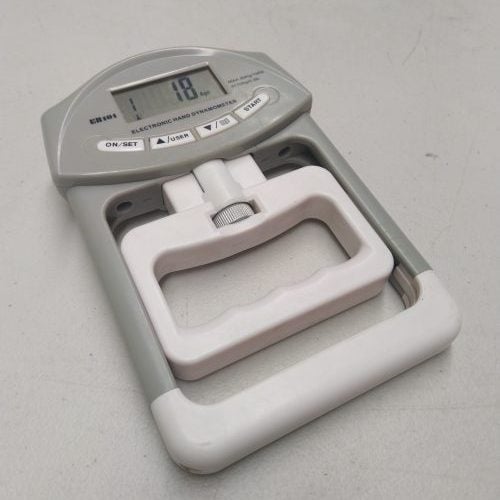
- Hand dynamometer – Quantify grip strength (in KG) and find out where you sit relative to your peers
- Heart rate measure – Measure resting and training heart rate
- Reaction time test – How fast can your body react to outside stimulus?
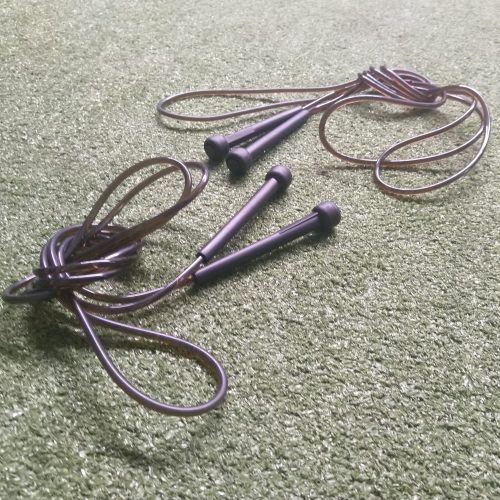
- Juggling – Juggling is a great test of hand-eye coordination
- Injury prevention and management – Learn about common injuries in sport and how to treat them
- Portion control – What is a good serving of of protein and carbohydrates in a balanced meal?
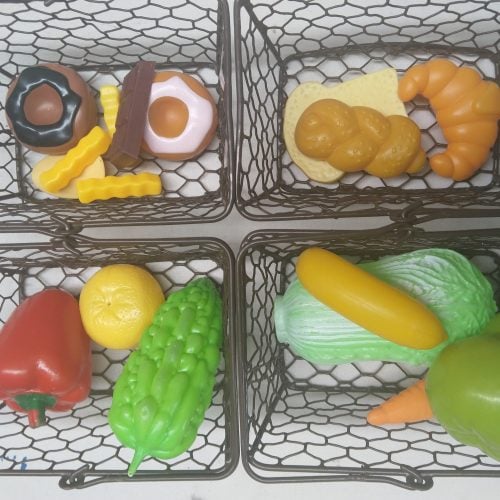
- Food sorting – Which foods belong in the protein, carbohydrates, vitamins, fats, and fibres categories?
- Taste testing – We all love the taste of sugar, but what are these other two substances…?
- Skeletal joints – How are your bones and muscles connected?
- Sugar discussion – Sugar tastes great – but why? What happens if you have too much?
Science workshop content
What Students Experience: The Physiology Lab
In this interactive health and science workshop, students move beyond the textbook to measure and analyze their own body’s performance. By combining physical activity with biological data, we make the science of “long-term health” tangible and engaging.
1. Cardiac Investigation
We kick off with a high-energy cardio challenge to get the heart pumping. Students perform immediate pulse checks to understand heart rate recovery and the vital link between exercise and the cardiovascular system.
2. Hands-On Stations
Students rotate through specialized testing zones. They measure grip strength using dynamometers, test flexibility with Sit & Reach boxes, analyze balance, and investigate the anatomy of bones and muscles.
3. The Nutritional Reveal
We conclude with a powerful visual demonstration of “hidden” additives. Students see exactly how much sugar and salt are concealed in common snacks, providing a scientific basis for making better dietary choices.
🏆 90-Minute Sports Science Expansion:
Our Commitment to Quality Health Education
A Trusted School Partner for 20 Years
Fizzics Education delivers reliable, syllabus-aligned visits that bridge the gap between Physical Education and Biological Science.
Using real dynamometers, pulse oximeters, and sit-and-reach equipment.
Students record and analyze their own physical data to see science in action.
Experienced presenters trained to facilitate physical activity and nutrition science safely.

Australian Curriculum Mapping
Australian National Curriculum Mapping for all our science incursions
Australian ACARA Content Outcomes:
Science F-10 Version 9.0
Year 3
- identify sources of heat energy and examine how temperature changes when heat energy is transferred from one object to another AC9S3U03
- investigate the observable properties of solids and liquids and how adding or removing heat energy leads to a change of state AC9S3U04
Year 4
- examine the properties of natural and made materials including fibres, metals, glass and plastics and consider how these properties influence their use AC9S4U04
Year 3 & 4
- examine how people use data to develop scientific explanations AC9S3H01, AC9S4H01
- consider how people use scientific explanations to meet a need or solve a problem AC9S3H02, AC9S4H02
- pose questions to explore observed patterns and relationships and make predictions based on observations AC9S3I01, AC9S4I01
- compare findings with others, consider if investigations were fair, identify questions for further investigation and draw conclusions AC9S3I05, AC9S4I05
Year 5
- explain observable properties of solids, liquids and gases by modelling the motion and arrangement of particles AC9S5U04
Year 6
- compare reversible changes, including dissolving and changes of state, and irreversible changes, including cooking and rusting that produce new substances AC9S6U04
Year 5 & 6
- investigate how scientific knowledge is used by individuals and communities to identify problems, consider responses and make decisions AC9S5H02, AC9S6H02
- pose investigable questions to identify patterns and test relationships and make reasoned predictions AC9S5I01, AC9S6I01
- compare methods and findings with others, recognise possible sources of error, pose questions for further investigation and select evidence to draw reasoned conclusions AC9S5I05, AC9S6I05
Health and Physical Education
Years 3 & 4
- describe and apply protective behaviours and help-seeking strategies in a range of online and offline situations AC9HP4P08
- interpret the nature and intention of health information and messages, and reflect on how they influence personal decisions and behaviours AC9HP4P09
- investigate and apply behaviours that contribute to their own and others’ health, safety, relationships and wellbeing AC9HP4P10
Years 5 & 6
- analyse and rehearse protective behaviours and help-seeking strategies that can be used in a range of online and offline situations AC9HP6P08
- investigate different sources and types of health information and how these apply to their own and others’ health choices AC9HP6P09
- analyse how behaviours influence the health, safety, relationships and wellbeing of individuals and communities AC9HP6P10
Design & Technology
Years 3 & 4
- describe the ways food can be selected and prepared for healthy eating AC9TDE4K04
Years 5 & 6
- explain how the characteristics of foods influence selection and preparation for healthy eating AC9TDE6K04
Australian National Curriculum Mapping for all our science workshops & shows

NSW K-10 Science Syllabus Mapping
NSW K – 10 Science Syllabus mapping
NSW Science Syllabus Content
A student:
- ST2-7MW-T investigates the suitability of natural and processed materials for a range of purposes
- ST2-8PW-ST describes the characteristics and effects of common forms of energy, such as light and heat
- ST3-5LW-T explains how food and fibre are produced sustainably in managed environments for health and nutrition
- ST3-7MW-T explains how the properties of materials determines their use for a range of purposes
- ST3-8PW-ST explains how energy is transformed from one form to another
PDHPE K to 10:
- PD3-7 proposes and implements actions and protective strategies that promote health, safety, wellbeing and physically active spaces
NSW Science and Technology K–6 Syllabus (Implementation from 2027)
For implementation advice, visit the NESA Science and Technology site.
Stage 2
ST2-SCI-01 uses information to investigate the solar system and the effects of energy on living, physical and geological systems
- Observe examples of matter that exist as a solid, liquid and gas
- Describe how adding and removing heat energy affects the movement and arrangement of particles
- ST2-PQU-01 poses questions to create fair tests that investigate the effects of energy on living things
Stage 3
ST3-SCI-01 uses evidence to explain how scientific knowledge can be used to develop sustainable practices
- Pose questions to determine whether substances dissolve in water by identifying variables
- ST3-PQU-01 poses questions to identify variables and conducts fair tests to gather data

VIC Science Syllabus Content
Science
Levels 3 & 4
- Solids, liquids and gases have observable properties; changes of state via heat energy. VC2S4U04
- Heat energy generation and temperature changes during transfer. VC2S4U09
- Plan and conduct scientific investigations using provided scaffolds and fair tests. VC2S4I02
Levels 5 & 6
- Modelling the motion and arrangement of particles in matter; forming mixtures. VC2S6U03
- Comparing reversible changes (dissolving) and irreversible changes (cooking). VC2S6U04
- Plan and conduct repeatable investigations, deciding variables and identifying risks. VC2S6I02
Health and Physical Education
Levels 3 & 4
- Identify and demonstrate protective behaviours and help-seeking strategies. VC2HP2P06
- Investigate health messages and strategies to promote wellbeing. VC2HP2P07
Levels 5 & 6
- Apply protective behaviours in online and offline situations. VC2HP4P08
- Interpret the nature and intention of health information and messages. VC2HP4P09
- Investigate and apply strategies that contribute to health and safety. VC2HP4P10
Design and Technologies
- Levels F-2: Explore how food can be selected and prepared for healthy eating. VC2TDE2C03
- Levels 3-4: Describe the ways food can be selected and prepared for healthy eating. VC2TDE4C03
- Levels 5-6: Explain how the properties of foods influence selection and preparation. VC2TDE6C03
Session Requirements
👥 Capacity & Timing
👨🎓 Attendance: Max 32 students per class.
🏫 Target: Appropriate for Years 3 to 6.
⏰ Duration: 60 or 90-minute options.
🛠️ Set/Pack: 45 mins setup + 45 mins pack down.
📍 Venue Requirements
🏗️ 60-Min Workshop: Indoor space with 7 tables.
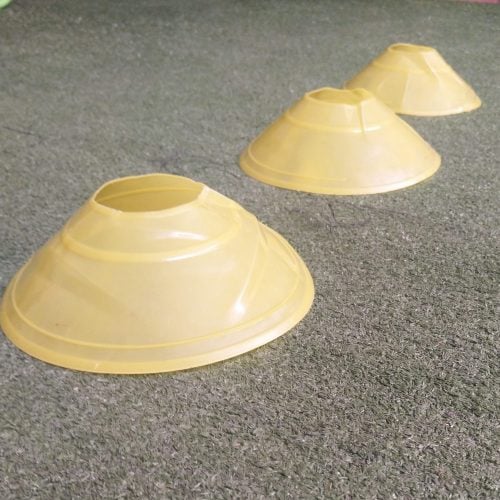
🌿 90-Min Version: Requires an outdoor grassed area at least 30 metres long for sprint testing.
🪑 Seating: Chairs are not required for students.
Go Further!
Complete Units of Work to Support Your Teaching
Support your classroom with 270+ syllabus-linked lessons, high-quality videos, and marking rubrics.
Save planning time with high-quality videos, printable experiments, and curriculum-aligned resources designed to engage students in health science.
Extend the Experience
Pair this workshop with a larger stage show for groups of up to 240 students:






