





Science Show Activities
- Eye model – Look inside!
- Ear model – How do we hear sound & have balance?
- Find your blind spot – Where are you blind in your retina?
- Colour blindness – Can you see all shades of red and green?
- Optical Illusions – Scientists use these to study how the brain works
- What smell is that? – Follow your nose…
- Taste tester – Use your sense of taste to work out the crystal types.
- Body puzzlers – Put together these layered puzzles on the body
- Microscopes – Check out your own hand on TV with this digital microscope
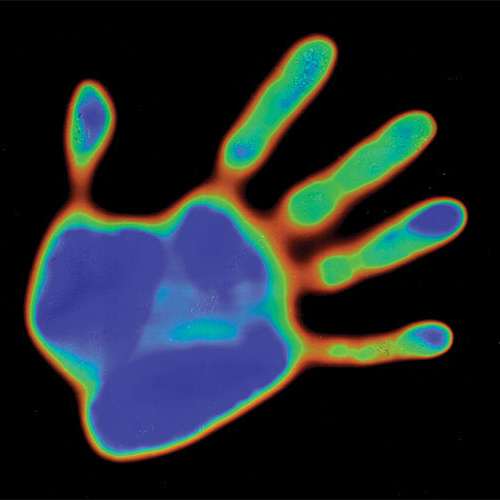
- Hot hands – This square shows where your hands are hot and cold.
- Sensory socks – Just what is that material?
Science workshop content
What Students Experience: The Sensory Lab
In this immersive biology workshop, students transition from simple observers to “Sensory Scientists.” By investigating how their bodies collect and process information, they gain a foundational understanding of how the human nervous system keeps us informed and safe.
1. Auditory Stimulus
We kick off with an interactive “Sound Mystery” challenge. Students use critical listening to identify environmental sounds, sparking a discussion on how our ears capture vibrations and how the brain decodes them.
2. Hands-On Stations
Students rotate through stations to put their senses to the test. They explore tactile textures, investigate the link between smell and taste, and use optical tools to see how our eyes perceive light and movement.
3. Safety & Synthesis
We conclude by synthesizing their findings. Students discuss how our senses act as an early-warning system—helping us identify danger through smell, sound, or touch—and keep us connected to the world around us.
Our Commitment to Quality Early Education
A Trusted School Partner for 20 Years
Fizzics Education delivers reliable, syllabus-aligned visits designed specifically for the developmental needs of Early Stage 1 and Stage 1 learners.
✓
We use high-quality, sanitized equipment suitable for hands-on sensory testing.
✓
Our educators are experts at breaking down complex biology into fun, understandable concepts for younger students.
✓
Experienced presenters trained to manage rotation stations and maintain high engagement levels.

Australian Curriculum Mapping
Australian National Curriculum Mapping for all our science incursions
Australian ACARA Content Outcomes:
Science F-10 Version 9.0
Foundation
- Observe external features of plants and animals and describe ways they can be grouped based on these features AC9SFU01
- Explore the ways people make and use observations and questions to learn about the natural world AC9SFH01
- Pose questions and make predictions based on experiences AC9SFI01
Year 1 & 2
- Describe how people use science in their daily lives, including using patterns to make scientific predictions AC9S1H01, AC9S2H01
- Pose questions to explore observed simple patterns and relationships and make predictions based on experiences AC9S1I01, AC9S2I01
- Compare observations with predictions and others’ observations, consider if investigations are fair and identify further questions AC9S1I05, AC9S2I05
Health and Physical Education Version 9.0
Foundation
- Demonstrate protective behaviours, name body parts and rehearse help-seeking strategies that help keep them safe AC9HPFP05
Australian National Curriculum Mapping for all our science workshops & shows

NSW K-10 Science Syllabus Mapping
NSW K – 10 Science Syllabus mapping
NSW Science Syllabus Outcomes
A student:
- ST2-4LW-S compares features and characteristics of living and non-living things
- ST3-4LW-S examines how the environment affects the growth, survival and adaptation of living things
NSW Science and Technology K–6 Syllabus (Implementation from 2027)
For implementation advice, visit the NESA Science and Technology site.
Early Stage 1
STE-SCI-01 identifies and describes characteristics of living things, properties of materials, and movement
- Identify the sense organs and describe their functions
- Identify and use tools to aid and extend sensory observations
- STE-PQU-01 poses questions based on observations to collect data
Stage 1
ST1-SCI-01 measures and describes changes in living things, materials, movement, Earth and the sky
- Recognise that the human brain detects information about the surroundings using sense organs, and that it controls and coordinates body functions
- Observe and describe the function and parts of the eye and the ear
- Investigate how taste and smell provide information about the environment
- Pose questions, test and describe textures to investigate the sense of touch
- ST1-PQU-01 poses questions based on observations and information to investigate cause and effect
Session Requirements
👥 Capacity & Timing
👨🎓 Attendance: Max 32 students per class.
🏫 Target: Appropriate for Years K to 2.
⏰ Duration: 60-minute workshop.
🛠️ Set/Pack: 45 mins setup + 45 mins pack down.
📍 Venue Requirements
🏗️ Tables: 7 tables arranged around the room for rotation stations.
🔌 Power: Access to 2 electrical power sockets.
🪑 Seating: Chairs are not required for students.
Go Further!
Complete Units of Work to Support Your Teaching
Support your classroom with 270+ syllabus-linked lessons, high-quality videos, and marking rubrics.
Save planning time with high-quality videos and experiments designed for early learners to engage with the science of the human body.
Extend the Experience
Pair this workshop with a larger stage show for groups of up to 240 students:






