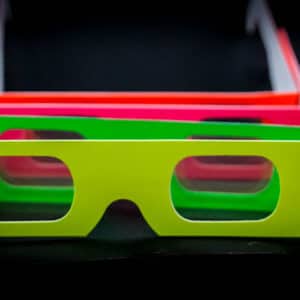
Light & Colour Your classroom is filled with colour as the students learn about properties of light in this fun interactive science workshop Enquire Now 🌈 Physical Science: Light, Energy & Optics Light & Colour Refraction, Reflection and the Visible Spectrum How does a single beam of white light contain every colour of the rainbow? In this high-energy physics workshop, your classroom becomes an optics laboratory. From the hidden world of ultraviolet minerals to the high-speed data traveling through optical fibres, students discover that light is much more than what meets the eye. 🔭 Optics Refraction vs. Reflection and telescope construction. ✨ Light Control Colour addition & subtraction and coloured shadows. ⚡ Energy & Tech Ultraviolet minerals and hi-speed Broadband Fibre. 👁️ Perception Colour vision, spectrums, and persistence of vision. Physics Made Accessible Led by Churchill Fellow Ben Newsome, we use specialized lasers, prisms, and light boxes to bring the abstract concepts of physics to life for every student. 4 Million+ Students Inspired since 2004 Trustpilot Reviews Check Availability Quick Links Past projects Requirements Cost per Science Show Free Science Resources Back to Primary Science Visits 150 Free Experiments Fizzics in the Media Australian Curriculum Mapping for all science workshops & shows Australian National Curriculum Mapping for all our science incursions Australian ACARA Content Outcomes: Science F-10 Version 9.0 Foundation Explore the ways people make and use observations and questions to learn about the natural world AC9SFH01 Pose questions and make predictions based on experiences AC9SFI01 Year 1 & 2 Describe how people use science in their daily lives, including using patterns to make predictions AC9S1H0, AC9S2H01 Pose questions to explore observed simple patterns and make predictions based on experiences AC9S1I01, AC9S2I01 Compare observations with predictions and consider if investigations are fair AC9S1I05, AC9S2I05 Year 3 & 4 Examine how people use data to develop scientific explanations AC9S3H01, AC9S4H01 Consider how people use scientific explanations to meet a need or solve a problem AC9S3H02, AC9S4H02 Pose questions to explore observed patterns and make predictions AC9S3I01, AC9S4I01 Compare findings with others and identify questions for further investigation AC9S3I05, AC9S4I05 Year 5 Identify sources of light, recognise that light travels in a straight path and describe how shadows are formed and light can be reflected and refracted AC9S5U03 Explain observable properties of solids, liquids and gases by modelling the arrangement of particles AC9S5U04 Year 5 & 6 Investigate how scientific knowledge is used to identify problems and make decisions AC9S5H02, AC9S6H02 Pose investigable questions to identify patterns and make reasoned predictions AC9S5I01, AC9S6I01 Compare methods and findings, recognize error, and select evidence to draw conclusions AC9S5I05, AC9S6I05 Design and Technologies F-10 Version 9.0 Years 5 & 6 Explain how electrical energy can be transformed into movement, sound or light in a product or system AC9TDE6K02 Australian National Curriculum Mapping for all our science workshops & shows NSW SCIENCE SYLLABUS CONTENT for all our incursions NSW K – 10 Science Syllabus mapping NSW Science & Technology Syllabus Content A student: ST1-8PW-S describes common forms of energy and explores some characteristics of sound energy ST1-9PW-ST investigates how forces and energy are used in products ST2-8PW-ST describes characteristics and effects of energy, such as light and heat ST3-7MW-T explains how properties of materials determine their use NSW Science and Technology K–6 Syllabus (Implementation from 2027) Implementation advice at the NESA Science and Technology site. Stage 1 ST1-SCI-01 measures and describes changes in movement and materials Recognise that light and sound can travel through air, water and some solids Pose questions, test and describe how light can be reflected, refracted, dispersed or absorbed Describe how translucent, transparent, opaque and reflective materials interact with light ST1-PQU-01 poses questions based on observations to investigate cause and effect [Image of light passing through transparent, translucent, and opaque materials] Stage 2 & 3 ST2-PQU-01 poses questions to create fair tests that investigate the effects of energy ST3-PQU-01 poses questions to identify variables and conducts fair tests to gather data NSW K-10 Mapping Print NSW PDF Mapping VIC Curriculum F–10 Version 2.0 Science Foundation to Level 2 Materials have observable properties and can be used to make objects. VC2S2U04 Pose questions to explore patterns and make predictions. VC2S2I01 Share observations and ideas using scientific vocabulary. VC2S2I06 Levels 3 & 4 The properties of glass and plastics influence their use and re-use. VC2S4U05 Plan and conduct fair tests considering the safe use of equipment. VC2S4I02 Levels 5 & 6 Light travels in a straight path and can be absorbed, reflected or refracted. VC2S6U08 Plan and conduct repeatable fair tests, deciding on variables and potential risks. VC2S6I02 Design & Tech: Explain how electrical energy can be transformed into light. VC2TDE6C01 VIC F-6 Mapping Print VIC PDF Mapping School Testimonials View All Manly Village Public School Feedback on: Light & Colour All the Year 1 teachers of Manly Village Public School want to thank you for the interesting and informative Light and Sound incursion that Ben delivered to us yesterday. The children were shown many different examples of how light and sound work such as the Newton's wheel, the slinky and the shadows on the screen. Ben was very professional and enthusiastic and gave simple explanations that the year 1 students could understand. He arrived early and was set up and ready to go at the arranged times. Many thanks for the educational show and we will be sure to recommend Fizzics Education to other teachers in our school and other colleagues. St. Luke's Grammar School Feedback on: Light & Sound Ben was great! The session was really relaxed with the kids. Science Show Activities Sunsets Just why are sunsets red anyway? Why not blue or green? Colour mixing Mix primary light colours ... why are the secondary colours different to paint? Bubble Films See light split through a bubble film. Nice... and demonstrates wave theory Float that image Create a 3D floating image hovering in mid-air Magic specs See rainbows all around with these diffraction glasses Glowing rocks Some minerals fluoresce under UV light... can you identify which ones? Hidden beaker Canola oil and this beaker have almost the same refractive index... lets hide it Talking telescopes Make a telescope in class Hide me Transparent materials are quite difference to translucent ones. Cartoon capers Make a number of cartoons work with these zoetropes and flip charts Optical illusions Light can be quite tricky, can you spot how they might work? Mirror boxes Hidden compartments can create 'magical' illusions. How do they work? Optical fibre Pretty.... and it can be used to transport massive amounts of information Perfect plasma A plasma ball can demonstrate light energies... and the students love it Colourful chemistry Some chemicals react to heat and change in colour... check them out! Colour vision Our Director is colour blind... are your students? Flys eye scopes What is the difference between human and insect eyes? Shiny disco ball Mirrors and light... what more can we say? Send images around the room! Mega lens Use this lenticular lens and magnify things, including you. Lasers Investigate how lasers work and see them through a cloud... neat! Science workshop content What Students Experience: The Light & Colour Lab In this vibrant workshop, students journey from the fundamental physics of the visible spectrum to the high-tech applications of light in modern communications. By manipulating photons, lenses, and logic, they discover how light shapes our perception of the world. 1. Spectral Foundations The workshop begins with a spectacular light show. Students investigate the difference between colour addition and subtraction, exploring the wavelengths of ROYGBIV and the creation of “coloured shadows” that challenge their visual expectations. 2. Optics in Motion Students rotate through hands-on stations to experiment with image formation, persistence of vision, and optical illusions. They utilise professional lenses to construct telescopes and create “floating” images through precise reflection techniques. 3. Applied Science The session concludes with high-level demonstrations showing how light powers our world. We explore the mechanics of animation and look inside the National Broadband Network to see how pulses of light transmit data at incredible speeds. Light & Colour in Action T Tangara School for Girls Cherrybrook, NSW View Workshop Highlight on Facebook EST. 2004 Authentic Physics Equipment A Trusted Science Partner for Over 20 Years We bring specialised apparatus, prisms, and light boxes into your classroom, providing inquiry-based experiences that Australian students love. ✓ Student Friendly Optics: Students handle high-quality glass prisms, convex/concave lenses, and optical fibres for genuine understanding. ✓ Engaging Multi-Sensory Kits: From ultraviolet mineral samples to mechanical zoetropes, our kits support every learning style. Trustpilot Requirements 🔦 Workshop Logistics Session Requirements 👥 Capacity & Timing 👨🎓 Attendance: Max 30 students per class. 🏫 Target: Appropriate for Years 1 to 6. ⏰ Duration: 60 or 90 minute sessions. 🛠️ Set/Pack: 45 mins setup + 45 mins pack down. 🌑 Room Darkness The ability to darken the room is essential. Please choose the room with the best blackout capabilities. 🏗️ Tables: 10 tables arranged for rotation stations. 🔌 Power: Access to 3 electrical power sockets. 🪑 Seating: Chairs are not required for students. Looking for a combined workshop? Explore our Light & Sound Program here! 🛡️ $20M Public Liability ✅ WWCC Checked 📋 Full Risk Assessments 🎓 Expert Educators Go Further! Complete Units of Work to Support Your Teaching Save planning time with high-quality videos and experiments designed for K to 6 learners to engage with the physics of energy. Explore STEM Units Extend the Experience Pair this workshop with a larger stage show for groups of up to 240 students: Big Science Big Fun tick tick BOOM! Destination Moon Food Science Show Deep Blue Oceans Cost 💰 Physics Workshop Investment Light & Colour Class Workshop $580 inc. GST 60-Minute Session ✨ $19.33 per student (Based on 30 students) Flexible Format $660 inc. GST 90-Minute Session ✨ $22.00 per student (Based on 30 students) Large Group Show $750 inc. GST 60-Minute Presentation ✨ $12.50 per student (Based on 60 students) 🌍 Global Learning: Available as a live online class anywhere in the world. 📍 Regional Access: Part of our country science tours. 🔖 Bundle & Save: Get discounts when you book 2+ sessions. Call 1300 856 828 📑 Syllabus Support: Print a PDF Mapping for all science visits. Trustpilot Enquire Now Extension Ideas! STEM Full Day Accelerator - Primary Create a Full Day STEM Accelerator or join us for a rapid science upskill! For schools outside of metropolitan areas please contact us to discuss how this science workshop can be run online or visit your school as part of a regional visit. Click below to know more! Science Full day STEM accelerator – Primary Teachers Teacher Professional Learning – One hour STEM Ideation Coding Full Day TPL – Primary Teachers Online courses Read More STEM Full Day Accelerator - Primary Create a Full Day STEM Accelerator or join us for a rapid science upskill! For schools outside of metropolitan areas please contact us to discuss how this science workshop can be run online or visit your school as part of a regional visit. Click below to know more! Science Full day STEM accelerator – Primary Teachers Teacher Professional Learning – One hour STEM Ideation Coding Full Day TPL – Primary Teachers Online courses Read More Extension Ideas! Scientist Q & A Often students attend our science workshops and shows with questions that stem beyond the covered topic area. Ask a scientist aims to give students a chance to get their questions answered! Run as a 30-minute session at a cost of $70 inc. GST. Read More Scientist Q & A Often students attend our science workshops and shows with questions that stem beyond the covered topic area. Ask a scientist aims to give students a chance to get their questions answered! Run as a 30-minute session at a cost of $70 inc. GST. Read More Fizzics Education Awards Related Shows Marvellous Mixtures Years K to 4 Maximum 30 students Hands-on science workshop 60 or 90 minutes Online Class Available Australian Capital Territory Kindergarten Year 1 Year 2 Chemical Science Human Endeavor Science Inquiry New South Wales Victoria Read More Enquire Now Plants for Life Years K to 6 Maximum 30 students Workshop (NSW & VIC) 60 or 90 minutes Online Class Available Kindergarten Year 1 Year 2 Year 3 Year 4 Year 5 Biological Science Year 6 Human Endeavor Science Inquiry New South Wales Victoria Read More Enquire Now Earth and Space K to 2 Years K to 2 Maximum 30 students Science workshop (NSW & VIC) 60 or 90 minutes Online Class Available New South Wales Victoria Kindergarten Year 1 Year 2 Earth and Space Human Endeavor Physical Science Read More Enquire Now
Australian National Curriculum Mapping for all our science incursions Australian ACARA Content Outcomes: Science F-10 Version 9.0 Foundation Explore the ways people make and use observations and questions to learn about the natural world AC9SFH01 Pose questions and make predictions based on experiences AC9SFI01 Year 1 & 2 Describe how people use science in their daily lives, including using patterns to make predictions AC9S1H0, AC9S2H01 Pose questions to explore observed simple patterns and make predictions based on experiences AC9S1I01, AC9S2I01 Compare observations with predictions and consider if investigations are fair AC9S1I05, AC9S2I05 Year 3 & 4 Examine how people use data to develop scientific explanations AC9S3H01, AC9S4H01 Consider how people use scientific explanations to meet a need or solve a problem AC9S3H02, AC9S4H02 Pose questions to explore observed patterns and make predictions AC9S3I01, AC9S4I01 Compare findings with others and identify questions for further investigation AC9S3I05, AC9S4I05 Year 5 Identify sources of light, recognise that light travels in a straight path and describe how shadows are formed and light can be reflected and refracted AC9S5U03 Explain observable properties of solids, liquids and gases by modelling the arrangement of particles AC9S5U04 Year 5 & 6 Investigate how scientific knowledge is used to identify problems and make decisions AC9S5H02, AC9S6H02 Pose investigable questions to identify patterns and make reasoned predictions AC9S5I01, AC9S6I01 Compare methods and findings, recognize error, and select evidence to draw conclusions AC9S5I05, AC9S6I05 Design and Technologies F-10 Version 9.0 Years 5 & 6 Explain how electrical energy can be transformed into movement, sound or light in a product or system AC9TDE6K02 Australian National Curriculum Mapping for all our science workshops & shows
NSW K – 10 Science Syllabus mapping NSW Science & Technology Syllabus Content A student: ST1-8PW-S describes common forms of energy and explores some characteristics of sound energy ST1-9PW-ST investigates how forces and energy are used in products ST2-8PW-ST describes characteristics and effects of energy, such as light and heat ST3-7MW-T explains how properties of materials determine their use NSW Science and Technology K–6 Syllabus (Implementation from 2027) Implementation advice at the NESA Science and Technology site. Stage 1 ST1-SCI-01 measures and describes changes in movement and materials Recognise that light and sound can travel through air, water and some solids Pose questions, test and describe how light can be reflected, refracted, dispersed or absorbed Describe how translucent, transparent, opaque and reflective materials interact with light ST1-PQU-01 poses questions based on observations to investigate cause and effect [Image of light passing through transparent, translucent, and opaque materials] Stage 2 & 3 ST2-PQU-01 poses questions to create fair tests that investigate the effects of energy ST3-PQU-01 poses questions to identify variables and conducts fair tests to gather data NSW K-10 Mapping Print NSW PDF Mapping VIC Curriculum F–10 Version 2.0 Science Foundation to Level 2 Materials have observable properties and can be used to make objects. VC2S2U04 Pose questions to explore patterns and make predictions. VC2S2I01 Share observations and ideas using scientific vocabulary. VC2S2I06 Levels 3 & 4 The properties of glass and plastics influence their use and re-use. VC2S4U05 Plan and conduct fair tests considering the safe use of equipment. VC2S4I02 Levels 5 & 6 Light travels in a straight path and can be absorbed, reflected or refracted. VC2S6U08 Plan and conduct repeatable fair tests, deciding on variables and potential risks. VC2S6I02 Design & Tech: Explain how electrical energy can be transformed into light. VC2TDE6C01 VIC F-6 Mapping Print VIC PDF Mapping
What Students Experience: The Light & Colour Lab In this vibrant workshop, students journey from the fundamental physics of the visible spectrum to the high-tech applications of light in modern communications. By manipulating photons, lenses, and logic, they discover how light shapes our perception of the world. 1. Spectral Foundations The workshop begins with a spectacular light show. Students investigate the difference between colour addition and subtraction, exploring the wavelengths of ROYGBIV and the creation of “coloured shadows” that challenge their visual expectations. 2. Optics in Motion Students rotate through hands-on stations to experiment with image formation, persistence of vision, and optical illusions. They utilise professional lenses to construct telescopes and create “floating” images through precise reflection techniques. 3. Applied Science The session concludes with high-level demonstrations showing how light powers our world. We explore the mechanics of animation and look inside the National Broadband Network to see how pulses of light transmit data at incredible speeds. Light & Colour in Action T Tangara School for Girls Cherrybrook, NSW View Workshop Highlight on Facebook EST. 2004 Authentic Physics Equipment A Trusted Science Partner for Over 20 Years We bring specialised apparatus, prisms, and light boxes into your classroom, providing inquiry-based experiences that Australian students love. ✓ Student Friendly Optics: Students handle high-quality glass prisms, convex/concave lenses, and optical fibres for genuine understanding. ✓ Engaging Multi-Sensory Kits: From ultraviolet mineral samples to mechanical zoetropes, our kits support every learning style. Trustpilot
STEM Full Day Accelerator - Primary Create a Full Day STEM Accelerator or join us for a rapid science upskill! For schools outside of metropolitan areas please contact us to discuss how this science workshop can be run online or visit your school as part of a regional visit. Click below to know more! Science Full day STEM accelerator – Primary Teachers Teacher Professional Learning – One hour STEM Ideation Coding Full Day TPL – Primary Teachers Online courses Read More
STEM Full Day Accelerator - Primary Create a Full Day STEM Accelerator or join us for a rapid science upskill! For schools outside of metropolitan areas please contact us to discuss how this science workshop can be run online or visit your school as part of a regional visit. Click below to know more! Science Full day STEM accelerator – Primary Teachers Teacher Professional Learning – One hour STEM Ideation Coding Full Day TPL – Primary Teachers Online courses Read More
Scientist Q & A Often students attend our science workshops and shows with questions that stem beyond the covered topic area. Ask a scientist aims to give students a chance to get their questions answered! Run as a 30-minute session at a cost of $70 inc. GST. Read More
Scientist Q & A Often students attend our science workshops and shows with questions that stem beyond the covered topic area. Ask a scientist aims to give students a chance to get their questions answered! Run as a 30-minute session at a cost of $70 inc. GST. Read More
This website uses cookies to improve user experience. By using our website you consent to all cookies in accordance with our Cookie Policy.
Thank you for looking to subscribing to our newsletter 🙂 Through this service you’ll be first to know about the newest free experiments, science news and special offers. PLUS: Get a free Kitchen Chemistry Booklet with >20 experiments, how to use variables plus a handy template!
Please fill out the details below and an email will be sent to you. Once you get that just click on the link to confirm your subscription and you're all done!