
Dish soap slime
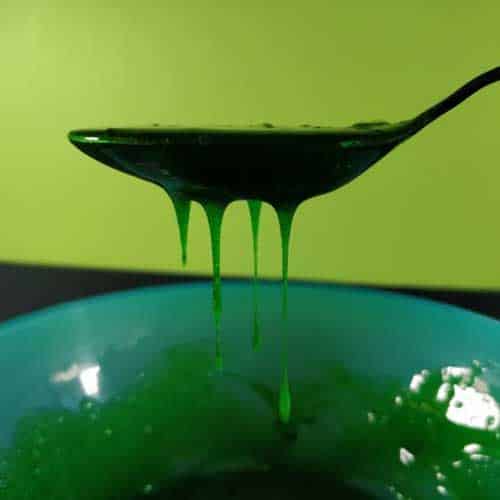
Dish soap slime is so much fun 🙂 With a bit of detergent or shampoo, salt & glitter you can create slime in snap! Full instructions by educators here…
Adult supervision for setup
You will need
- Detergent. Either dishwashing liquid, hand soap or shampoo.
- Food colouring/glitter (optional)
- Table salt
- A container.
- One Spoon
Method
-
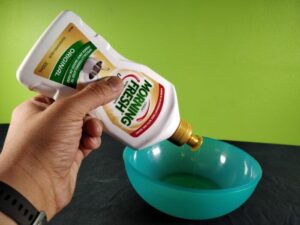
Squeeze some detergent into the container.
-
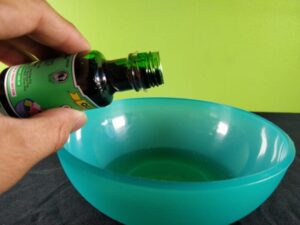
Add the food dye, or glitter.
-
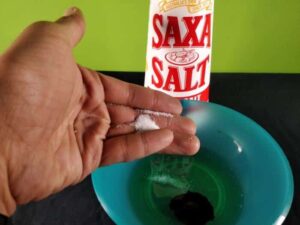
Sprinkle some salt into the mixture and stir well with a spoon.
-
Repeat step three until a ‘slime’ consistency is reached. Each addition of salt could take a minute
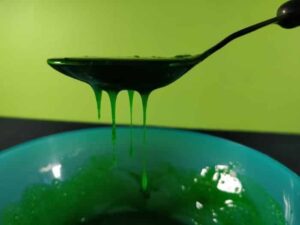
or so to mix in, so be patient.Try different detergents & amounts of salt as variables! This slime is very much dependent on the materials you use. Once you get the balance right it will not be as ‘gloopy’ as some slimes, more of a slippery liquid.. but it’s still a slime all the same.
Other slimes to try:
-
School science visits since 2004!
– Curriculum-linked & award-winning incursions.
– Over 40 primary & high school programs to choose from.
– Designed by experienced educators.
– Over 2 million students reached.
– Face to face incursions & online programs available.
– Early learning centre visits too!

-

The science behind it
What is happening?
This slime is slimy to touch (not a classic dripping slime). Is there a way to improve it? Of course!
For more slime recipes and experiments, check out our comprehensive guide to SLIME!
Dish detergent, shampoo, hand soap, and anything else you might use to wash things contain surfactants. A surfactant is usually a molecule with a hydrophilic “head” and a hydrophobic “tail”. This means that it is able to bridge between water soluble and oil-soluble interfaces. An anionic surfactant is one with an anionic functional group at the “head” position. They are the most common surfactants used in industry, typical examples are lauryl sulfates, laureth sulfates, sulfonates and phosphate esters. If your soapy liquid of choice has one of these chemicals in its long list of ingredients, it should make a slime when you add just the right amount of salt to it.
When surfactants are in solution they can sometimes arrange themselves into these aggregate units called micelles, where all the surfactant molecules have their “tails” pointing inwards and “heads” pointing outwards, or vice versa. In the detergents that we used to make the slime, the micelles formed have anionic “head” groups sticking out into the solution, with their hydrophobic “tails” in the centre. This gives the micelles a certain charge density on its outer surface, which can be affected by the addition of salt. The ions from the dissolved salt, at the right concentration, can cause bigger micelles to form and pack closer together, resulting in a thicker mixture or gelling effect. But if salt concentrations are pushed beyond that optimal level, the micelle structures can breakdown and the mixture viscosity will decrease.
Variables to test
- Change the type of detergent used. This makes a massive difference as not all detergents are made the same way.
- Which amount of salt is the optimal amount?
- Does adding heat make a difference?
- Add 1 more ingredient and see what happens. Try shaving cream, contact lens solution, shampoo or cornflour. Which is best?
- Does iodised salt vs. non-iodised salt make a difference?
Teacher's note
Curriculums change, and so does the way you implement them in your classroom. Please use your own experience and knowledge of your students to use these resources to best effect for student learning.
Still want the curriculum links?
Here are the suggested links:
Australian Curriculum (ACARA) Science:
NSW Science syllabuses:
Victorian Curriculum Science:
Want this experiment — and many more — running in your classroom?
Have us visit your school — every student gets three hands-on experiments in 60–90 minutes with a qualified presenter.








