Big Science Big Fun Show An awesome science show performance with all the cool stuff for your next school visit! Enquire Now 🧪 High-Impact Science Performance Big Science Big Fun The Definitive Science Sampler for K to Year 6 Originally developed as the main stage performance for the Australian Science Festival, Big Science Big Fun is one our most highly popular shows. It is designed to bridge the gap between spectacular demonstrations and foundational scientific principles. This professional large-stage performance is the perfect “hook” for schools wanting to ignite a love of inquiry. Whether used as a reward or a launchpad for a new term, our expert presenters ensure every moment grabs the studnet’s attention. Core Learning Outcomes: Energy & Electricity: Investigating Van de Graaff generators and circuits. Forces & Motion: Giant gyroscopes, air pressure, and Bernoulli’s principle. Materials & Chemistry: Exploring gigantic bubbles and energetic fireballs. Optics & Light: Visualising coloured shadows and the science of sight. Inquiry Skills: Developing predictions based on large-scale observations. Education-First Leadership Led by Churchill Fellow Ben Newsome, we ensure every performance is more than a show—it’s a high-calibre educational experience that inspires students to discover the world around them. Trustpilot 4 Million+ Students Inspired since 2004 Trustpilot Check Availability Accommodates up to 240 students per session. Full Risk Assessments & WWCC Provided. Quick Links Past projects Requirements Cost per Science Show Free Science Resources Back to Primary Science Visits 150 Free Experiments Fizzics in the Media Australian Curriculum Mapping for all science workshops & shows Australian National Curriculum Mapping for all our science incursions Australian ACARA Content Outcomes: Science F-10 Version 9.0 Foundation describe how objects move and how factors including their size, shape or material influence their movement AC9SFU02 recognise that objects can be composed of different materials and describe the observable properties of those materials AC9SFU03 explore the ways people make and use observations and questions to learn about the natural world AC9SFH01 pose questions and make predictions based on experiences AC9SFI01 Year 1 describe pushes and pulls in terms of strength and direction and predict the effect of these forces on objects’ motion and shape AC9S1U03 Year 2 explore different actions to make sounds and how to make a variety of sounds, and recognise that sound energy causes objects to vibrate AC9S2U02 recognise that materials can be changed physically without changing their material composition and explore the effect of different actions on materials including bending, twisting, stretching and breaking into smaller pieces AC9S2U03 Year 1 & 2 describe how people use science in their daily lives, including using patterns to make scientific predictions AC9S1H0, AC9S2H01 pose questions to explore observed simple patterns and relationships and make predictions based on experiences AC9S1I01, AC9S2I01 compare observations with predictions and others’ observations, consider if investigations are fair and identify further questions with guidance AC9S1I05, AC9S2I05 Year 3 identify sources of heat energy and examine how temperature changes when heat energy is transferred from one object to another AC9S3U03 investigate the observable properties of solids and liquids and how adding or removing heat energy leads to a change of state AC9S3U04 Year 4 identify how forces can be exerted by one object on another and investigate the effect of frictional, gravitational and magnetic forces on the motion of objects AC9S4U03 examine the properties of natural and made materials including fibres, metals, glass and plastics and consider how these properties influence their use AC9S4U04 Year 3 & 4 examine how people use data to develop scientific explanations AC9S3H01, AC9S4H01 consider how people use scientific explanations to meet a need or solve a problem AC9S3H02, AC9S4H02 pose questions to explore observed patterns and relationships and make predictions based on observations AC9S3I01, AC9S4I01 compare findings with those of others, consider if investigations were fair, identify questions for further investigation and draw conclusions AC9S3I05, AC9S4I05 Year 5 identify sources of light, recognise that light travels in a straight path and describe how shadows are formed and light can be reflected and refracted AC9S5U03 explain observable properties of solids, liquids and gases by modelling the motion and arrangement of particles AC9S5U04 Year 6 compare reversible changes, including dissolving and changes of state, and irreversible changes, including cooking and rusting that produce new substances AC9S6U04 Year 5 & 6 investigate how scientific knowledge is used by individuals and communities to identify problems, consider responses and make decisions AC9S5H02, AC9S6H02 pose investigable questions to identify patterns and test relationships and make reasoned predictions AC9S5I01, AC9S6I01 compare methods and findings with those of others, recognise possible sources of error, pose questions for further investigation and select evidence to draw reasoned conclusions AC9S5I05, AC9S6I05 Australian National Curriculum Mapping for all our science workshops & shows NSW SCIENCE SYLLABUS CONTENT for all our incursions NSW K – 10 Science Syllabus mapping for all our incursions NSW Science Syllabus Content A student: STe-5PW-ST observes the way objects move and relates changes in motion to push and pull forces ST1-8PW-S describes common forms of energy and explores some characteristics of sound energy ST1-9PW-ST investigates how forces and energy are used in products ST2-6MW-S describes how adding or removing heat causes a change of state ST2-8PW-ST describes the characteristics and effects of common forms of energy, such as light and heat ST2-9PW-ST describes how contact and non-contact forces affect an object’s motion ST3-6MW-S explains the effect of heat on the properties and behaviour of materials ST3-7MW-T explains how the properties of materials determines their use for a range of purposes ST3-8PW-ST explains how energy is transformed from one form to another ST3-9PW-ST investigates the effects of increasing or decreasing the strength of a specific contact or non-contact force NSW Science and Technology K–6 Syllabus (Implementation from 2027) For explanatory points & implementation advice for each dot point, please visit the NESA Science and Technology K–6 Curriculum site Early Stage 1 STE-SCI-01 identifies and describes characteristics of living things, properties of materials, and movement Recognise that properties of materials can be observed using the senses Observe and manipulate materials to describe their properties using Tier 2 vocabulary Pose questions about materials and describe how they are used in everyday objects STE-PQU-01 poses questions based on observations to collect data Stage 1 ST1-SCI-01 measures and describes changes in living things, materials, movement, Earth and the sky Recognise that a force is a push or a pull that can make things either start moving, stop moving, change speed, direction or shape Pose questions and test the effects of forces on an object’s movement Recognise that light and sound can travel through air, water and some solids and are affected by those materials Recognise that sound is created and carried by vibrations Test how different materials and actions affect the volume and pitch of sound ST1-PQU-01 poses questions based on observations and information to investigate cause and effect Stage 2 ST2-SCI-01 uses information to investigate the solar system and the effects of energy on living, physical and geological systems Recognise that matter is anything that has mass, takes up space and consists of very small particles Observe examples of matter that exist as a solid, which has a defined shape and volume; a liquid, which has a definite volume but not a definite shape; and a gas, which has neither a definite shape nor a definite volume Observe and describe water changing from solid to liquid to gas and back again, using Tier 2 and Tier 3 vocabulary Describe how adding and removing heat energy affects the movement and arrangement of particles when matter is changing state Recognise that heat energy can be transferred from warmer to cooler objects by conduction, convection and radiation Pose questions and conduct fair tests to compare how different materials absorb or reflect heat energy Describe how the properties of materials and transfer of heat energy impact everyday life ST2-PQU-01 poses questions to create fair tests that investigate the effects of energy on living things and physical systems Stage 3 ST3-PQU-01 poses questions to identify variables and conducts fair tests to gather data Recognise that in a fair test, an independent variable is changed, a dependent variable is measured, and controlled variables remain the same NSW K – 10 Science Syllabus mapping for all our incursions Print a PDF detailing NSW K-6 mapping VIC Science Syllabus Content VIC Curriculum F–10 Version 2.0 For explanatory points & implementation advice for each dot point, please visit the VIC Curriculum F-10 site. Foundation to Level 2 objects can be made of one or more different materials; these materials have observable properties. VC2S2U04 materials can be combined in a variety of ways for particular purposes; the properties of objects and mixtures can differ from the properties of the materials from which they are made. VC2S2U05 materials can be changed physically by different actions without changing their material composition, including by bending, twisting, stretching, crushing, squashing and breaking into smaller pieces. VC2S2U06 the way objects move depends on a variety of factors including their size, shape and material. VC2S2U10 pushes and pulls are forces that can change an object’s movement or shape and can be represented in terms of strength and direction. VC2S2U11 experiences can be used as a basis for posing questions to explore observed patterns and relationships, and to make predictions. VC2S2I01 observations, findings and ideas can be shared with others by using everyday and some scientific vocabulary. VC2S2I06 Levels 3 and 4 solids, liquids and gases have observable properties; adding or removing heat energy leads to a change of state between solids, liquids and gases. VC2S4U04 the properties of natural and made materials, including fibres, metals, glass and plastics, influence their use and re-use. VC2S4U05 heat energy can be generated from different sources; temperature changes may happen when heat is transferred from one object to another. VC2S4U09 forces, including frictional, gravitational, electrostatic and magnetic, can be exerted by one object on another through direct contact or from a distance and affect the motion (speed and direction) of objects. VC2S4U10 scientific investigations to answer questions or test predictions can be planned and conducted using provided scaffolds, including identifying the attributes of fair tests, and considering the safe use of materials and equipment. VC2S4I02 Levels 5 & 6 light can be produced from many sources; light travels in a straight path, can form shadows, and can be absorbed, transmitted, reflected or refracted by objects. VC2S6U08 the observable properties of matter (solids, liquids and gases) can be explained by modelling the motion and arrangement of their particles; mixtures (including solutions) can be formed by combining 2 or more different substances. VC2S6U03 changes to substances may be reversible, in which case the substance may be recovered, or irreversible, in which case new substances are formed; for most substances a change of state or dissolving in water is reversible, while irreversible changes include cooking and rusting. VC2S6U04 repeatable scientific investigations to answer questions can be planned and conducted, including, as appropriate, deciding the variables to be changed, measured and controlled in fair tests, considering potential risks, planning for the safe and ethical use of equipment and materials, and obtaining permissions for investigations conducted on Country and Place or in protected areas. VC2S6I02 VIC F – 6 Science Syllabus mapping Print a PDF detailing VIC P-6 mapping School Testimonials View All Gresford Public School Feedback on: Big Science Big Fun Lego Robotics National Science Week Many thanks for a fantastic day last week. The Big Science Show got rave reviews from both children and adults alike. Our students loved their robotics session and now have more confidence to go on with their explorations. St Peter's Campus Maitland Feedback on: Big Science Big Fun I just wanted to pass on how wonderful we thought Jeanette was. She was a vibrant and enthusiastic presenter, she engaged the students really well and was very professional throughout the session. It was a pleasure to have her present to our students. Science Show Demonstrations Air vortices Shooting compressed air rings over the class - discussion on pressure Bernoulli balls Float balls in mid-air, relating curved surfaces to wing design Coloured shadows Colour addition vs colour subtraction Fire ball Learn about the fire triangle in this highly visual demonstration Flying toilet paper Demonstration on how the Coanda effect helps planes to fly Giant gyroscope A student uses a giant gyroscope to spin on a rotating platform Gigantic bubbles Have a look at surface tension in a different way Mega hoberman sphere An expanding sphere (1ft to 4ft). Gravity, forces, friction & big bang. Nail chair How can you sit on a nail chair and be OK? Dispelling magic myths... Newton colour wheel Colour addition experiment for the entire audience. Rubens Tube A 'flame equalizer', how does it work? Skateboard shuffle Pulling and pushing forces are analysed in this visual demonstration (age dependent) Slinky Shake A visual representation of sound waves Van de Graf hair rise Opposite charges attract, like charges repel... related to a 'Fun fly stick' toy Science show content What Students Experience: The Ultimate Science Journey As our flagship “sampler” performance, Big Science Big Fun is designed to demonstrate the sheer breadth of the physical and chemical world. By bridging multiple disciplines in one high-impact session, we provide students with a panoramic view of how science explains everything from the air we breathe to the energy that powers our lives. 1. Forces, Flight & Motion We explore the physics of movement. From levitating beach balls and the Bernoulli principle to giant gyroscopes and the mechanics of flight, students see how forces shape our world. 2. Exploring Energy Students witness the hair-raising power of static electricity and energy transfer. Using the Van de Graaff generator, we make abstract energy concepts visible and memorable. 3. Light, Sound & Chemistry The journey rounds out with optics and acoustics. Students explore coloured shadows, flame equalisers, and energetic fireballs, connecting light and sound energy to chemical reactions. B Berkeley Vale PS Science Incursion What an amazing day of Big Science! Our students were absolutely enthralled by the experiments and demonstrations. A fantastic way to bring the curriculum to life. View on Facebook T Taren Point PS Whole School Show Thank you Fizzics Education! Our kids are still talking about the giant fog rings and the hair-raising electricity. Engaging, educational, and high energy! View on Facebook K Kangaroo Valley PS STEM Incursion An out-of-this-world experience for our students. The variety of science concepts covered in Big Science Big Fun kept every year level engaged. View on Facebook EST. 2004 Our Commitment to Quality Science Education A Trusted School Partner for hundreds of Australian schools.Supporting teachers and students since 2004 with reliable, syllabus-aligned visits. ✓Consistency & CareSince 2004, we have provided stable, high-quality STEM support. ✓Real FeedbackOur programs are refined through constant dialogue with teachers. ✓Expert FacilitationLed by science specialists who understand classroom dynamics. Verified Reviews Trustpilot Requirements 📊 Performance Logistics Show Requirements 🔬 The Stage Setup 👨🎓 Capacity: Max 240 students per show. 🏫 Target: Designed for Years K to 6. 🪑 Chairs: Not required for this session. ⚡ Utilities: 2 power sockets + 3 tables. ⏰ Duration: 60 mins (+45 min set/pack). ⚠️ Safety & Audience Fit Fire Alarms: Ability to isolate/turn off alarms is required for Rubens tube or fireball demonstrations. Primary Focus: For younger audiences, the content concentrates more on light, movement, and sound. * Experiments may vary depending on the average age of the audience and location constraints. 🛡️ $20M Public Liability ✅ WWCC Checked 📋 Full Risk Assessments 🎓 Expert Science Educators Go Further! Complete Units of Work to Support Your Teaching Save time and engage students in STEM with high-quality videos, printable experiments, quizzes, and full marking rubrics. Find out more! Cost 💰 Show Incursion Investment Big Science Big Fun $1560 inc. GST ✨ Only $6.50 per student! (Based on 240 student capacity per performance) Find out about offers & discounts here! Print a PDF detailing K to 6 Mapping Ready to secure your date? Call 1300 856 828 Regional school? Ask about our country science tours. Your Booking Makes An Impact Every Fizzics performance contributes to high-impact global projects through B1G1. Trustpilot Enquire Now Extension Ideas! STEM Full Day Accelerator - Primary Create a Full Day STEM Accelerator or join us for a rapid science upskill! For schools outside of metropolitan areas please contact us to discuss how this science workshop can be run online or visit your school as part of a regional visit. Click below to know more! Science Full day STEM accelerator – Primary Teachers Teacher Professional Learning – One hour STEM Ideation Coding Full Day TPL – Primary Teachers Online courses Read More STEM Full Day Accelerator - Primary Create a Full Day STEM Accelerator or join us for a rapid science upskill! For schools outside of metropolitan areas please contact us to discuss how this science workshop can be run online or visit your school as part of a regional visit. Click below to know more! Science Full day STEM accelerator – Primary Teachers Teacher Professional Learning – One hour STEM Ideation Coding Full Day TPL – Primary Teachers Online courses Read More Extension Ideas! Scientist Q & A Often students attend our science workshops and shows with questions that stem beyond the covered topic area. Ask a scientist aims to give students a chance to get their questions answered! Run as a 30-minute session at a cost of $70 inc. GST. Read More Scientist Q & A Often students attend our science workshops and shows with questions that stem beyond the covered topic area. Ask a scientist aims to give students a chance to get their questions answered! Run as a 30-minute session at a cost of $70 inc. GST. Read More Fizzics Education Awards Related Shows Crazy Contraptions Years 3 to 6 Maximum 30 students School workshop (NSW & VIC) 60 or 90 minutes Science Inquiry New South Wales Victoria Year 3 Year 4 Year 5 Year 6 Physical Science Read More Enquire Now Hot & Cold Workshop Years 1 to 6 Maximum 30 students School workshop (NSW & VIC) 60 or 90 minutes Online Class Available Science Inquiry New South Wales Victoria Year 1 Year 2 Year 3 Year 4 Year 5 Chemical Science Year 6 Human Endeavor Physical Science Read More Enquire Now Slime, Sherbet & Bubbles Years K to 2 Maximum 30 students School Workshop 60 minutes Online Class Available New South Wales Victoria Australian Capital Territory Kindergarten Year 1 Year 2 Chemical Science Human Endeavor Science Inquiry Read More Enquire Now
Australian National Curriculum Mapping for all our science incursions Australian ACARA Content Outcomes: Science F-10 Version 9.0 Foundation describe how objects move and how factors including their size, shape or material influence their movement AC9SFU02 recognise that objects can be composed of different materials and describe the observable properties of those materials AC9SFU03 explore the ways people make and use observations and questions to learn about the natural world AC9SFH01 pose questions and make predictions based on experiences AC9SFI01 Year 1 describe pushes and pulls in terms of strength and direction and predict the effect of these forces on objects’ motion and shape AC9S1U03 Year 2 explore different actions to make sounds and how to make a variety of sounds, and recognise that sound energy causes objects to vibrate AC9S2U02 recognise that materials can be changed physically without changing their material composition and explore the effect of different actions on materials including bending, twisting, stretching and breaking into smaller pieces AC9S2U03 Year 1 & 2 describe how people use science in their daily lives, including using patterns to make scientific predictions AC9S1H0, AC9S2H01 pose questions to explore observed simple patterns and relationships and make predictions based on experiences AC9S1I01, AC9S2I01 compare observations with predictions and others’ observations, consider if investigations are fair and identify further questions with guidance AC9S1I05, AC9S2I05 Year 3 identify sources of heat energy and examine how temperature changes when heat energy is transferred from one object to another AC9S3U03 investigate the observable properties of solids and liquids and how adding or removing heat energy leads to a change of state AC9S3U04 Year 4 identify how forces can be exerted by one object on another and investigate the effect of frictional, gravitational and magnetic forces on the motion of objects AC9S4U03 examine the properties of natural and made materials including fibres, metals, glass and plastics and consider how these properties influence their use AC9S4U04 Year 3 & 4 examine how people use data to develop scientific explanations AC9S3H01, AC9S4H01 consider how people use scientific explanations to meet a need or solve a problem AC9S3H02, AC9S4H02 pose questions to explore observed patterns and relationships and make predictions based on observations AC9S3I01, AC9S4I01 compare findings with those of others, consider if investigations were fair, identify questions for further investigation and draw conclusions AC9S3I05, AC9S4I05 Year 5 identify sources of light, recognise that light travels in a straight path and describe how shadows are formed and light can be reflected and refracted AC9S5U03 explain observable properties of solids, liquids and gases by modelling the motion and arrangement of particles AC9S5U04 Year 6 compare reversible changes, including dissolving and changes of state, and irreversible changes, including cooking and rusting that produce new substances AC9S6U04 Year 5 & 6 investigate how scientific knowledge is used by individuals and communities to identify problems, consider responses and make decisions AC9S5H02, AC9S6H02 pose investigable questions to identify patterns and test relationships and make reasoned predictions AC9S5I01, AC9S6I01 compare methods and findings with those of others, recognise possible sources of error, pose questions for further investigation and select evidence to draw reasoned conclusions AC9S5I05, AC9S6I05 Australian National Curriculum Mapping for all our science workshops & shows
NSW K – 10 Science Syllabus mapping for all our incursions NSW Science Syllabus Content A student: STe-5PW-ST observes the way objects move and relates changes in motion to push and pull forces ST1-8PW-S describes common forms of energy and explores some characteristics of sound energy ST1-9PW-ST investigates how forces and energy are used in products ST2-6MW-S describes how adding or removing heat causes a change of state ST2-8PW-ST describes the characteristics and effects of common forms of energy, such as light and heat ST2-9PW-ST describes how contact and non-contact forces affect an object’s motion ST3-6MW-S explains the effect of heat on the properties and behaviour of materials ST3-7MW-T explains how the properties of materials determines their use for a range of purposes ST3-8PW-ST explains how energy is transformed from one form to another ST3-9PW-ST investigates the effects of increasing or decreasing the strength of a specific contact or non-contact force NSW Science and Technology K–6 Syllabus (Implementation from 2027) For explanatory points & implementation advice for each dot point, please visit the NESA Science and Technology K–6 Curriculum site Early Stage 1 STE-SCI-01 identifies and describes characteristics of living things, properties of materials, and movement Recognise that properties of materials can be observed using the senses Observe and manipulate materials to describe their properties using Tier 2 vocabulary Pose questions about materials and describe how they are used in everyday objects STE-PQU-01 poses questions based on observations to collect data Stage 1 ST1-SCI-01 measures and describes changes in living things, materials, movement, Earth and the sky Recognise that a force is a push or a pull that can make things either start moving, stop moving, change speed, direction or shape Pose questions and test the effects of forces on an object’s movement Recognise that light and sound can travel through air, water and some solids and are affected by those materials Recognise that sound is created and carried by vibrations Test how different materials and actions affect the volume and pitch of sound ST1-PQU-01 poses questions based on observations and information to investigate cause and effect Stage 2 ST2-SCI-01 uses information to investigate the solar system and the effects of energy on living, physical and geological systems Recognise that matter is anything that has mass, takes up space and consists of very small particles Observe examples of matter that exist as a solid, which has a defined shape and volume; a liquid, which has a definite volume but not a definite shape; and a gas, which has neither a definite shape nor a definite volume Observe and describe water changing from solid to liquid to gas and back again, using Tier 2 and Tier 3 vocabulary Describe how adding and removing heat energy affects the movement and arrangement of particles when matter is changing state Recognise that heat energy can be transferred from warmer to cooler objects by conduction, convection and radiation Pose questions and conduct fair tests to compare how different materials absorb or reflect heat energy Describe how the properties of materials and transfer of heat energy impact everyday life ST2-PQU-01 poses questions to create fair tests that investigate the effects of energy on living things and physical systems Stage 3 ST3-PQU-01 poses questions to identify variables and conducts fair tests to gather data Recognise that in a fair test, an independent variable is changed, a dependent variable is measured, and controlled variables remain the same NSW K – 10 Science Syllabus mapping for all our incursions Print a PDF detailing NSW K-6 mapping VIC Science Syllabus Content VIC Curriculum F–10 Version 2.0 For explanatory points & implementation advice for each dot point, please visit the VIC Curriculum F-10 site. Foundation to Level 2 objects can be made of one or more different materials; these materials have observable properties. VC2S2U04 materials can be combined in a variety of ways for particular purposes; the properties of objects and mixtures can differ from the properties of the materials from which they are made. VC2S2U05 materials can be changed physically by different actions without changing their material composition, including by bending, twisting, stretching, crushing, squashing and breaking into smaller pieces. VC2S2U06 the way objects move depends on a variety of factors including their size, shape and material. VC2S2U10 pushes and pulls are forces that can change an object’s movement or shape and can be represented in terms of strength and direction. VC2S2U11 experiences can be used as a basis for posing questions to explore observed patterns and relationships, and to make predictions. VC2S2I01 observations, findings and ideas can be shared with others by using everyday and some scientific vocabulary. VC2S2I06 Levels 3 and 4 solids, liquids and gases have observable properties; adding or removing heat energy leads to a change of state between solids, liquids and gases. VC2S4U04 the properties of natural and made materials, including fibres, metals, glass and plastics, influence their use and re-use. VC2S4U05 heat energy can be generated from different sources; temperature changes may happen when heat is transferred from one object to another. VC2S4U09 forces, including frictional, gravitational, electrostatic and magnetic, can be exerted by one object on another through direct contact or from a distance and affect the motion (speed and direction) of objects. VC2S4U10 scientific investigations to answer questions or test predictions can be planned and conducted using provided scaffolds, including identifying the attributes of fair tests, and considering the safe use of materials and equipment. VC2S4I02 Levels 5 & 6 light can be produced from many sources; light travels in a straight path, can form shadows, and can be absorbed, transmitted, reflected or refracted by objects. VC2S6U08 the observable properties of matter (solids, liquids and gases) can be explained by modelling the motion and arrangement of their particles; mixtures (including solutions) can be formed by combining 2 or more different substances. VC2S6U03 changes to substances may be reversible, in which case the substance may be recovered, or irreversible, in which case new substances are formed; for most substances a change of state or dissolving in water is reversible, while irreversible changes include cooking and rusting. VC2S6U04 repeatable scientific investigations to answer questions can be planned and conducted, including, as appropriate, deciding the variables to be changed, measured and controlled in fair tests, considering potential risks, planning for the safe and ethical use of equipment and materials, and obtaining permissions for investigations conducted on Country and Place or in protected areas. VC2S6I02 VIC F – 6 Science Syllabus mapping Print a PDF detailing VIC P-6 mapping
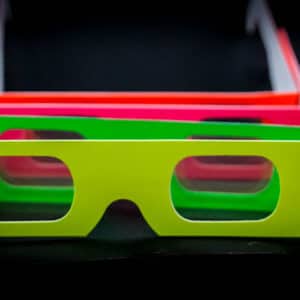
What Students Experience: The Ultimate Science Journey As our flagship “sampler” performance, Big Science Big Fun is designed to demonstrate the sheer breadth of the physical and chemical world. By bridging multiple disciplines in one high-impact session, we provide students with a panoramic view of how science explains everything from the air we breathe to the energy that powers our lives. 1. Forces, Flight & Motion We explore the physics of movement. From levitating beach balls and the Bernoulli principle to giant gyroscopes and the mechanics of flight, students see how forces shape our world. 2. Exploring Energy Students witness the hair-raising power of static electricity and energy transfer. Using the Van de Graaff generator, we make abstract energy concepts visible and memorable. 3. Light, Sound & Chemistry The journey rounds out with optics and acoustics. Students explore coloured shadows, flame equalisers, and energetic fireballs, connecting light and sound energy to chemical reactions. B Berkeley Vale PS Science Incursion What an amazing day of Big Science! Our students were absolutely enthralled by the experiments and demonstrations. A fantastic way to bring the curriculum to life. View on Facebook T Taren Point PS Whole School Show Thank you Fizzics Education! Our kids are still talking about the giant fog rings and the hair-raising electricity. Engaging, educational, and high energy! View on Facebook K Kangaroo Valley PS STEM Incursion An out-of-this-world experience for our students. The variety of science concepts covered in Big Science Big Fun kept every year level engaged. View on Facebook EST. 2004 Our Commitment to Quality Science Education A Trusted School Partner for hundreds of Australian schools.Supporting teachers and students since 2004 with reliable, syllabus-aligned visits. ✓Consistency & CareSince 2004, we have provided stable, high-quality STEM support. ✓Real FeedbackOur programs are refined through constant dialogue with teachers. ✓Expert FacilitationLed by science specialists who understand classroom dynamics. Verified Reviews Trustpilot
STEM Full Day Accelerator - Primary Create a Full Day STEM Accelerator or join us for a rapid science upskill! For schools outside of metropolitan areas please contact us to discuss how this science workshop can be run online or visit your school as part of a regional visit. Click below to know more! Science Full day STEM accelerator – Primary Teachers Teacher Professional Learning – One hour STEM Ideation Coding Full Day TPL – Primary Teachers Online courses Read More
STEM Full Day Accelerator - Primary Create a Full Day STEM Accelerator or join us for a rapid science upskill! For schools outside of metropolitan areas please contact us to discuss how this science workshop can be run online or visit your school as part of a regional visit. Click below to know more! Science Full day STEM accelerator – Primary Teachers Teacher Professional Learning – One hour STEM Ideation Coding Full Day TPL – Primary Teachers Online courses Read More
Scientist Q & A Often students attend our science workshops and shows with questions that stem beyond the covered topic area. Ask a scientist aims to give students a chance to get their questions answered! Run as a 30-minute session at a cost of $70 inc. GST. Read More
Scientist Q & A Often students attend our science workshops and shows with questions that stem beyond the covered topic area. Ask a scientist aims to give students a chance to get their questions answered! Run as a 30-minute session at a cost of $70 inc. GST. Read More
This website uses cookies to improve user experience. By using our website you consent to all cookies in accordance with our Cookie Policy.
Thank you for looking to subscribing to our newsletter 🙂 Through this service you’ll be first to know about the newest free experiments, science news and special offers. PLUS: Get a free Kitchen Chemistry Booklet with >20 experiments, how to use variables plus a handy template!
Please fill out the details below and an email will be sent to you. Once you get that just click on the link to confirm your subscription and you're all done!