Christmas Science Show for Primary School Enquire Now 🎄 Festive Science Celebration Christmas Science Show Celebrate the end of the year with a bang! Kids love Christmas and they love science—why not combine the two? This festive presentation is the perfect way to celebrate the end of the school year. We bring a high-energy collection of Christmas-themed experiments designed to engage students, teachers, and visiting families alike. Memorable, unique, and highly interactive, this show uses the holiday spirit to explore fundamental scientific principles. It’s an easy-to-arrange incursion that leaves a lasting impression on the whole school community. Why Schools Love This Show: Festive Engagement: High-impact experiments with a holiday twist. Curriculum Linked: While fun, every “pop” and “fizz” is tied to K-6 outcomes. Professional Delivery: Presented by qualified and experienced educators. Community Building: Perfect for end-of-term assemblies or family nights. Education-First Leadership Led by Churchill Fellow Ben Newsome, we ensure every festive show is grounded in pedagogical best practice. We provide the tools to make high-level science accessible to every student. Trustpilot 4 Million+ Students Inspired since 2004 Trustpilot Check Availability ❄️ Instant Science Snow. 🎁 Memorably unique celebration. 📜 Syllabus linked & Risk Assessed. Quick Links Past projects Requirements Cost per Science Show Free Science Resources Back to Primary Science Visits 150 Free Experiments Fizzics in the Media Australian Curriculum Mapping for all science workshops & shows Australian National Curriculum Mapping for all our science incursions Australian ACARA Content Outcomes: Science F-10 Version 9.0 Foundation describe how objects move and how factors including their size, shape or material influence their movement AC9SFU02 recognise that objects can be composed of different materials and describe the observable properties of those materials AC9SFU03 explore the ways people make and use observations and questions to learn about the natural world AC9SFH01 pose questions and make predictions based on experiences AC9SFI01 Year 1 describe pushes and pulls in terms of strength and direction and predict the effect of these forces on objects’ motion and shape AC9S1U03 Year 2 explore different actions to make sounds and how to make a variety of sounds, and recognise that sound energy causes objects to vibrate AC9S2U02 recognise that materials can be changed physically without changing their material composition AC9S2U03 Year 1 & 2 describe how people use science in their daily lives, including using patterns to make scientific predictions AC9S1H0, AC9S2H01 pose questions to explore observed simple patterns and relationships AC9S1I01, AC9S2I01 compare observations with predictions and others’ observations AC9S1I05, AC9S2I05 Year 3 identify sources of heat energy and examine how temperature changes when heat energy is transferred AC9S3U03 investigate the observable properties of solids and liquids and how adding or removing heat energy leads to a change of state AC9S3U04 Year 4 identify how forces can be exerted by one object on another (frictional, gravitational and magnetic forces) AC9S4U03 examine the properties of natural and made materials and consider how these properties influence their use AC9S4U04 Year 3 & 4 examine how people use data to develop scientific explanations AC9S3H01, AC9S4H01 consider how people use scientific explanations to meet a need or solve a problem AC9S3H02, AC9S4H02 pose questions to explore observed patterns and draw conclusions AC9S3I01, AC9S4I01, AC9S3I05, AC9S4I05 Year 5 identify sources of light, recognise that light travels in a straight path and describe how shadows are formed AC9S5U03 explain observable properties of solids, liquids and gases by modelling the motion and arrangement of particles AC9S5U04 Year 6 compare reversible changes, including dissolving and changes of state, and irreversible changes AC9S6U04 Year 5 & 6 investigate how scientific knowledge is used by individuals and communities to identify problems and make decisions AC9S5H02, AC9S6H02 pose investigable questions to identify patterns and test relationships AC9S5I01, AC9S6I01 compare methods and findings with those of others and draw reasoned conclusions AC9S5I05, AC9S6I05 Australian National Curriculum Mapping for all our science workshops & shows NSW SCIENCE SYLLABUS CONTENT for all our incursions NSW K – 10 Science Syllabus mapping NSW Science Syllabus Content A student: STe-5PW-ST observes movement and relates changes to push and pull forces ST1-8PW-S describes common forms of energy and sound characteristics ST2-6MW-S describes how heat causes a change of state ST2-8PW-ST describes characteristics and effects of light and heat energy ST3-6MW-S explains the effect of heat on materials ST3-8PW-ST explains how energy is transformed from one form to another NSW Science and Technology K–6 Syllabus (Implementation from 2027) For implementation advice, visit the NESA Curriculum site. Early Stage 1 STE-SCI-01 movement and material properties Recognise properties can be observed using the senses Pose questions about materials used in everyday objects Stage 1 ST1-SCI-01 measures and describes changes in materials and movement Recognise force is a push or pull that changes movement or shape Recognise that sound is created and carried by vibrations Test how actions affect the volume and pitch of sound Stage 2 ST2-SCI-01 investigation of energy effects and particle arrangements Observe matter as solids, liquids and gases Describe how heat affects particle arrangement when changing state Recognise heat transfer via conduction, convection and radiation Stage 3 ST3-PQU-01 identification of variables and fair tests NSW K-10 Science Syllabus Mapping Print a PDF detailing NSW K-6 mapping VIC Science Syllabus Content VIC Curriculum F–10 Version 2.0 Foundation to Level 2 observable properties of different materials. VC2S2U04 materials changed physically without changing composition (bending/twisting). VC2S2U06 pushes and pulls are forces that change movement or shape. VC2S2U11 Levels 3 and 4 solids, liquids and gases change state when heat is added or removed. VC2S4U04 heat energy generation and transfer from warmer to cooler objects. VC2S4U09 direct and contact forces (magnetic, frictional, gravitational). VC2S4U10 Levels 5 & 6 light travels in a straight path and can be reflected or refracted. VC2S6U08 reversible vs irreversible changes (cooking, rusting, dissolving). VC2S6U04 motion and arrangement of particles in matter. VC2S6U03 VIC F – 6 Science Syllabus Mapping Print a PDF detailing VIC P-6 mapping School Testimonials View All St Thomas the Apostle Primary School Feedback on: Christmas Science Show We had Ben in today at our school for the Christmas show! I just wanted to say that he was absolutely OUTSTANDING. One of the best presenters to kids I have seen. He was engaging and explained everything to the students! They were talking about it all day! Science Show Demonstrations Flying Tinsel It's almost like magic... but it's all about static! Instant Snow So fluffy... and we can use it to make water disappear Boomwhacker Christmas Carols The science of sound! Santa's Reindeer Toothpaste A Christmas version of Elephant's toothpaste Glowing Christmas Tree Amazing to see! Power up the Sleigh! A dynamo that keep the lights on Twinkle twinkle red & green stars Splitting laser light to form beautiful patterns Vortex ring halos Make vortex halo rings fly through the room! Bubbling balloon decorations Instantly blow up balloons for Christmas The balancing present How on Earth can it do that? Giant bubbles Just because we can! Rubens Tube Christmas Carols Sing along to your favourite songs that are played through fire! Red & Green Coloured Flames Flame chromatography with a seasonal twist Don't set your Christmas tree on fire! This fireball teaches you why Fog clouds With a little liquid nitrogen, we make it look like winter! Science show content What Students Experience: Festive Science in Action This show turns holiday preparations into a series of thrilling scientific investigations. We move through the “Christmas To-Do List,” using physics and chemistry to solve festive challenges in front of a live audience. 🎄 Decorating & Lighting We start by getting the tree ready! Students explore electromagnetism to light up the Christmas tree and use Bernoulli’s principle to decorate the branches. We even create a “White Christmas” instantly using super-absorbent polymers to make instant snow. 🎁 Presents & Preparation Next, we investigate the centre of balance with balancing presents and demonstrate inertia with the classic tablecloth pull. No fireplace? No problem—we use chemistry to create a hearth of coloured flames. [Image of metal ions flame test colours] 🎶 Carols & Resonance The show finishes with a festive symphony. We explore sound energy by playing carols through local vibration and use Boomwhackers to demonstrate how length affects pitch and resonance. S St Patrick’s Sutherland Christmas Science What a fantastic way to end the year! The Christmas Science Show was a massive hit with all our students. Educational, high energy, and very festive. View on Facebook M St Madeleine’s Primary End of Year Celebration A huge thank you for the amazing show today! The kids loved the instant snow and the coloured flames. A perfect blend of science and holiday fun. View on Facebook J Jodi Warner via X / Twitter Thanks Fizzics Education for the amazing Xmas show today—the experiments were mind blowing—highly recommended! View on X / Twitter 🎄 SEASONAL Festive Science made Fun Unforgettable End-of-Year MemoriesFizzics Education has been the trusted partner for Australian school celebrations for over 20 years. ✓Qualified EducatorsOur presenters are experts at managing large holiday crowds while keeping the science front and centre. ✓Safe SpectacleAll “festive fire” and chemical reactions are conducted under strict safety protocols and risk assessments. Trustpilot Requirements 📊 Show Logistics Session Requirements 👥 Audience & Timing 👨👩👧👦 Capacity: Up to 240 students per show. 🎓 Age Groups: Years K to 6 (Content is adjusted for younger audiences to focus on light, sound, and movement). ⏰ Duration: 60 mins (+45 min set/pack). 📍 Space & Safety Needs 🏗️ Setup: 3 tables and 2 electrical power sockets. 🪑 Seating: Chairs are not required for students. ⚠️ Fire Alarms: Ability to isolate smoke alarms is required for the Rubens tube and flame demonstrations. 🛡️ $20M Public Liability ✅ WWCC Checked 📋 Full Risk Assessments 🎓 Expert Science Educators Go Further! Complete Units of Work to Support Your Teaching Save time and engage students in STEM year-round with high-quality videos, printable experiments, and full marking rubrics. Find out more! Cost 💰 Festive Event Investment Christmas Science Show $1560 inc. GST Per Performance ✨ Only $6.50 per student *Calculated at show capacity of 240 students. ✓ Early Bird: Book and pay within 7 days to receive 10% off your booking. View all offers & discounts 📍 Regional Schools: Find out how we can visit you via a country science tour. 📑 Syllabus Details: Print a PDF for mapping of all our science visits. Book your end-of-year celebration Call 1300 856 828 Trustpilot Enquire Now Extension Ideas! STEM TPL for Primary and Early Learning Teachers Create a Full Day STEM Accelerator or join us for a rapid science upskill! For schools outside of metropolitan areas please contact us to discuss how this science workshop can be run online or visit your school as part of a regional visit. Click below to know more! Science Full day STEM accelerator – Primary Teachers Teacher Professional Learning – One hour STEM Ideation Coding Full Day TPL – Primary Teachers Online courses Read More STEM TPL for Primary and Early Learning Teachers Create a Full Day STEM Accelerator or join us for a rapid science upskill! For schools outside of metropolitan areas please contact us to discuss how this science workshop can be run online or visit your school as part of a regional visit. Click below to know more! Science Full day STEM accelerator – Primary Teachers Teacher Professional Learning – One hour STEM Ideation Coding Full Day TPL – Primary Teachers Online courses Read More Fizzics Education Awards Related Shows Plants for Life Years K to 6 Maximum 30 students Workshop (NSW & VIC) 60 or 90 minutes Online Class Available Victoria Kindergarten Year 1 Year 2 Year 3 Year 4 Year 5 Biological Science Year 6 Human Endeavor Science Inquiry New South Wales Read More Enquire Now Forces, Friction & Movement Years K to 6 Maximum 30 students School workshop 60 or 90 minutes Online Class Available Year 6 Science Inquiry New South Wales Victoria Australian Capital Territory Kindergarten Year 1 Year 2 Year 3 Year 4 Human Endeavor Year 5 Physical Science Read More Enquire Now Destination Moon & Beyond Years K to 6 30 to 240 students Science show (NSW & VIC) 60 minutes Online Class Available Year 3 Year 4 Earth and Space Year 5 Human Endeavor Year 6 Physical Science Science Inquiry New South Wales Victoria Kindergarten Year 1 Year 2 Read More Enquire Now
Australian National Curriculum Mapping for all our science incursions Australian ACARA Content Outcomes: Science F-10 Version 9.0 Foundation describe how objects move and how factors including their size, shape or material influence their movement AC9SFU02 recognise that objects can be composed of different materials and describe the observable properties of those materials AC9SFU03 explore the ways people make and use observations and questions to learn about the natural world AC9SFH01 pose questions and make predictions based on experiences AC9SFI01 Year 1 describe pushes and pulls in terms of strength and direction and predict the effect of these forces on objects’ motion and shape AC9S1U03 Year 2 explore different actions to make sounds and how to make a variety of sounds, and recognise that sound energy causes objects to vibrate AC9S2U02 recognise that materials can be changed physically without changing their material composition AC9S2U03 Year 1 & 2 describe how people use science in their daily lives, including using patterns to make scientific predictions AC9S1H0, AC9S2H01 pose questions to explore observed simple patterns and relationships AC9S1I01, AC9S2I01 compare observations with predictions and others’ observations AC9S1I05, AC9S2I05 Year 3 identify sources of heat energy and examine how temperature changes when heat energy is transferred AC9S3U03 investigate the observable properties of solids and liquids and how adding or removing heat energy leads to a change of state AC9S3U04 Year 4 identify how forces can be exerted by one object on another (frictional, gravitational and magnetic forces) AC9S4U03 examine the properties of natural and made materials and consider how these properties influence their use AC9S4U04 Year 3 & 4 examine how people use data to develop scientific explanations AC9S3H01, AC9S4H01 consider how people use scientific explanations to meet a need or solve a problem AC9S3H02, AC9S4H02 pose questions to explore observed patterns and draw conclusions AC9S3I01, AC9S4I01, AC9S3I05, AC9S4I05 Year 5 identify sources of light, recognise that light travels in a straight path and describe how shadows are formed AC9S5U03 explain observable properties of solids, liquids and gases by modelling the motion and arrangement of particles AC9S5U04 Year 6 compare reversible changes, including dissolving and changes of state, and irreversible changes AC9S6U04 Year 5 & 6 investigate how scientific knowledge is used by individuals and communities to identify problems and make decisions AC9S5H02, AC9S6H02 pose investigable questions to identify patterns and test relationships AC9S5I01, AC9S6I01 compare methods and findings with those of others and draw reasoned conclusions AC9S5I05, AC9S6I05 Australian National Curriculum Mapping for all our science workshops & shows
NSW K – 10 Science Syllabus mapping NSW Science Syllabus Content A student: STe-5PW-ST observes movement and relates changes to push and pull forces ST1-8PW-S describes common forms of energy and sound characteristics ST2-6MW-S describes how heat causes a change of state ST2-8PW-ST describes characteristics and effects of light and heat energy ST3-6MW-S explains the effect of heat on materials ST3-8PW-ST explains how energy is transformed from one form to another NSW Science and Technology K–6 Syllabus (Implementation from 2027) For implementation advice, visit the NESA Curriculum site. Early Stage 1 STE-SCI-01 movement and material properties Recognise properties can be observed using the senses Pose questions about materials used in everyday objects Stage 1 ST1-SCI-01 measures and describes changes in materials and movement Recognise force is a push or pull that changes movement or shape Recognise that sound is created and carried by vibrations Test how actions affect the volume and pitch of sound Stage 2 ST2-SCI-01 investigation of energy effects and particle arrangements Observe matter as solids, liquids and gases Describe how heat affects particle arrangement when changing state Recognise heat transfer via conduction, convection and radiation Stage 3 ST3-PQU-01 identification of variables and fair tests NSW K-10 Science Syllabus Mapping Print a PDF detailing NSW K-6 mapping VIC Science Syllabus Content VIC Curriculum F–10 Version 2.0 Foundation to Level 2 observable properties of different materials. VC2S2U04 materials changed physically without changing composition (bending/twisting). VC2S2U06 pushes and pulls are forces that change movement or shape. VC2S2U11 Levels 3 and 4 solids, liquids and gases change state when heat is added or removed. VC2S4U04 heat energy generation and transfer from warmer to cooler objects. VC2S4U09 direct and contact forces (magnetic, frictional, gravitational). VC2S4U10 Levels 5 & 6 light travels in a straight path and can be reflected or refracted. VC2S6U08 reversible vs irreversible changes (cooking, rusting, dissolving). VC2S6U04 motion and arrangement of particles in matter. VC2S6U03 VIC F – 6 Science Syllabus Mapping Print a PDF detailing VIC P-6 mapping
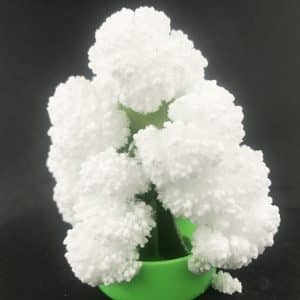
What Students Experience: Festive Science in Action This show turns holiday preparations into a series of thrilling scientific investigations. We move through the “Christmas To-Do List,” using physics and chemistry to solve festive challenges in front of a live audience. 🎄 Decorating & Lighting We start by getting the tree ready! Students explore electromagnetism to light up the Christmas tree and use Bernoulli’s principle to decorate the branches. We even create a “White Christmas” instantly using super-absorbent polymers to make instant snow. 🎁 Presents & Preparation Next, we investigate the centre of balance with balancing presents and demonstrate inertia with the classic tablecloth pull. No fireplace? No problem—we use chemistry to create a hearth of coloured flames. [Image of metal ions flame test colours] 🎶 Carols & Resonance The show finishes with a festive symphony. We explore sound energy by playing carols through local vibration and use Boomwhackers to demonstrate how length affects pitch and resonance. S St Patrick’s Sutherland Christmas Science What a fantastic way to end the year! The Christmas Science Show was a massive hit with all our students. Educational, high energy, and very festive. View on Facebook M St Madeleine’s Primary End of Year Celebration A huge thank you for the amazing show today! The kids loved the instant snow and the coloured flames. A perfect blend of science and holiday fun. View on Facebook J Jodi Warner via X / Twitter Thanks Fizzics Education for the amazing Xmas show today—the experiments were mind blowing—highly recommended! View on X / Twitter 🎄 SEASONAL Festive Science made Fun Unforgettable End-of-Year MemoriesFizzics Education has been the trusted partner for Australian school celebrations for over 20 years. ✓Qualified EducatorsOur presenters are experts at managing large holiday crowds while keeping the science front and centre. ✓Safe SpectacleAll “festive fire” and chemical reactions are conducted under strict safety protocols and risk assessments. Trustpilot
STEM TPL for Primary and Early Learning Teachers Create a Full Day STEM Accelerator or join us for a rapid science upskill! For schools outside of metropolitan areas please contact us to discuss how this science workshop can be run online or visit your school as part of a regional visit. Click below to know more! Science Full day STEM accelerator – Primary Teachers Teacher Professional Learning – One hour STEM Ideation Coding Full Day TPL – Primary Teachers Online courses Read More
STEM TPL for Primary and Early Learning Teachers Create a Full Day STEM Accelerator or join us for a rapid science upskill! For schools outside of metropolitan areas please contact us to discuss how this science workshop can be run online or visit your school as part of a regional visit. Click below to know more! Science Full day STEM accelerator – Primary Teachers Teacher Professional Learning – One hour STEM Ideation Coding Full Day TPL – Primary Teachers Online courses Read More
This website uses cookies to improve user experience. By using our website you consent to all cookies in accordance with our Cookie Policy.
Thank you for looking to subscribing to our newsletter 🙂 Through this service you’ll be first to know about the newest free experiments, science news and special offers. PLUS: Get a free Kitchen Chemistry Booklet with >20 experiments, how to use variables plus a handy template!
Please fill out the details below and an email will be sent to you. Once you get that just click on the link to confirm your subscription and you're all done!