
Sweet Drinks
Which soda can floats? Does it matter how sweet the drink is? This floating cans science experiment looks at buoyancy in a way that'll surprise you!
Adult supervision for setup
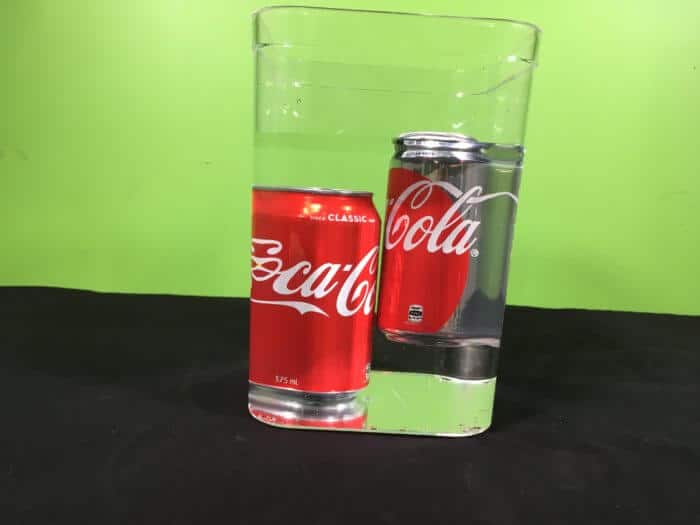
You will need
- 1 regular soda drink 375mL
- 1 diet soda drink 375mL
- 1 Tub of water
Method
-
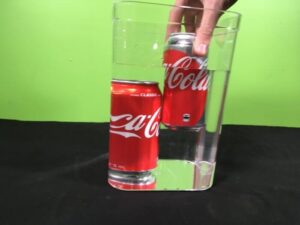
Gently place each can of drink into a tub of water large enough to float the cans. Try not to let the cans touch each other.
-
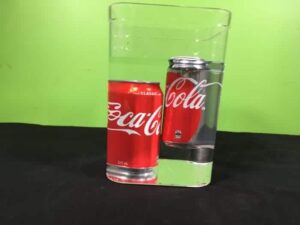
Which can of drink floats higher? Why?
-
School science visits since 2004!
– Curriculum-linked & award-winning incursions.
– Over 40 primary & high school programs to choose from.
– Designed by experienced educators.
– Over 2 million students reached.
– Face to face incursions & online programs available.
– Early learning centre visits too!

-

The science behind it
Why Does This Happen?
The Science of Sweet Floating Drinks
If you look at two cans of soft drink, they usually have the exact same volume (typically 375mL). However, if you place them on a scale, you’ll find they have different masses. This experiment is a perfect demonstration of density—a measure of how much “stuff” (mass) is packed into a given space (volume).
Density = Mass ÷ Volume
A regular soft drink contains a significant amount of dissolved sugar (often around 10 teaspoons!). This sugar adds a lot of mass to the liquid, making it denser than water. On the other hand, diet soda uses artificial sweeteners like aspartame. Because aspartame is approximately 200 times sweeter than sugar, manufacturers only need a tiny amount to get the same taste. This means the diet drink has much less mass, making the entire can less dense than water, which allows it to float.
While we often talk about “natural” versus “artificial” ingredients, it is interesting to note that food technologists have played a role in almost everything we eat. From selectively breeding crops over thousands of years to developing modern sweeteners, science is always at the table. Your diet directly influences your health, and understanding the chemistry of what is inside your drink is a great place to start!
Variables to test
Find out more on variables here.
-
Thermal Energy
Hot vs. cold water—does water temperature affect the buoyancy of the cans? Molecules in hot water are spread further apart (less dense); does this make the cans sink more easily? -
Brand Comparison
Try different soda brands. Do all “zero sugar” versions float, or do some brands use different mixtures that change the density? -
Dissolved Gases
What happens if you shake the drinks or open them to let the carbon dioxide escape? Does the effervescence (bubbles) contribute to the can staying upright? -
Liquid Medium
What if you use a liquid other than water, such as salty water? Salt increases the density of the solvent, which should provide more upward buoyant force to the cans. -
Packaging Materials
Does using glass bottles versus aluminium cans make a difference? This tests how the density of the container material affects the overall “average density” of the object.
When testing these variables, remember that for a result to be valid, you should only change one factor at a time while keeping everything else the same!

Teacher's note
Curriculums change, and so does the way you implement them in your classroom. Please use your own experience and knowledge of your students to use these resources to best effect for student learning.
Still want the curriculum links?
Here are the suggested links:
Australian Curriculum (ACARA) Science:
NSW Science syllabuses:
Victorian Curriculum Science:
Want this experiment — and many more — running in your classroom?
Have us visit your school — every student gets three hands-on experiments in 60–90 minutes with a qualified presenter.








