
Lemon juice and tea colour change
A simple colour change in the kitchen! Simply grab a lemon and a mug of tea to explore kitchen chemistry that you can drink afterwards 🙂
Adult supervision for setup
You will need
- A kettle
- Either a ceramic mug or a heatproof glass (glass is best for visibility)
- Lemon
- Teabag
- Knife
- Chopping board
- Adult help!
Method
-
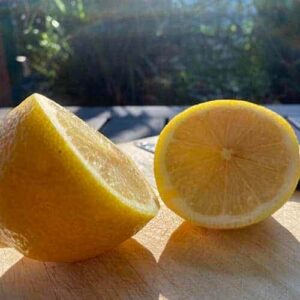
Ask an adult to cut a lemon in half.
-
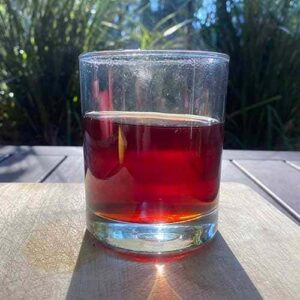
Ask an adult to boil a kettle and then add the hot water to tea bags in a mug or heatproof glass. You may want to choose a white mug to see the contrast in the colour change.

-
Allow the teabag to sit in the hot water for a minute or so and then take it out. As an option you could setup a camera to take a photo of the water’s colour for reference of the colour change later.
-
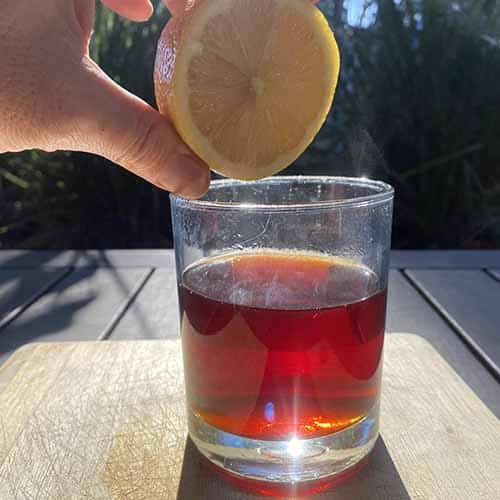
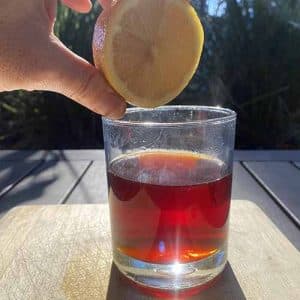
Squeeze a few drops of lemon juice into the glass and watch the colour carefully (again, if you use a white mug you will have a good background to see the colour change more easily)
-
You should have seen the tea go a lighter shade of brown! If you had a setup a camera prior, take another photo and then use a service like Adobe Photoshop or an app such as pixel picker to compare the hex codes to get a fair result without bias.
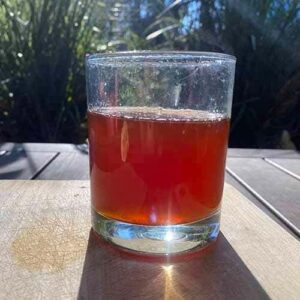
-
Try squeezing even more lemon into the tea! In this photo we squeezed several lemons into tea and we found the tea go a much lighter colour.
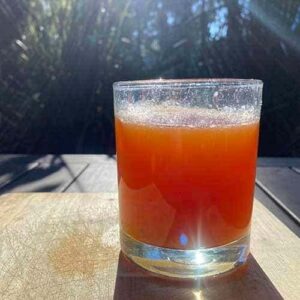
-
School science visits since 2004!
– Curriculum-linked & award-winning incursions.
– Over 40 primary & high school programs to choose from.
– Designed by experienced educators.
– Over 2 million students reached.
– Face to face incursions & online programs available.
– Early learning centre visits too!

-

-
Want to dive into acid-base chemistry?
Get the 30-minute video + PDF + curriculum links for your class here!

The science behind it
What is going on?
The Science of Lemon Juice and Tea Colour Change
Ever noticed your tea get lighter when you add a squeeze of lemon? You’ve actually performed a chemical titration! Black tea contains natural pigments called thearubigins. These molecules are responsible for the deep red and brown colours we associate with a good brew.
Thearubigins act as a natural pH indicator. In a neutral solution (like plain water), they stay dark. However, lemon juice contains citric acid, which increases the concentration of hydrogen ions in the tea. This change in acidity alters the chemical structure of the thearubigin molecules, causing them to reflect light differently and appear much lighter in colour.
Conversely, if you were to add an alkaline substance (like a pinch of bicarbonate soda), the pigments would shift the other way, making the tea look much darker, almost purple or black. This ability to change colour based on pH is exactly how laboratory indicators work!
You can explore this further by making your own indicator using red cabbage juice, which contains similar pigments called anthocyanins.
Variables to test
Find out more on variables here.
-
Pigment Concentration
What happens if you use two or three teabags? Does a higher concentration of thearubigins require more lemon juice to achieve the same colour shift? -
Acid Source
Do limes, grapefruit, or oranges produce the same effect? Compare these to see which fruit has the highest acidic potency. -
Alternative Juices
What if you use apple juice or white vinegar? Vinegar is a strong acid, but does its clear colour make the shift easier to see than using a sugary juice? -
Water Hardness
Try “soft” water (filtered) versus “hard” water (tap water in some regions). Hard water contains dissolved minerals like calcium which can act as a buffer, potentially resisting the colour change. -
Tea Variety
Compare green tea to black tea. Green tea is less oxidised and contains different polyphenols—does it react as dramatically to the lemon juice?
When conducting your tests, try to keep the temperature of the tea consistent, as thermal energy can also influence the speed and intensity of chemical reactions!

Teacher's note
Curriculums change, and so does the way you implement them in your classroom. Please use your own experience and knowledge of your students to use these resources to best effect for student learning.
Still want the curriculum links?
Here are the suggested links:
Australian Curriculum (ACARA) Science:
NSW Science syllabuses:
Victorian Curriculum Science:
Want this experiment — and many more — running in your classroom?
Have us visit your school — every student gets three hands-on experiments in 60–90 minutes with a qualified presenter.








