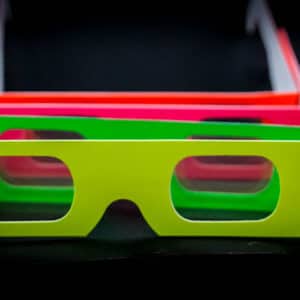
Light & Sound Enquire Now 🌈 Physical World: Waves and Energy Light & Sound Vibrations, Waves and Everyday Applications How do we see and hear the world around us? This engaging workshop helps students investigate the properties of light and sound, bringing these two fundamental concepts together so that students can see how both are based on the movement of waves. From absorption to reflection and pitch to volume, your students will gain a strong understanding of how energy travels. Through hands-on learning stations, they discover how these physical phenomena are applied in everyday life, from medical technology to the cartoons they watch. Key Investigations: Wave Fundamentals: Visualise sound waves and compare them to light waves. Pitch & Volume: Discover how sound waves change with frequency and intensity. Visible Spectrum: Investigate the components of light, including colour addition and subtraction. Luminescence: Explore minerals and objects that glow under ultraviolet light. Optics & Perception: Create coloured shadows, hovering images, and learn about transparent vs. opaque materials. Visual Persistence: Operate zoetropes and flipbooks to understand how the eye perceives motion. Education-First Leadership Led by Churchill Fellow Ben Newsome, we simplify complex physics into high-impact, memorable classroom experiences. Trustpilot 4 Million+ Students Inspired since 2004 Trustpilot Check Availability Online Class Option: Interactive distance programs since 2010. Includes live demonstrations and hands-on activities with full child protection protocols. 🔦 Materials list provided on booking. 🎥 Zoom, Teams, or school software. Quick Links Past projects Requirements Cost per Science Show Free Science Resources Back to Primary Science Visits 150 Free Experiments Fizzics in the Media Australian Curriculum Mapping for all science workshops & shows Australian National Curriculum Mapping for all our science incursions Australian ACARA Content Outcomes: Science F-10 Version 9.0 Foundation explore the ways people make and use observations and questions to learn about the natural world AC9SFH01 pose questions and make predictions based on experiences AC9SFI01 Year 2 explore different actions to make sounds and how to make a variety of sounds, and recognise that sound energy causes objects to vibrate AC9S2U02 Year 1 & 2 describe how people use science in their daily lives, including using patterns to make scientific predictions AC9S1H0, AC9S2H01 pose questions to explore observed simple patterns and relationships and make predictions based on experiences AC9S1I01, AC9S2I01 compare observations with predictions and others’ observations, consider if investigations are fair and identify further questions with guidance AC9S1I05, AC9S2I05 Year 3 & 4 examine how people use data to develop scientific explanations AC9S3H01, AC9S4H01 consider how people use scientific explanations to meet a need or solve a problem AC9S3H02, AC9S4H02 pose questions to explore observed patterns and relationships and make predictions based on observations AC9S3I01, AC9S4I01 compare findings with those of others, consider if investigations were fair, identify questions for further investigation and draw conclusions AC9S3I05, AC9S4I05 Year 5 identify sources of light, recognise that light travels in a straight path and describe how shadows are formed and light can be reflected and refracted AC9S5U03 explain observable properties of solids, liquids and gases by modelling the motion and arrangement of particles AC9S5U04 Year 5 & 6 investigate how scientific knowledge is used by individuals and communities to identify problems, consider responses and make decisions AC9S5H02, AC9S6H02 pose investigable questions to identify patterns and test relationships and make reasoned predictions AC9S5I01, AC9S6I01 compare methods and findings with those of others, recognise possible sources of error, pose questions for further investigation and select evidence to draw reasoned conclusions AC9S5I05, AC9S6I05 Design and Technologies F-10 Version 9.0 Years 5 & 6 explain how electrical energy can be transformed into movement, sound or light in a product or system AC9TDE6K02 Australian National Curriculum Mapping for all our science workshops & shows NSW SCIENCE SYLLABUS CONTENT for all our incursions NSW K – 10 Science Syllabus mapping for all our incursions NSW Science & Technology Syllabus Content A student: describes common forms of energy and explores some characteristics of sound energy ST1-8PW-S investigates how forces and energy are used in products ST1-9PW-ST describes the characteristics and effects of common forms of energy, such as light and heat ST2-8PW-ST explains how the properties of materials determines their use for a range of purposes ST3-7MW-T NSW Science and Technology K–6 Syllabus (Implementation from 2027) For explanatory points & implementation advice for each dot point, please visit the NESA Science and Technology K–6 Curriculum site Stage 1 ST1-SCI-01 measures and describes changes in living things, materials, movement, Earth and the sky Recognise that light and sound can travel through air, water and some solids and are affected by those materials Recognise that sound is created and carried by vibrations Test how different materials and actions affect the volume and pitch of sound Pose questions, test and describe how light can be reflected, refracted, dispersed or absorbed by materials Describe how translucent, transparent, opaque and reflective materials interact with light ST1-PQU-01 poses questions based on observations and information to investigate cause and effect Stage 2 ST2-PQU-01 poses questions to create fair tests that investigate the effects of energy on living things and physical systems Stage 3 ST3-PQU-01 poses questions to identify variables and conducts fair tests to gather data NSW K – 10 Science Syllabus mapping for all our incursions Print a PDF which details K to 6 mapping of all our NSW science visits VIC Curriculum F–10 Version 2.0 For explanatory points & implementation advice for each dot point, please visit the VIC Curriculum F-10 site. Science Foundation to Level 2 sound can make materials vibrate and vibrating materials can make sound; different actions can be used to produce sounds of varying pitch and volume VC2S2U12 objects can be made of one or more different materials; these materials have observable properties. VC2S2U04 experiences can be used as a basis for posing questions to explore observed patterns and relationships, and to make predictions. VC2S2I01 observations, findings and ideas can be shared with others by using everyday and some scientific vocabulary. VC2S2I06 Levels 3 & 4 the properties of natural and made materials, including fibres, metals, glass and plastics, influence their use and re-use. VC2S4U05 scientific investigations to answer questions or test predictions can be planned and conducted using provided scaffolds, including identifying the attributes of fair tests, and considering the safe use of materials and equipment. VC2S4I02 Levels 5 & 6 light can be produced from many sources; light travels in a straight path, can form shadows, and can be absorbed, transmitted, reflected or refracted by objects. VC2S6U08 repeatable scientific investigations to answer questions can be planned and conducted, including, as appropriate, deciding the variables to be changed, measured and controlled in fair tests, considering potential risks, planning for the safe and ethical use of equipment and materials, and obtaining permissions for investigations conducted on Country and Place or in protected areas. VC2S6I02 VIC F – 6 Science Syllabus mapping for all our incursions Design and Technologies Levels 5 & 6 explain how electrical energy can be transformed into movement, sound or light in a product or system VC2TDE6C01 Print a PDF which details P to 6 mapping of all our VIC science visits School Testimonials View All St. Luke's Grammar School Feedback on: Light & Sound Ben was great! The session was really relaxed with the kids. Manly Village Public School Feedback on: Light & Sound All the Year 1 teachers of Manly Village Public School want to thank you for the interesting and informative Light and Sound incursion that Ben delivered to us yesterday. The children were shown many different examples of how light and sound work such as the Newton's wheel, the slinky and the shadows on the screen. Ben was very professional and enthusiastic and gave simple explanations that the year 1 students could understand. Many thanks for the educational show and we will be sure to recommend Fizzics Education to other teachers in our school and other colleagues. Science Show Activities Colour mixing Mix primary light colours ... why are the secondary colours different to paint? Bubble Films See light split through a bubble film. Nice... and demonstrates wave theory Float that image Create a 3D floating image hovering in mid-air Magic specs See rainbows all around with these diffraction glasses Mirror boxes Hidden compartments can create 'magical' illusions. How do they work? Flys eye scopes What is the difference between human and insect eyes? Insect clickers A simple device used in communications during wartime Music Box An investigation into sound travelling through different materials. Slinky shake A visual depiction on how soundwaves propagate through the air. Straw flute A simple yet effective way of demonstrating a standing wave. Students love it! Xylophones Compare different xylophones and their pitch Twirl tubes Students work together to create chords of varying pitch. Great fun! Thunder drum A demonstration on amplifying sound and blocking vibrations. Science workshop content 🔍 Looking for a more specific focus? If you want to dive deeper into a single topic, explore our dedicated Light and Colour workshop or the Science of Sound programme. What Students Experience: The Light and Sound Lab Our presenter first demonstrates colour addition vs subtraction using a colourful light display. Students then rotate through hands-on stations to explore refraction, reflection, image formation, and optical illusions. We investigate how sound is created by vibrations, and how variables like length and speed dictate pitch. We conclude with demonstrations on sound travelling as a wave, connecting classroom theory to global research. 1. Spectrum Analysis The session opens with high-impact demonstrations of the visible spectrum. Students witness the difference between mixing light (additive) and mixing pigments (subtractive) to understand how we perceive colour. 2. Hands-on Discovery Students rotate through specialised stations to explore physical phenomena. They manipulate light through refraction and reflection and investigate how the physical properties of objects—like length and vibration speed—dictate pitch. 3. The Wave Finale We bring both concepts together in a stunning conclusion, demonstrating how sound travels as a wave. We discuss real-world scientific applications, connecting classroom theory to global physics research. Real Classroom Feedback A St Angela’s Primary Castle Hill, NSW A fantastic day exploring light and sound! Our students loved the hands-on stations and the optical illusions. A great way to bring our Science unit to life. View on Facebook M St Matthew’s Primary Science Incursion Thank you Fizzics Education! The Light and Sound Lab was perfectly paced and highly engaging. The students learned so much about vibrations and waves. View on Facebook D Danebank School Sydney, NSW A brilliant workshop. The girls were fully engaged in the investigation of light properties and sound waves. A spectacular finale! View on Facebook ⬅️ Swipe to see more examples ➡️ EST. 2004 Our Commitment to Quality Science Education A Trusted School Partner for 20 Years Fizzics Education delivers reliable, syllabus-aligned visits that engage students and meet the practical requirements of the Australian classroom. ✓ Professional Gear: Providing access to specialised specialised light boxes, UV minerals, and acoustic apparatus. ✓ Qualified Presenters: Experienced educators trained to facilitate high-level physical world inquiry. Trustpilot Requirements 🌈 Workshop Logistics Session Requirements 👥 Capacity & Timing 👨🎓 Attendance: Max 30 students per class. 🏫 Target: Appropriate for Years 1 to 6. ⏰ Duration: 90 minutes. 🛠️ Set/Pack: 45 mins setup + 45 mins pack down. 📍 Space & Power 🏗️ Layout: 10 Tables arranged around a room. Chairs are not required. 🔌 Power: Access to 3 electrical power sockets. 🌑 Light Control: Ability to darken the room is essential. 🖥️ Handy to have: A whiteboard or screen in the room. ✨ Presentation Note: For us to provide the best possible learning experience, the materials used during the presentation may be varied to suit the conditions and the audience. Please chat with our presenter if there is a particular focus that you’d like us to cover. 🔍 Focus Areas: If you want to concentrate on just light or sound, check out our dedicated Light & Colour Workshop or the Science of Sound Workshop. COVID Safe: We’ll tailor the session to suit both your school and the State’s current social distancing requirements. Inquire here. 🛡️ $20M Public Liability ✅ WWCC Checked 📋 Full Risk Assessments 🎓 Expert Educators Go Further! Complete Units of Work to Support Your Teaching Save planning time with high-quality videos, printable experiments, vocabulary lists, Scope & sequences, and marking rubrics. Explore STEM Units Did you know about our larger stage shows? Designed to engage up to 240 students, pair this workshop with one of these school favourites: Big Science Big Fun tick tick BOOM! Destination Moon Food Science Show Deep Blue Oceans Cost 💰 Workshop Investment Light & Sound Most Popular $630 inc. GST 90-Minute Workshop ✨ $21.00 per student (Based on 30 students) $780 inc. GST 60-Minute Show ✨ $13.00 per student (Based on 60 students) Special Offer: Save money by booking multiple sessions on the same day. View offers & discounts 🌍 Global Reach: Available as a live online class anywhere in the world. 📍 Regional: We visit country schools via Country Science Tours. 📑 Syllabus: Print a PDF for mapping of all K to 6 science visits. Call 1300 856 828 Click below to book your primary school incursion. Find out more about our impact 4 Million+ Students Inspired since 2004 Trustpilot Enquire Now Extension Ideas! STEM Full Day Accelerator - Primary Create a Full Day STEM Accelerator or join us for a rapid science upskill! For schools outside of metropolitan areas please contact us to discuss how this science workshop can be run online or visit your school as part of a regional visit. Click below to know more! Science Full day STEM accelerator – Primary Teachers Teacher Professional Learning – One hour STEM Ideation Coding Full Day TPL – Primary Teachers Online courses Read More STEM Full Day Accelerator - Primary Create a Full Day STEM Accelerator or join us for a rapid science upskill! For schools outside of metropolitan areas please contact us to discuss how this science workshop can be run online or visit your school as part of a regional visit. Click below to know more! Science Full day STEM accelerator – Primary Teachers Teacher Professional Learning – One hour STEM Ideation Coding Full Day TPL – Primary Teachers Online courses Read More Extension Ideas! Scientist Q & A Often students attend our science workshops and shows with questions that stem beyond the covered topic area. Ask a scientist aims to give students a chance to get their questions answered! Run as a 30-minute session at a cost of $70 inc. GST. Read More Scientist Q & A Often students attend our science workshops and shows with questions that stem beyond the covered topic area. Ask a scientist aims to give students a chance to get their questions answered! Run as a 30-minute session at a cost of $70 inc. GST. Read More Fizzics Education Awards Related Shows Liquid Nitrogen Show Years K to 6 Maximum 60 students Science show 45 minutes Online Class Available Australian Capital Territory Kindergarten Year 1 Year 2 Year 3 Chemical Science Year 4 Human Endeavor Year 5 Physical Science Year 6 Science Inquiry New South Wales Victoria Read More Enquire Now Seeds of Science – Australian Discoveries Years 3 to 6 For large audiences School science show 60 minutes New South Wales Victoria Australian Capital Territory Year 3 Year 4 Year 5 Year 6 Chemical Science Human Endeavor National Science Week Physical Science Science Inquiry Read More Enquire Now Human Body – Organs & Body Systems Years 5 to 6 Maximum 30 students School workshop (NSW & ACT only) 60 or 90 minutes Online Class Available Science Inquiry New South Wales Australian Capital Territory Year 5 Year 6 Biological Science Human Endeavor Read More Enquire Now
Australian National Curriculum Mapping for all our science incursions Australian ACARA Content Outcomes: Science F-10 Version 9.0 Foundation explore the ways people make and use observations and questions to learn about the natural world AC9SFH01 pose questions and make predictions based on experiences AC9SFI01 Year 2 explore different actions to make sounds and how to make a variety of sounds, and recognise that sound energy causes objects to vibrate AC9S2U02 Year 1 & 2 describe how people use science in their daily lives, including using patterns to make scientific predictions AC9S1H0, AC9S2H01 pose questions to explore observed simple patterns and relationships and make predictions based on experiences AC9S1I01, AC9S2I01 compare observations with predictions and others’ observations, consider if investigations are fair and identify further questions with guidance AC9S1I05, AC9S2I05 Year 3 & 4 examine how people use data to develop scientific explanations AC9S3H01, AC9S4H01 consider how people use scientific explanations to meet a need or solve a problem AC9S3H02, AC9S4H02 pose questions to explore observed patterns and relationships and make predictions based on observations AC9S3I01, AC9S4I01 compare findings with those of others, consider if investigations were fair, identify questions for further investigation and draw conclusions AC9S3I05, AC9S4I05 Year 5 identify sources of light, recognise that light travels in a straight path and describe how shadows are formed and light can be reflected and refracted AC9S5U03 explain observable properties of solids, liquids and gases by modelling the motion and arrangement of particles AC9S5U04 Year 5 & 6 investigate how scientific knowledge is used by individuals and communities to identify problems, consider responses and make decisions AC9S5H02, AC9S6H02 pose investigable questions to identify patterns and test relationships and make reasoned predictions AC9S5I01, AC9S6I01 compare methods and findings with those of others, recognise possible sources of error, pose questions for further investigation and select evidence to draw reasoned conclusions AC9S5I05, AC9S6I05 Design and Technologies F-10 Version 9.0 Years 5 & 6 explain how electrical energy can be transformed into movement, sound or light in a product or system AC9TDE6K02 Australian National Curriculum Mapping for all our science workshops & shows
NSW K – 10 Science Syllabus mapping for all our incursions NSW Science & Technology Syllabus Content A student: describes common forms of energy and explores some characteristics of sound energy ST1-8PW-S investigates how forces and energy are used in products ST1-9PW-ST describes the characteristics and effects of common forms of energy, such as light and heat ST2-8PW-ST explains how the properties of materials determines their use for a range of purposes ST3-7MW-T NSW Science and Technology K–6 Syllabus (Implementation from 2027) For explanatory points & implementation advice for each dot point, please visit the NESA Science and Technology K–6 Curriculum site Stage 1 ST1-SCI-01 measures and describes changes in living things, materials, movement, Earth and the sky Recognise that light and sound can travel through air, water and some solids and are affected by those materials Recognise that sound is created and carried by vibrations Test how different materials and actions affect the volume and pitch of sound Pose questions, test and describe how light can be reflected, refracted, dispersed or absorbed by materials Describe how translucent, transparent, opaque and reflective materials interact with light ST1-PQU-01 poses questions based on observations and information to investigate cause and effect Stage 2 ST2-PQU-01 poses questions to create fair tests that investigate the effects of energy on living things and physical systems Stage 3 ST3-PQU-01 poses questions to identify variables and conducts fair tests to gather data NSW K – 10 Science Syllabus mapping for all our incursions Print a PDF which details K to 6 mapping of all our NSW science visits VIC Curriculum F–10 Version 2.0 For explanatory points & implementation advice for each dot point, please visit the VIC Curriculum F-10 site. Science Foundation to Level 2 sound can make materials vibrate and vibrating materials can make sound; different actions can be used to produce sounds of varying pitch and volume VC2S2U12 objects can be made of one or more different materials; these materials have observable properties. VC2S2U04 experiences can be used as a basis for posing questions to explore observed patterns and relationships, and to make predictions. VC2S2I01 observations, findings and ideas can be shared with others by using everyday and some scientific vocabulary. VC2S2I06 Levels 3 & 4 the properties of natural and made materials, including fibres, metals, glass and plastics, influence their use and re-use. VC2S4U05 scientific investigations to answer questions or test predictions can be planned and conducted using provided scaffolds, including identifying the attributes of fair tests, and considering the safe use of materials and equipment. VC2S4I02 Levels 5 & 6 light can be produced from many sources; light travels in a straight path, can form shadows, and can be absorbed, transmitted, reflected or refracted by objects. VC2S6U08 repeatable scientific investigations to answer questions can be planned and conducted, including, as appropriate, deciding the variables to be changed, measured and controlled in fair tests, considering potential risks, planning for the safe and ethical use of equipment and materials, and obtaining permissions for investigations conducted on Country and Place or in protected areas. VC2S6I02 VIC F – 6 Science Syllabus mapping for all our incursions Design and Technologies Levels 5 & 6 explain how electrical energy can be transformed into movement, sound or light in a product or system VC2TDE6C01 Print a PDF which details P to 6 mapping of all our VIC science visits
🔍 Looking for a more specific focus? If you want to dive deeper into a single topic, explore our dedicated Light and Colour workshop or the Science of Sound programme. What Students Experience: The Light and Sound Lab Our presenter first demonstrates colour addition vs subtraction using a colourful light display. Students then rotate through hands-on stations to explore refraction, reflection, image formation, and optical illusions. We investigate how sound is created by vibrations, and how variables like length and speed dictate pitch. We conclude with demonstrations on sound travelling as a wave, connecting classroom theory to global research. 1. Spectrum Analysis The session opens with high-impact demonstrations of the visible spectrum. Students witness the difference between mixing light (additive) and mixing pigments (subtractive) to understand how we perceive colour. 2. Hands-on Discovery Students rotate through specialised stations to explore physical phenomena. They manipulate light through refraction and reflection and investigate how the physical properties of objects—like length and vibration speed—dictate pitch. 3. The Wave Finale We bring both concepts together in a stunning conclusion, demonstrating how sound travels as a wave. We discuss real-world scientific applications, connecting classroom theory to global physics research. Real Classroom Feedback A St Angela’s Primary Castle Hill, NSW A fantastic day exploring light and sound! Our students loved the hands-on stations and the optical illusions. A great way to bring our Science unit to life. View on Facebook M St Matthew’s Primary Science Incursion Thank you Fizzics Education! The Light and Sound Lab was perfectly paced and highly engaging. The students learned so much about vibrations and waves. View on Facebook D Danebank School Sydney, NSW A brilliant workshop. The girls were fully engaged in the investigation of light properties and sound waves. A spectacular finale! View on Facebook ⬅️ Swipe to see more examples ➡️ EST. 2004 Our Commitment to Quality Science Education A Trusted School Partner for 20 Years Fizzics Education delivers reliable, syllabus-aligned visits that engage students and meet the practical requirements of the Australian classroom. ✓ Professional Gear: Providing access to specialised specialised light boxes, UV minerals, and acoustic apparatus. ✓ Qualified Presenters: Experienced educators trained to facilitate high-level physical world inquiry. Trustpilot
STEM Full Day Accelerator - Primary Create a Full Day STEM Accelerator or join us for a rapid science upskill! For schools outside of metropolitan areas please contact us to discuss how this science workshop can be run online or visit your school as part of a regional visit. Click below to know more! Science Full day STEM accelerator – Primary Teachers Teacher Professional Learning – One hour STEM Ideation Coding Full Day TPL – Primary Teachers Online courses Read More
STEM Full Day Accelerator - Primary Create a Full Day STEM Accelerator or join us for a rapid science upskill! For schools outside of metropolitan areas please contact us to discuss how this science workshop can be run online or visit your school as part of a regional visit. Click below to know more! Science Full day STEM accelerator – Primary Teachers Teacher Professional Learning – One hour STEM Ideation Coding Full Day TPL – Primary Teachers Online courses Read More
Scientist Q & A Often students attend our science workshops and shows with questions that stem beyond the covered topic area. Ask a scientist aims to give students a chance to get their questions answered! Run as a 30-minute session at a cost of $70 inc. GST. Read More
Scientist Q & A Often students attend our science workshops and shows with questions that stem beyond the covered topic area. Ask a scientist aims to give students a chance to get their questions answered! Run as a 30-minute session at a cost of $70 inc. GST. Read More
This website uses cookies to improve user experience. By using our website you consent to all cookies in accordance with our Cookie Policy.
Thank you for looking to subscribing to our newsletter 🙂 Through this service you’ll be first to know about the newest free experiments, science news and special offers. PLUS: Get a free Kitchen Chemistry Booklet with >20 experiments, how to use variables plus a handy template!
Please fill out the details below and an email will be sent to you. Once you get that just click on the link to confirm your subscription and you're all done!